By Christopher Rugaber
The Federal Reserve signaled Wednesday that it will keep its key short-term interest rate near zero for the foreseeable future as part of its extraordinary efforts to bolster an economy that is sinking into its worst crisis since the 1930s
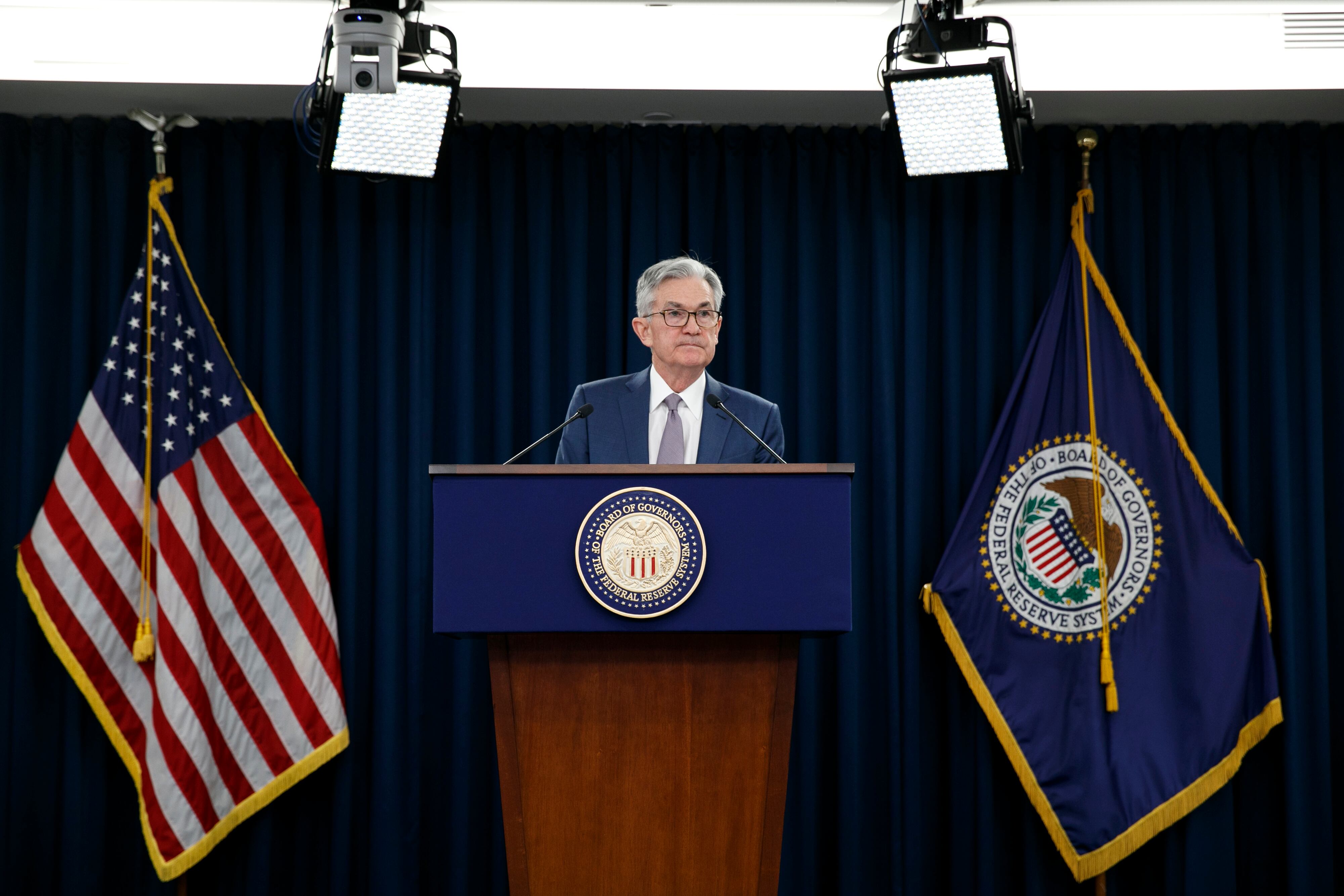
The Fed noted the gravity of the crisis that has gripped the economy in the face of the coronavirus outbreak and made clear it would continue to do all that it could to provide support. But at a news conference, Chairman Jerome Powell cautioned about any prospects for a swift or a robust economic recovery.
“I would say that it may well be the case that the economy will need further support from all of us if the recovery is to be a strong one,” Powell said.
Powell suggested that given the depth of the U.S. economic catastrophe, with perhaps 30 million people having lost jobs in the past six weeks, it will “probably will take some time for us to get back to a more normal level of employment and ultimately maximum employment.”
The chairman and the Fed itself sought to provide reassurance, though, that their aggressive intervention could help mitigate the vast damage to the economy and to millions of workers. In its statement, the Fed said it is "committed to using its full range of tools to support the U.S. economy in this challenging time.”
The viral outbreak and measures to contain it," the statement noted, are “inducing sharp declines in economic activity and a surge in job losses.”
Under Powell, the Fed is confronting a deeply perilous moment for an economy that had looked robust just a few months ago. Since the virus struck with full force last month, widespread business shutdowns have caused roughly 30 million workers to lose jobs. As layoffs mount, retail sales are sinking, along with manufacturing, construction, home sales and consumer confidence.
At his news conference, the chairman noted that layoffs have struck hardest at the lowest-income American workers, many of whom had just begun to make progress in the 11th year of an economic expansion that has now ended.
“It is heartbreaking to see that is threatened now,” Powell said.
During two emergency meetings in March, the Fed cut its benchmark rate to a range between zero and 0.25%. It has also announced nine new lending programs to pump cash into financial markets and provide support to large and medium-sized businesses as well as cities and states.
In its statement Wednesday, the Fed said it will also keep buying Treasury and mortgage bonds to help keep rates low and ensure that companies can lend easily to each other amid a near-paralysis of the economy caused by the coronavirus. It did not specify any amounts or timing for its bond purchases.
It said it will keep its rate at nearly zero “until it is confident that the economy has weathered recent events and is on track to achieve its maximum employment and price stability goals.” That’s the same language it used in its previous statement last month.
Asked about eventually lifting rates, Powell made clear that that wouldn't happen for many months at least.
“We are going to wait until we are quite confident the economy is on the road to recovery,” he said.
The Fed provided no details Wednesday about the pace of its purchases of Treasurys and mortgage-backed securities. It has tapered those purchases recently as markets have calmed. But earlier this month, it bought as many Treasury securities in a day as it did during an entire month in the 2008-2009 Great Recession.
In its statement, the Fed also raised concerns about slowing inflation, which is likely to sink further below its 2% target level in the coming months.
“Weaker demand and significantly lower oil prices are holding down consumer price inflation,” the statement said.
The Fed’s statement came on the same day that the Commerce Department released grim news about the economy: Economic output shrank at a 4.8% annual rate in the first three months of the year — the worst showing since the Great Recession struck near the end of 2008.
The economic picture is expected to grow ever darker, with the economy forecast to contract at a shocking 30% to 40% annual rate in the April-June quarter. The unemployment rate could reach 20% when April's jobs report is released next week.
The central bank has already slashed its benchmark interest rate to near zero and escalated its purchases of Treasury and mortgage-backed securities to pump cash into financial markets to smooth the flow of credit. It has also said it will buy corporate bonds and lend to states and cities — two actions it has never previously taken.
“The fact that they are operating in those markets is unprecedented," said Nathan Sheets, chief economist at PGIM Fixed Income and a former director of international finance at the Fed. “They are coming up on the extent of their legal authorities here.”
Yet this crisis is unlike any other, and it comes against a backdrop of horrific economic data. More than 26 million Americans have sought unemployment benefits since the viral outbreak shuttered much of the U.S. economy in mid-March.
As economic activity has collapsed, inflation has also begun to fall. Economists expect it to drop below 1% by next year, far under the Fed’s 2% target level. That poses another problem for the Fed: Declining prices can eventually lead consumers to delay spending, thereby slowing the economy further.
Earlier this month, as part of a $2.3 trillion lending program, the Fed said it would buy municipal bonds issued by state and local governments, up to $500 billion. It also unveiled a Main Street Lending Program, which will lend $600 billion to medium-sized companies of up 10,000 employees.
These loans are intended to support mostly companies that are too large for the government’s small business lending program, which targets those with fewer than 500 workers. Companies that borrow from the Main Street program must “make reasonable efforts” to retain their workers, the Fed says, and cannot repurchase their shares or pay dividends. The Fed has said it will disclose the recipients of its Main Street loans.
Still, neither the municipal or Main Street programs have yet started. The Fed has yet to buy any municipal securities or corporate debt. Even so, just the announcements that it will do so have smoothed markets.
These new programs have exposed the central bank to concerns that it will inevitably favor some companies or municipalities over others. The Fed, whose independence is seen as vital to its role in the financial system, has always steered clear of such potentially politicized actions.
___
AP Economics Writer Martin Crutsinger contributed to this report.