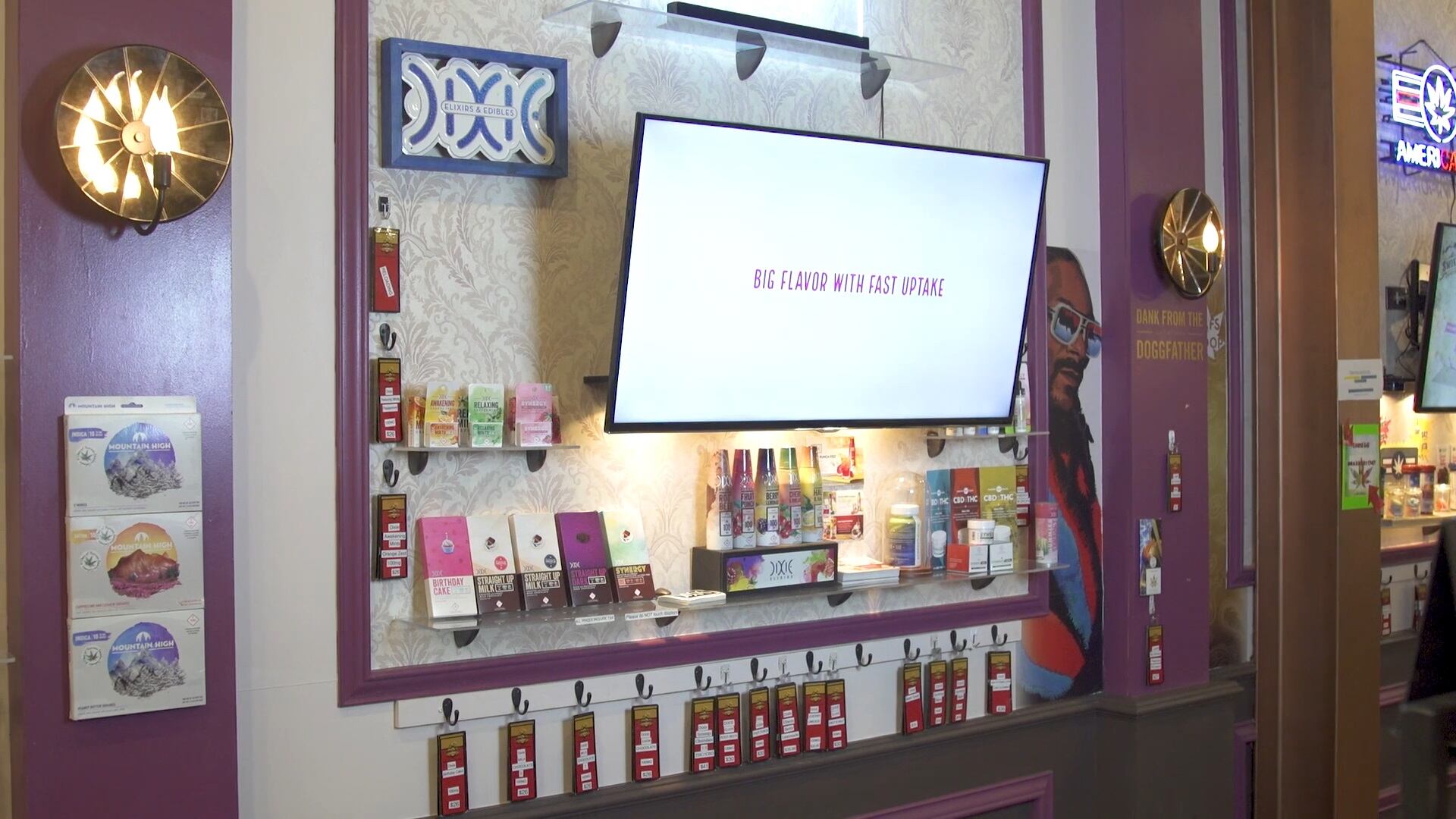
In spite of choppy market conditions, cannabis brand platform BR Brands has big plans to go public through a reverse takeover of Dixie Brands. It's a play, not only for Dixie's assets but to better position BR Brands for future acquisitions at a time when many assets are trading at a discount.
"BR Brands … was always designed in what I would call a buy and build strategy. The buy portion of that strategy is naturally focused on consolidation efforts driven by accretive M&A," Andrew Schweibold, CEO and co-founder of Rose Capital and chairman and co-founder of BR Brands, told Cheddar. "With the value that exists today and the volatility of the cannabis markets, you are seeing Mom and Pops and smaller subscale assets looking for shelter from the storm, so to speak, and looking for a platform to tie their ship."
BR Brands plans to list on the Canadian Securities Exchange through a reverse takeover of Dixie Brands, the parent company to popular cannabis brands like Dixie and Therabis. The combined value of the new company will be an estimated at $218 million, giving Dixie a valuation of about $43 million and BR Brands a valuation of $175 million.
Per terms of the transaction, which is expected to close in the third quarter, BR Brands will become the majority shareholder, holding about 80 percent of the merged company and a bulk of the board seats, and Dixie shareholders will own 20 percent. Key management and personnel are expected to remain in place as the companies integrate. Dixie's CFO Greg Robins departed concurrently with the announcement to be replaced by interim CFO Jared Lanser, although the companies said his departure was unrelated to the deal.
Dixie Brands President and CEO Chuck Smith will be president and CEO of the combined company, and Schweibold will serve as chairman of the board. Management is in the process of renaming the combined company.
Shares of Dixie, which trades on the Canadian Securities Exchange and over-the-counter in the U.S. halted pending the news.
It's a boon for cannabis house of brands Dixie, which has struggled on the public markets in the past year — like so many others in the space. It's shares are down some 81 percent in that period amid broader selling across the sector and markets related to investor overexuberance and underperformance in key markets, as well as other factors. Smith said that in addition to helping out both companies' balance sheets, the acquisition is a means to accelerate growth for Dixie Brands, which has been searching for a strategic partner for quite some time.
In spite of challenging conditions that have left retail investors, who make up the bulk of investors in the cannabis space, feeling burned and many cannabis companies on unsteady footing, Schweibold, whose background is in private investing, said it's the right time for BR Brands to go public.
"I, 99 out of 100 times, stand resolute that it is best to remain in a private operating environment as long as you possibly can. That said, I have opened up to the public dynamic currently," he said.
By his telling, Schweibold stubbornly insisted on taking BR Brands public for a number of reasons including easier access to capital outside of private funding, which, like the capital markets, all but dried up in recent months. Schweibold said going public also better positions BR Brands to acquire brands and companies that may be struggling in the challenging market environment.
"I'm careful not to come off as a predatory acquirer. We are looking for assets, and where we will acquire, we are looking for partnerships with assets. But we do recognize the opportunity that we sit in today to acquire thoughtfully and accretively," he added.
Schweibold wouldn't get into specifics on which companies BR Brands are eyeing, but did say the new, combined company will be looking for companies they can acquire at a discount and that bring access to new talent, customers, markets, or products faster and cheaper than BR Brands could access itself.
Beyond the allure of the public markets, Dixie Brands on its own has much to add to BR Brands, as the companies work together to build a power player akin to Coca Cola or LVMH, but for the cannabis and CBD consumer packaged goods space.
What made Dixie stand out to Schweibold and his team, he said, is that it checks the boxes in terms of the operating talent, market reach, and product portfolio it needed to stand on its own as a house of brands. Together with BR Brands' existing portfolio, which includes Mary's Brands products sold in dispensaries, direct-to-consumer, and at major retailers like Urban Outfitters, Schweibold and Smith hope to tap into what are projected to be multibillion-dollar markets for cannabis and hemp, while building a portfolio of brands across a wide geographic footprint.
"When you take two powerhouse brands with an incredible amount of intellectual property and capabilities and you put them together on one platform, as the trite saying goes, 'one plus one can equal three' in this case, and that's really what we expect," Smith said.