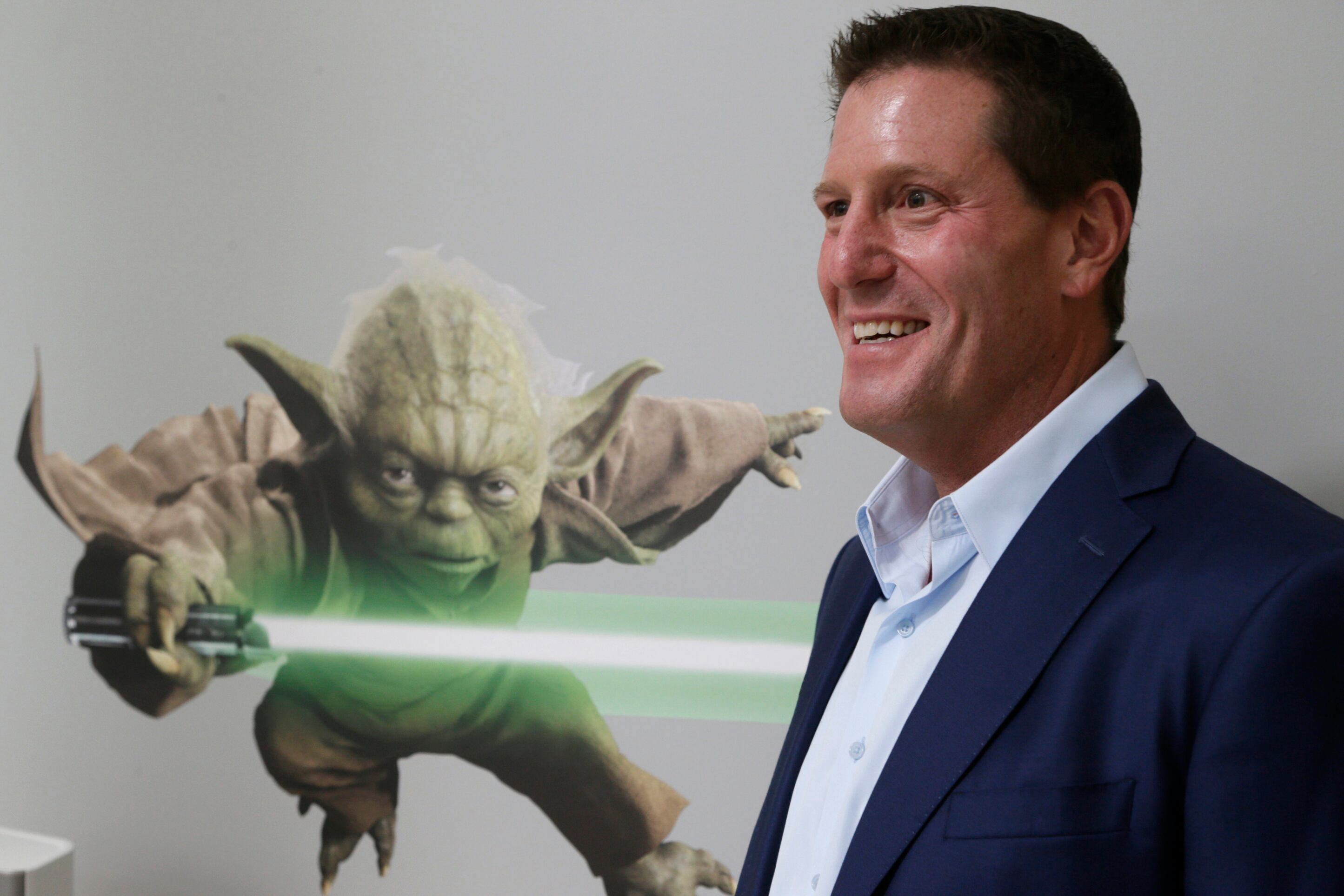
In this July 13, 2015, file photo, then Disney chief strategy officer Kevin Mayer visits the company's "accelerator" space in Glendale, Calif. TikTok CEO Mayer resigned Thursday, Aug. 27, 2020 amid U.S. pressure for its Chinese owner to sell the popular video app, which the White House says is a security risk. His resignation comes after U.S. President Donald Trump ordered a ban on TikTok, unless parent company Bytedance sells its U.S. operations to an American company within 90 days. (AP Photo/Damian Dovarganes, File)
By Zen Soo
TikTok CEO Kevin Mayer resigned Thursday amid U.S. pressure for its Chinese owner to sell the popular video app, which the White House says is a security risk.
In a letter to employees, Mayer said that his decision to leave comes after the "political environment has sharply changed."
His resignation follows President Donald Trump's order to ban TikTok unless its parent company, ByteDance, sells its U.S. operations to an American company within 90 days.
"I have done significant reflection on what the corporate structural changes will require, and what it means for the global role I signed up for," he said in the letter. "Against this backdrop, and as we expect to reach a resolution very soon, it is with a heavy heart that I wanted to let you all know that I have decided to leave the company."
Bytedance is currently in talks with Microsoft for the U.S. firm to buy TikTok's U.S. operations.
Mayer, a former Disney executive, joined TikTok as CEO in May.
TikTok thanked Mayer.
"We appreciate that the political dynamics of the last few months have significantly changed what the scope of Kevin's role would be going forward, and fully respect his decision," the company said in a statement.
ByteDance launched TikTok in 2017, then bought Musical.ly, a video service popular with teens in the U.S. and Europe, and combined the two. A twin service, Douyin, is available for Chinese users.
TikTok gained immense popularity via its fun, goofy videos and ease of use, and has hundreds of millions of users globally.
But its Chinese ownership has raised concerns about potential censorship of videos, including those critical of the Chinese government, and the risk Beijing may access user data.
Earlier this month, Trump ordered a sweeping but unspecified ban on dealings with the Chinese owners of consumer apps TikTok and WeChat as the U.S. heightens scrutiny of Chinese technology companies, citing concerns that they may pose a threat to national security.
Markets are emerging from a turbulent Q3. Horizon’s Mike Dickson shares insights on interest rates, small caps, and where investors should look in Q4 and beyond
Bambu Ventures's Kyle Pretsch dives into Lemonaid’s $10M buyout, down from 23andMe’s $400M price tag, and what’s next after Chrome Co.’s dramatic pivot.
Former Cisco Systems CEO John Chambers learned all about technology’s volatile highs and lows as a veteran of the internet’s early boom days during the late 1990s and the ensuing meltdown that followed the mania. And now he is seeing potential signs of the cycle repeating with another transformative technology in artificial intelligence. Chambers is trying take some of the lessons he learned while riding a wave that turned Cisco into the world's most valuable company in 2000 before a crash hammered its stock price and apply them as an investor in AI startups. He recently discussed AI's promise and perils during an interview with The Associated Press.
Grove Collaborative’s CEO shares how the company is reinventing everyday goods with sustainability at the core and working toward a plastic-free future.
Atlanta Mayor Andre Dickens shares plans for affordable housing, community-led growth, and why private and public grocery stores could be key to food equity.
Tesla reported a surprise increase in sales in the third quarter as the electric car maker likely benefited from a rush by consumers to take advantage of a $7,500 credit before it expired on Sept. 30. The company reported Thursday that sales in the three months through September rose 7% compared to the same period a year ago. The gain follows two quarters of steep declines as people turned off by CEO Elon Musk’s foray into right-wing politics avoided buying his company’s cars and even protested at some dealerships. Sales rose to 497,099 vehicles, compared with 462,890 in the same period last year.