A Seattle startup is offering life after death.
Recompose | SEATTLE recently unveiled renderings for what it says will be the world's first site for composting human remains, or what it's calling the first truly "sustainable option for after-death care."
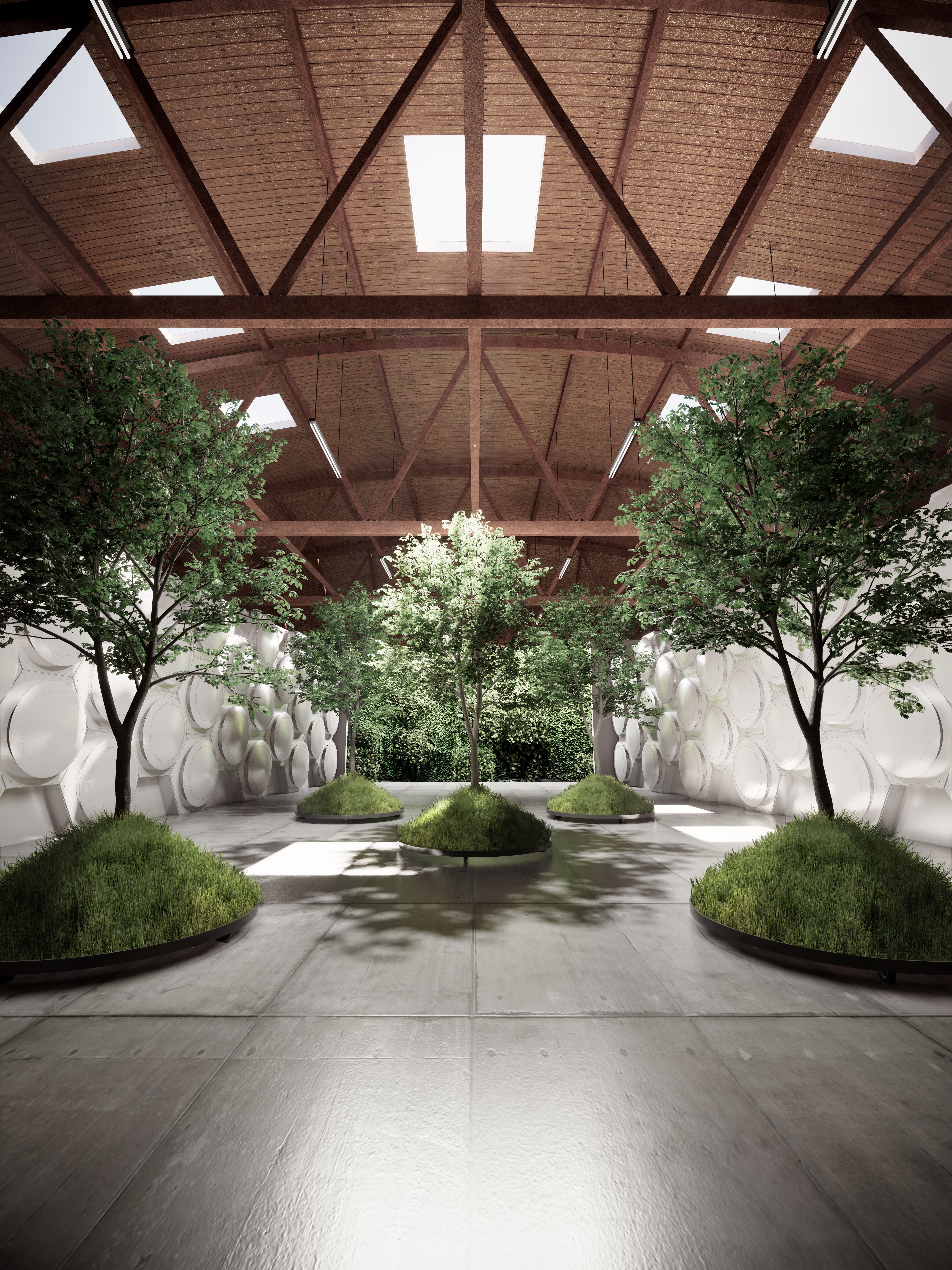
Starting in the spring of 2021, in a former warehouse in an industrial district just south of Seattle, the bereaved will be able to turn their dearly departed into healthy soil, which will be used to help restore a nearby conservation forest or can be used in gardens closer to home.
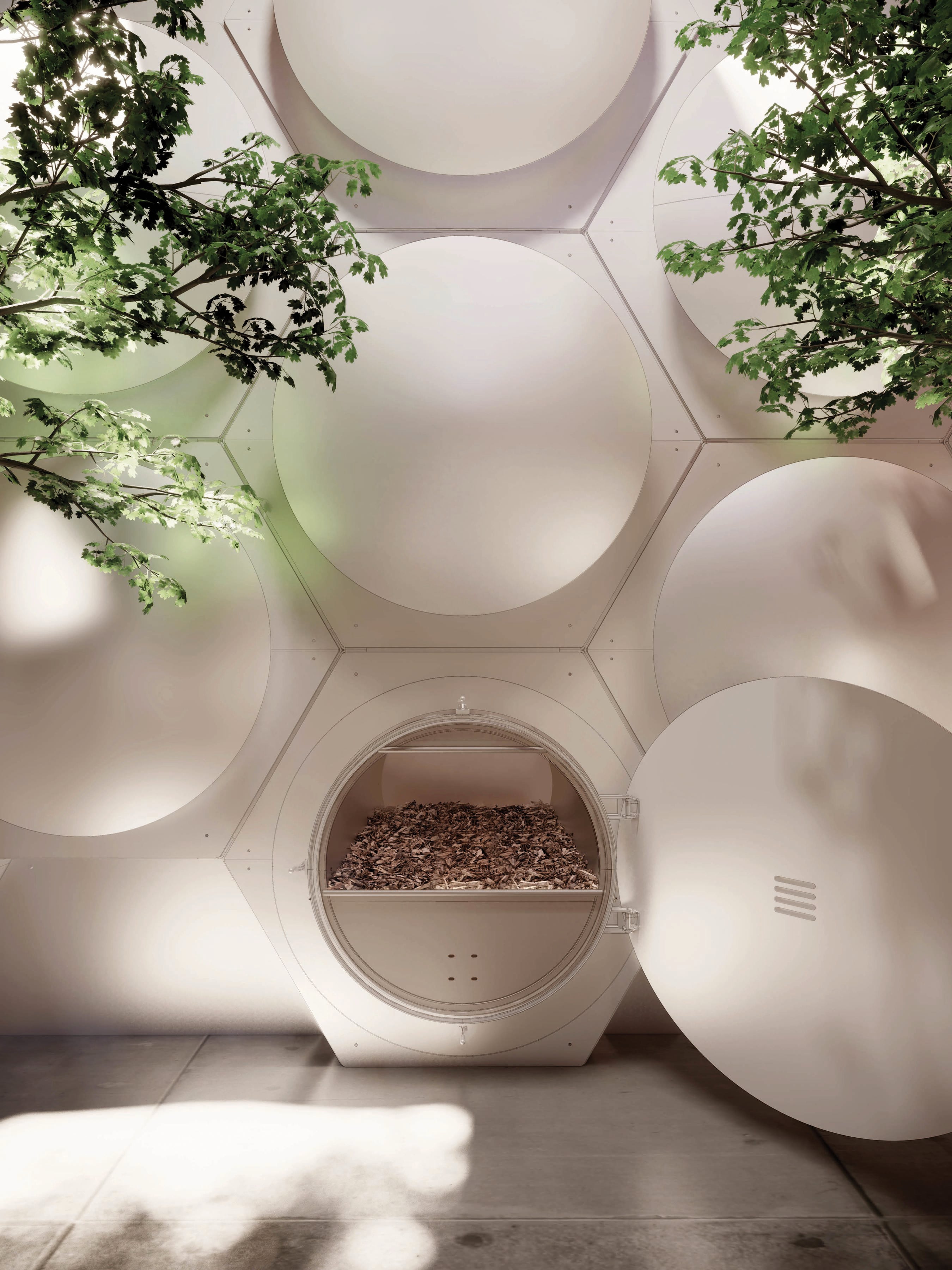
A typical body, after being stored in one of Recompose's hexagonal vessels for about three months, will turn into about a cubic yard of healthy soil – infusing "from dust to dust" with a new, 21st-century meaning.
The project has raised $2.5 million, and it's already fielding requests for pre-orders from millennials willing to make pre-payments toward a memorial that promises to be far more Earth-friendly than traditional burial or cremation.
Gov. Jay Inslee, a Democrat, legalized "natural organic reduction" – a.k.a. human composting – in May, hailing the approach as an "environmentally friendly option for people." The bill, which also breathed life into chemical-based cremation, takes effect in May 2020.
"Recompose is offering an alternative to cremation and burial that transforms human bodies into soil," said CEO and co-founder Katrina Spade, who attended the bill-signing this spring. "We're doing that both as a way of reducing the pollution and emissions of the current funeral practices that we have here and also as a way to help us reconnect with the entire natural cycle and the part we play in it as humans."
The task is monumental – and not merely in the memorial sense. Along with designing a new type of space for a funeral, the endeavor also means rethinking ancient rituals and even finding new ways of talking about death and what comes after – at least when it comes to our earthly remains.
Rather than a traditional casket, the deceased's body is placed in a shroud in a six-sided container – a shape that Recompose borrowed from the hexagons that suffuse nature from the cells of beehives to flower petals, snail shells, and starfish. And while the capsule might call to mind a starship's escape pod, Spade and her design partner, Alan Maskin, designed the surrounding space – and the "burial" ritual – to emphasize the body's return to nature.
Beneath a soaring wood ceiling, amid trees and a small indoor bamboo forest, friends and loved ones put alfalfa, wood chips, and straw around the body, preparing it for the next stage of the process. Later, the vessel is sealed and over the next several months supplied with oxygen, nitrogen, and carbon to accelerate decomposition.
"We're creating a framework for ritual for people, and ritual completely hinges on the process itself – we don't make up the process, but what we're saying is, 'We need to take the body from this point to this point, we're going to then put this on top of the body, and we're going to then place it into this vessel,'" Spade said. "All of this is happening because that's actually how we start the conversion of human remains to soil in the system."
The service, including a memorial service, will cost about $5,500; conventional burials, by contrast, start at around $12,000, and cremation can range from as little as $1,000 to as much as $7,000.
The project comes amid new interest in environmentally-friendly options for the afterlife that include so-called green burials, where the dead are enclosed in shrouds or wicker baskets that biodegrade, to chemical cremation that doesn't rely on burning fossil fuels. (More offbeat options – although not nearly as green – include services such as LifeGems, which since the early 2000s has been turning dead humans into artificial diamonds.)
Spade began studying the topic in architecture school, where she sought to reimagine not only the spaces people design for our most final of goodbyes – in the U.S., often in stuffy, low-ceilinged funeral homes and industrial, stainless-steel crematoriums – but also how Americans engage (or not) with the idea of mortality itself. In the U.S., in particular, embalming is unusually common – along with concrete-lined graves and steel caskets, all of which have an ecological toll.
"A friend told me about a practice that farmers have been using for decades to recycle farm animals back to the land, a form of composting. If you can compost a cow, you can compost a human. So I set about investigating and designing around the idea," Spade said. "I was excited to sequester carbon and reduce emissions from a natural earth-cycle perspective, but also, what would I want the aesthetic experience to be like for my loved ones?"
The Recompose site is being designed by the Seattle-based architecture firm Olson Kundig, one of the largest in the country. It signed onto the project after Maskin, its co-owner, was introduced to Spade through a mutual friend who designs tombstones.
"It's not just a sustainable option for burial for people; she also is interested in changing the culture that surrounds death," Maskin said. "What we're trying to make tangible is the opposite of the funeral home atmosphere – it's mysterious, it's opaque, you can't see into it, and it's not until someone in your life dies that you go there."
The pair hopes that Seattle will be the first of many Recompose sites. Spade and her team are already looking into licensing options for other locations.
They're already keenly aware of the challenges that come with describing the project – the overlap of humor, ghoulishness, and sensitivity, itself a kind of mirror on the range of emotions that so often characterizes the end-of-life process itself. Even the language can be perilous – Spade has found that "recomposition," for example, tends to be more palatable than "human composting," and never uses the word "disposal."
"Because then we're talking about solid waste all the sudden, and that's not what we're doing," Spade says.
But she's also not afraid to joke about it, describing at one point how the conservation centers that are partnering with Recompose "would love to fold the community almost literally into their work."
As Maskin put it, "Suddenly there's this productive piece of giving back to the Earth, or food can be grown, or construction material, or you'll be adding to the oxygen on Earth just from the trees. For many of us, certainly for me, I am most comforted by the notion that my body will be contributing to nature and the future of the world in a positive way."