New York Gov. Andrew Cuomo on Monday provided his daily coronavirus update from the Javits Convention Center, which opened today as an emergency field hospital.
The governor said both the Javits Center and the USNS Comfort hospital ship, which docked in the city this morning, will serve patients dealing with non-coronavirus medical needs. That should leave New York City hospitals to serve as the frontline of the coronavirus outbreak.
While expressing gratitude for federal support the state has received, Cuomo stressed that the city is not an "anomaly" but rather a "canary in the coal mine" for what the rest of the state and country will soon experience.
"What you see us going through here, you will see happening all across this country," he said.
"Anyone who says this situation is a New York City-only situation is in a state of denial."
All but one county in the state of New York has a confirmed COVID-19 case, he added.
Collaboration has been complicated, however, by the fact that states are competing for the same stock of limited supplies.
"We're competing amongst ourselves. We're driving the prices up. When we started buying ventilators, they were under $20,000. The ventilators are now over $50,000 if you can find them," Cuomo said.
The governor echoed a message from Mayor Bill de Blasio earlier today emphasizing that New York would provide guidance and direct assistance to other areas once they, too, become hot zones.
The state's latest death toll from the virus now stands at 1,218, a jump of about 300 from Sunday. Cuomo said the jump correlates with an increasing number of patients who have died after prolonged periods of ventilators use, suggesting that patients with more serious cases are beginning to succumb to the disease.
In a bit of positive news, Cuomo reported that cases are now doubling at a slower rate than that had been, down from doubling every two days to every six days.
"While the overall number of cases is going up, the rate of doubling is actually down," Cuomo said.
The average city in California has a 38% higher cost of living than the average American city, according to a cost of living index. For many, the general minimum wage of $15/hour just doesn't cut it. Anti-poverty activist Joe Sanberg wants to get the minimum wage changed to $18/hour. He joins Cheddar News to discuss the Living Wage Act of 2022.
Liana Guzmán, CEO of FOLX Health, joins Cheddar News to discuss the company launching billboards across the country in response to anti-LGBTQ+ legislation.
President Biden has announced an additional $800 million in military assistance to Ukraine, including artillery, armored personnel carriers, and helicopters. It comes as Russian forces appear to be preparing for a new, aggressive offensive in the eastern part of Ukraine. Paul McLeary, defense reporter for Politico, joined Cheddar to discuss this new round of aid and what it means for the U.S. commitment to arming the embattled country.
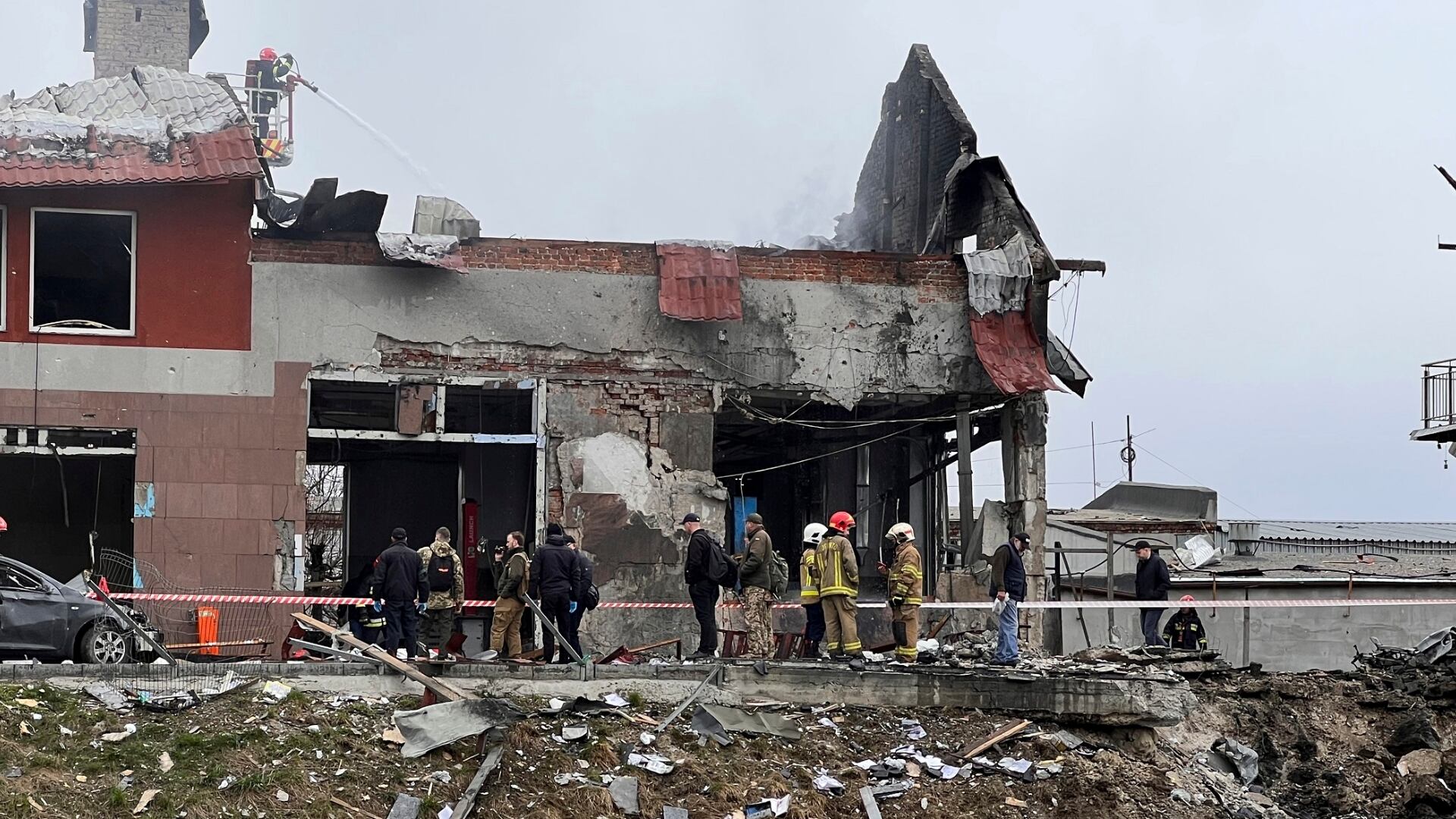
Catching you up on what you need to know on April 18, 2022, with Russian missile attacks on the Ukrainian city of Lviv killing seven, mass shootings in South Carolina and Pittsburgh, Lucky Charms cereal under official investigation by the FDA, and more.
Activism is growing around the country in response to school boards banning books from shelves that focus on sexuality, gender, identity, or race. Jen Cousins, co-founder of The Florida Freedom to Read Project, joins Cheddar News to discuss.
As the Russian invasion of Ukraine intensifies, President Biden has announced a ban on importing Russian oil, gas, and energy. To discuss how this ban will impact the war and Americans, Amir Handjani, non-resident fellow at Quincy Institute, joins Cheddar News.
Thousands of protesters around the world are expressing their solidarity with Ukraine against Russia's invasion.
Jason Beardsley, national executive director of the Association of the U.S. Navy and national security expert, joins Cheddar News to discuss.
As gas prices surge amid the Russian invasion of Ukraine, other nations could potentially transition faster to using clean energy than previously expected. Philip K. Verleger, a senior fellow at the Niskanen Center, joined Cheddar News to explain how this could be a possibility in the near future. "Part of the reason I think we have this invasion and the tantrum that's being thrown by Russia, terrible tantrum, is because the Russians were trying to slow down the transition," he said. "Ironically they speeded it up."