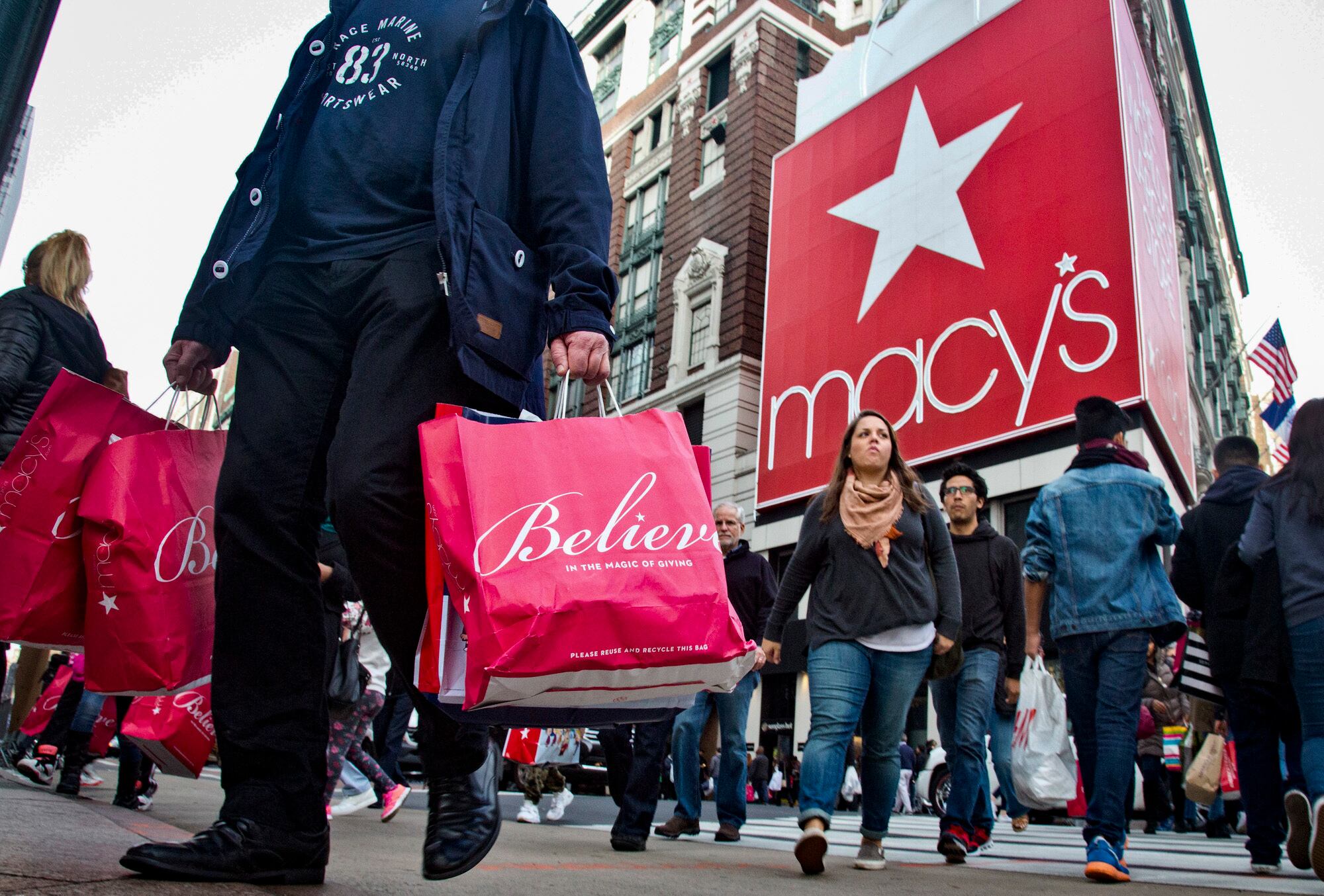
This file photo from Monday Oct. 17, 2016, shows shoppers and pedestrians in a crosswalk near a giant billboard next to Macy's flagship department store in Herald Square in New York. Macy's has filed a lawsuit against the company that owns the billboard, fighting to prevent Amazon from taking over the advertising space that carried Macy's name for almost 60 years. (AP Photo/Bebeto Matthews, File)
Macy's has filed a lawsuit against the company that owns the giant billboard next to its flagship Manhattan store, fighting to prevent Amazon from taking over the advertising space that carried Macy's name for almost 60 years.
In the lawsuit, filed last week in state Supreme Court in Manhattan, the department store retailer said there has been a restrictive covenant in place since 1963 barring the billboard space from being used by any Macy's competitor.
But Macy's said that when it tried to negotiate a lease renewal this year, the billboard's owners, the Kaufman Organization, told them they were in discussions with a “prominent online retailer," and there was “little doubt" that meant Amazon, according to the lawsuit.
Messages were left with the Kaufman Organization seeking comment. Amazon had no comment.
In the lawsuit, Macy's asked the judge for an injunction that would keep Kaufman from leasing the space to Amazon or any other competitor.
“The damages to Macy’s customer goodwill, image, reputation and brand, should a ‘prominent online retailer’ (especially, Amazon) advertise on the billboard are impossible to calculate," the company said in the lawsuit.
The lawsuit pointed out that the billboard is highly visible in its annual Thanksgiving Day parade, which is nationally televised.
Consumer prices in the United States picked up last month, a sign that inflation remains a persistent challenge for the Federal Reserve and for President Biden.
Jayesh Govindarajan, head of A.I. at Salesforce, explains the company's new Einstein copilot, plus other ways it is investing in artificial intelligence.
Altro founder and CEO Michael Broughton shares how his company is bringing both expanded credit access and financial wellness to underserved consumers, plus netting early investments from Tinashe, Quavo, and Jay Z’s Marcy Ventures.
Portillo’s CEO Michael Osanloo discusses the company’s decades of profitability, opening restaurants in new markets, and why it doesn’t need trends like dynamic pricing.
Adam Turnquist, Chief Technical Strategist for LPL Financial, weighs in on the latest CPI data, what could get the Fed to lower borrowing costs, and the crypto rally.