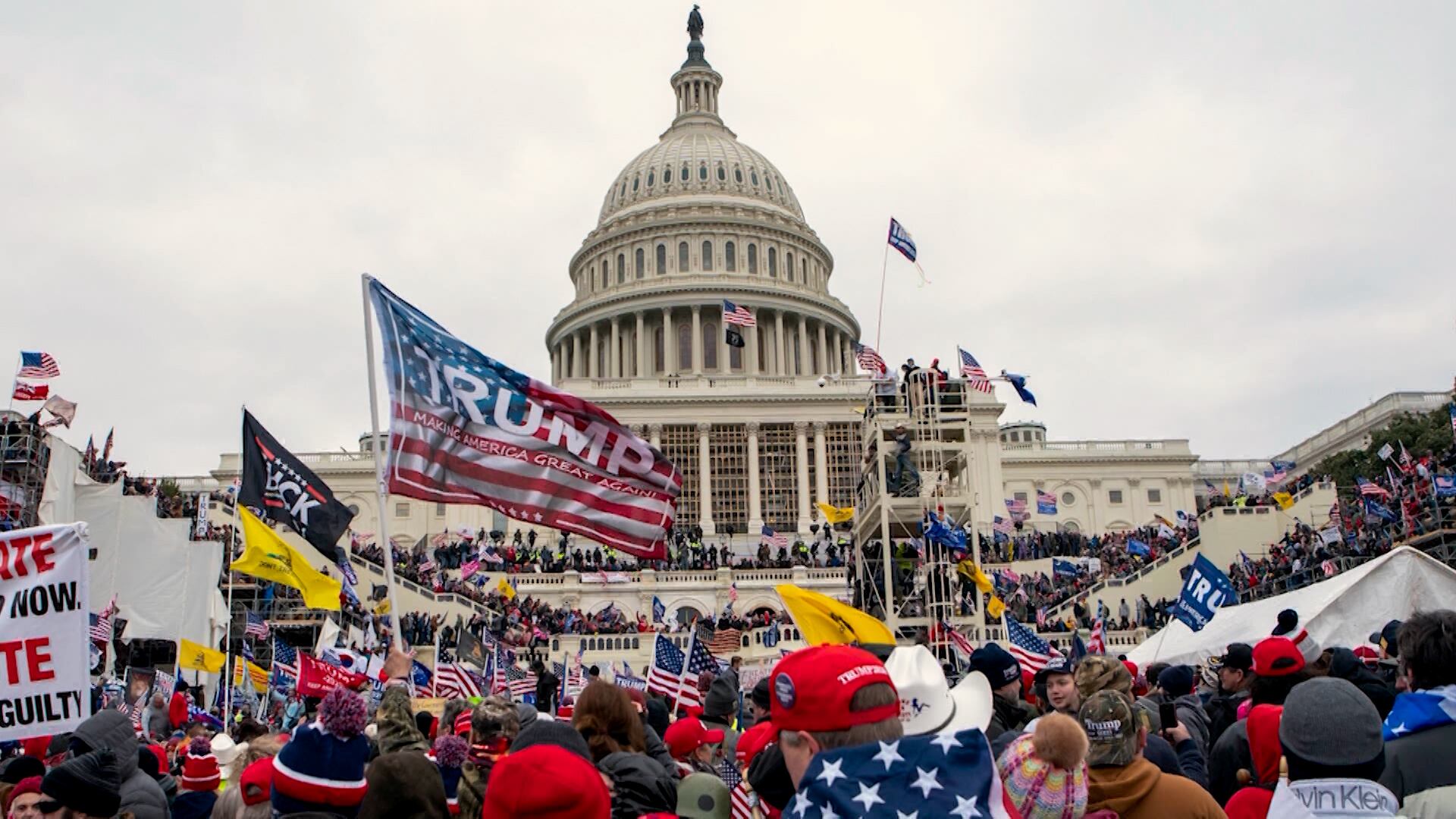
The violence that swept the U.S. Capitol on January 6 has officially been deemed a domestic terrorism event by FBI Director Christopher Wray. In testimony to the Senate Judiciary Committee, Wray warned that the attack in DC was not just a one-off event, but part of a larger issue with homegrown extremists.
Former Department of Homeland Security acting secretary Chad Wolf said that he agrees with the assessment, calling the insurrection largely perpetrated by supporters of President Donald Trump "unconscionable."
"I think all Americans condemn that type of violence," he told Cheddar.
Wolf stepped down from his role at DHS days after the attack and just over a week ahead of the inauguration of President Joe Biden, although he cited concerns about the legality of his serving in the role as the reason for his departure. His appointment by Trump was controversial because it did not follow rules of succession, and he was never confirmed by the Senate.
While Wolf said the investigations into the storming of the Capitol are proper, he also stated that violence linked to the protests that erupted last summer after the police killings of George Floyd and Breonna Taylor should be condemned in a bipartisan fashion.
"I think it's incumbent upon all political leaders to make sure that we call out violence regardless of what side of the ideological spectrum it's on and to be consistent there," Wolf said.
FBI Director Wray testified that the number of domestic terror investigations has doubled since 2017. Wolf noted the investigations are left to the appropriate agencies, but DHS also did see a rise in related issues as well. "We certainly saw an uptick in the number of incidents between 2018 and 2020, [2021]; so yes, we saw certainly an uptick in the types of domestic terrorism-related events here in the homeland."
The rise of domestic terror in the U.S. is just one concern for the former acting secretary who is now a visiting fellow for the Heritage Foundation, a conservative think tank. Wolf claimed that there is a crisis at the U.S. border with Mexico that was "self-imposed" by the Biden administration's reversal of Trump-era policies and decisions. The Border Patrol has seen an increase in the number of undocumented migrants arriving at the border since the beginning of the year and the Biden administration has reopened controversial holding facilities to deal with the influx.
Prior to taking on the role of acting secretary and undersecretary of the office of strategy, policy, and plans concurrently in 2019, Wolf had served as chief of staff to Homeland Security Secretary Kirstjen Nielsen. During Neisen's tenure, the U.S. began to enforce the "Zero Tolerance" campaign at the southern border, which led to the separation of nearly 3,000 migrant children from their parents.
According to Wolf, there has to be a clear message sent to smugglers and traffickers that the southern border is closed.
"At the end of the day you need strong enforcement of current law and that's what's not going on right now," said Wolf. "You need to send a signal that the border is not open, and then you can certainly start doing some of the other reforms that Congress has talked about over the past several years."
He also floated the idea of providing an aid package for Central America as a means to counteract or reduce the number of migrants attempting to cross the border.
While Wolf said the current administration needs to be stronger on border security, he said the Biden team's handling of Russian sanctions in connection to last year's SolarWinds hack is trending in the right direction. Experts widely believe Russia was behind the hack which compromised 100 private companies and nine federal agencies through 18,000 entities who downloaded a tainted software update from the SolarWinds Orion platform.
When it comes to protecting government systems, he said the SolarWinds hack was perhaps the worst-case scenario for the federal agencies as it allowed a foreign adversary to monitor systems without being noticed for an extended period of time.
As the private sector leads the fight against cyberattacks, Wolf said there has to be more collaboration between government agencies and those companies already on the frontlines, fighting those attacks.
"There's been a lot of progress over the last several years to try to secure federal networks — U.S. government federal networks — and that work continues. CISA, which is our Cybersecurity and Infrastructure Security Agency at the Department of Homeland Security is leading the way in that," he added.