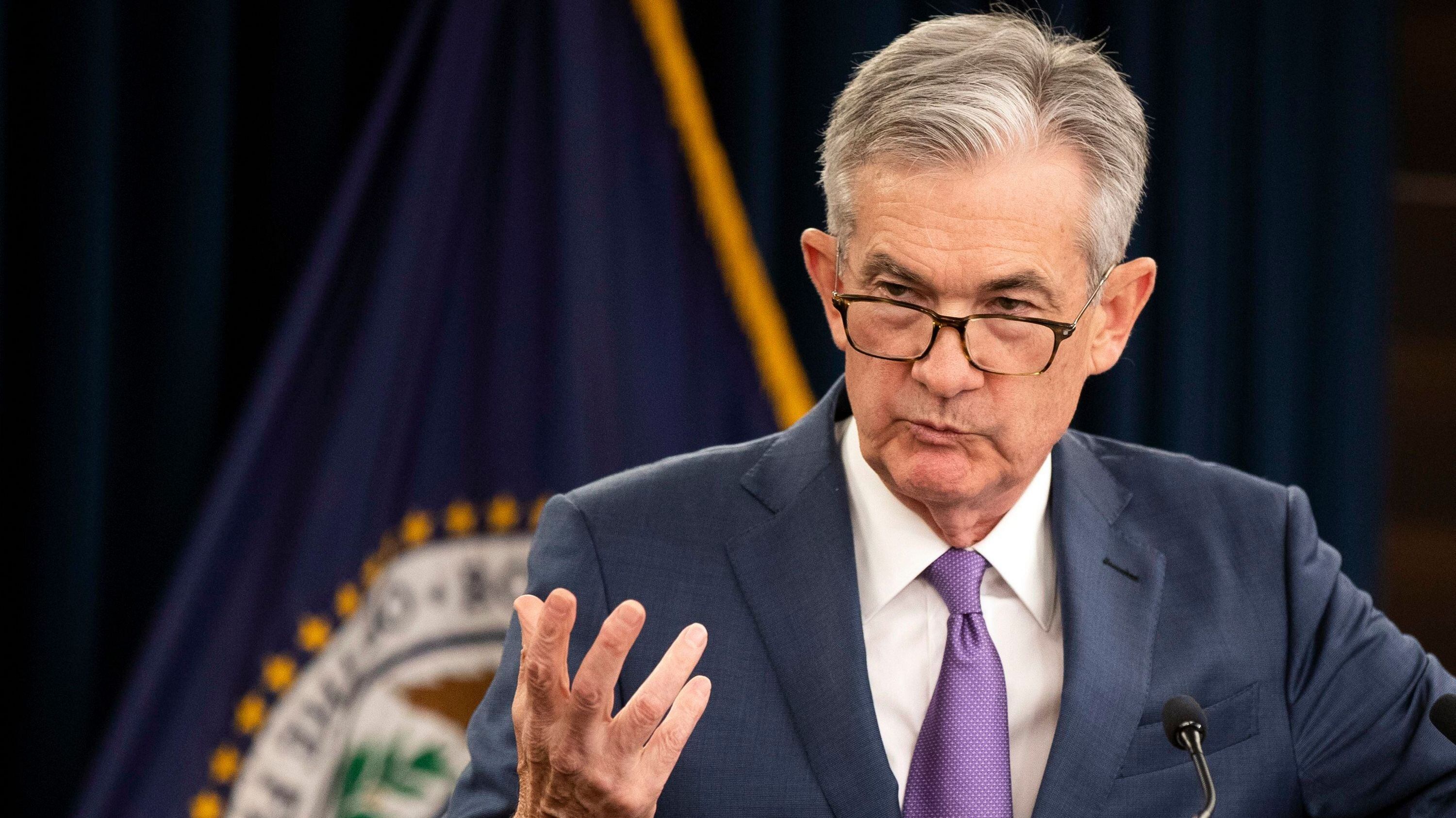
The Federal Reserve released the minutes of its July meeting on Tuesday, providing the financial world with greater insight into its decision to lower interest rates by 0.25 percent. The cut, which was announced on July 31, marked the first time the U.S. central bank lowered rates since 2008, in the midst of the financial crisis.
"Most participants viewed a proposed quarter-point policy easing at this meeting as part of a recalibration of the stance of policy, or mid-cycle adjustment, in response to the evolution of the economic outlook over recent months," the minutes read.
The statement reaffirms what Fed Chair Jerome Powell stressed at his press conference last month: that the cut is a "mid-cycle adjustment to policy" and not the start of a rate-slashing cycle.
"The outlook for the U.S. economy remains favorably and this action is designed to support that outlook," Powell said at the time.
Two of the meeting's participants, the minutes added, argued for a higher cut of 0.5 percent to "better address the stubbornly low inflation rates" of recent years. Ultimately, eight of the 10 voting members on the committee, including Powell and Vice Chairman John C. Williams, voted in favor of lowering rates by 0.25 percent.
The two dissenters — President of the Federal Reserve Bank of Boston Eric Rosengren and President of the Federal Reserve Bank of Kansas City Esther George — argued instead to leave rates unchanged.
George dissented because she believed "incoming data and the outlook for economic activity over the medium term" did not warrant a change in rates, according to the minutes. Rosengren argued that "financial stability concerns were elevated" and therefore, among other reasons, a cut was not necessary.
The decision to cut rates was made at the two-day Federal Open Market Committee (FOMC) meeting, which is held eight times a year to determine necessary adjustments on interest rates and other monetary policies.
The minutes also reiterated that despite strong economic indicators, "uncertainties associated with weak global economic growth and in international trade were weighing on the domestic economy." That concern, muted inflations pressures, and other forecasts influenced the FOMC's decision to cut rates.
Powell — who was nominated by President Trump to chair the Fed in 2017 — has been repeatedly criticized by the White House for raising rates, which the Fed does to mitigate inflation, and for not cutting rates enough to maintain economic growth.
On Wednesday, ahead of the Fed minutes release, Trump tweeted that "the only problem we have is Jay Powell and the Fed. He's like a golfer who can't putt, has no touch. Big U.S. growth if he does the right thing, BIG CUT - but don't count on him! So far he has called it wrong, and only let us down...."
Last month, Powell said that the Fed, which has historically stayed above the fray of politics, never takes "into account political considerations" when deciding monetary policy.
In another tweet on Monday, Trump called for a full 1 percent cut to interest rates and “with perhaps some quantitative easing” to spur economic growth, adding that “Democrats are trying to “will” the Economy to be bad for purposes of the 2020 Election.”