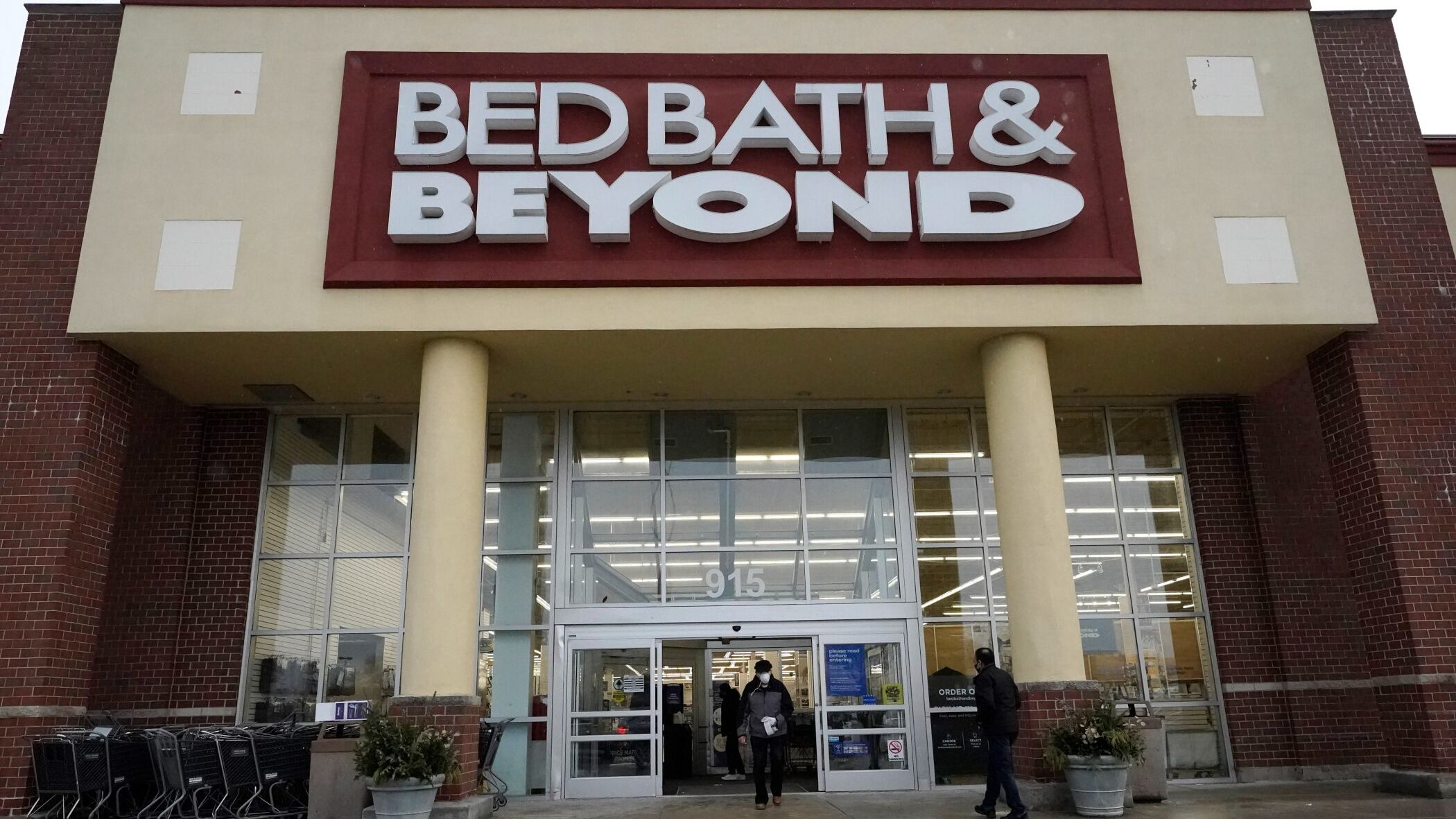
Bed Bath & Beyond on Thursday warned investors that bankruptcy is now on the table, as a turnaround effort begun in the third quarter failed to right the firm's financial ship. The company reported net sales of $1.3 billion last quarter, compared to $1.9 billion last year, and is now anticipating its cash flow to fall behind expenses, according to a financial filing.
While Bed Bath & Beyond continues to "pursue actions and steps to improve its cash position" and address any shortfall in liquidity, "the Company has concluded that there is substantial doubt about the Company's ability to continue as a going concern," read the filing.
Shares of Bed Bath & Beyond plunged more than 20 percent following the release. The stock is down around 85 percent from 12 months ago. Over that period, its memestock status spurred multiple, short-lived rallies.
The retailer has long struggled with its debt load, and now other macroeconomic and microeconomic headwinds are converging on its balance sheet. Among the biggest challenges: It has gotten harder to keep shelves stocked with the merchandise consumers want.
"Reduced credit limits resulted in lower levels of in-stock presentation within the assortments that our customers expect," said CEO Sue Gove in a statement. "Consequently, we have already leveraged the liquidity gained from the holiday season to immediately pursue higher in-stock levels with support from our key vendors."
In other words, the company can't afford to keep its own shelves filled, which is leading customers to go elsewhere for their home goods needs. This, in turn, is reducing cash flow, which is making it even harder to stock shelves — a vicious cycle.
The filing showed that Bed Bath & Beyond is expecting a net loss of $385.8 million for the third quarter, compared to $276.4 million a year ago. Cove urged patience as the company continues a series of operational changes designed to expand omnichannel capabilities and make inventory and merchandising efforts more efficient.
"Transforming an organization of our size and scale requires time, and we anticipate that each coming quarter will build on our progress," she said.
In addition, the company is considering a slew of financial options such as "restructuring or refinancing its debt, seeking additional debt or equity capital, reducing or delaying the Company's business activities and strategic initiatives, or selling assets, other strategic transactions and/or other measures, including obtaining relief under the U.S. Bankruptcy Code."
"These measures may not be successful," the company concluded.