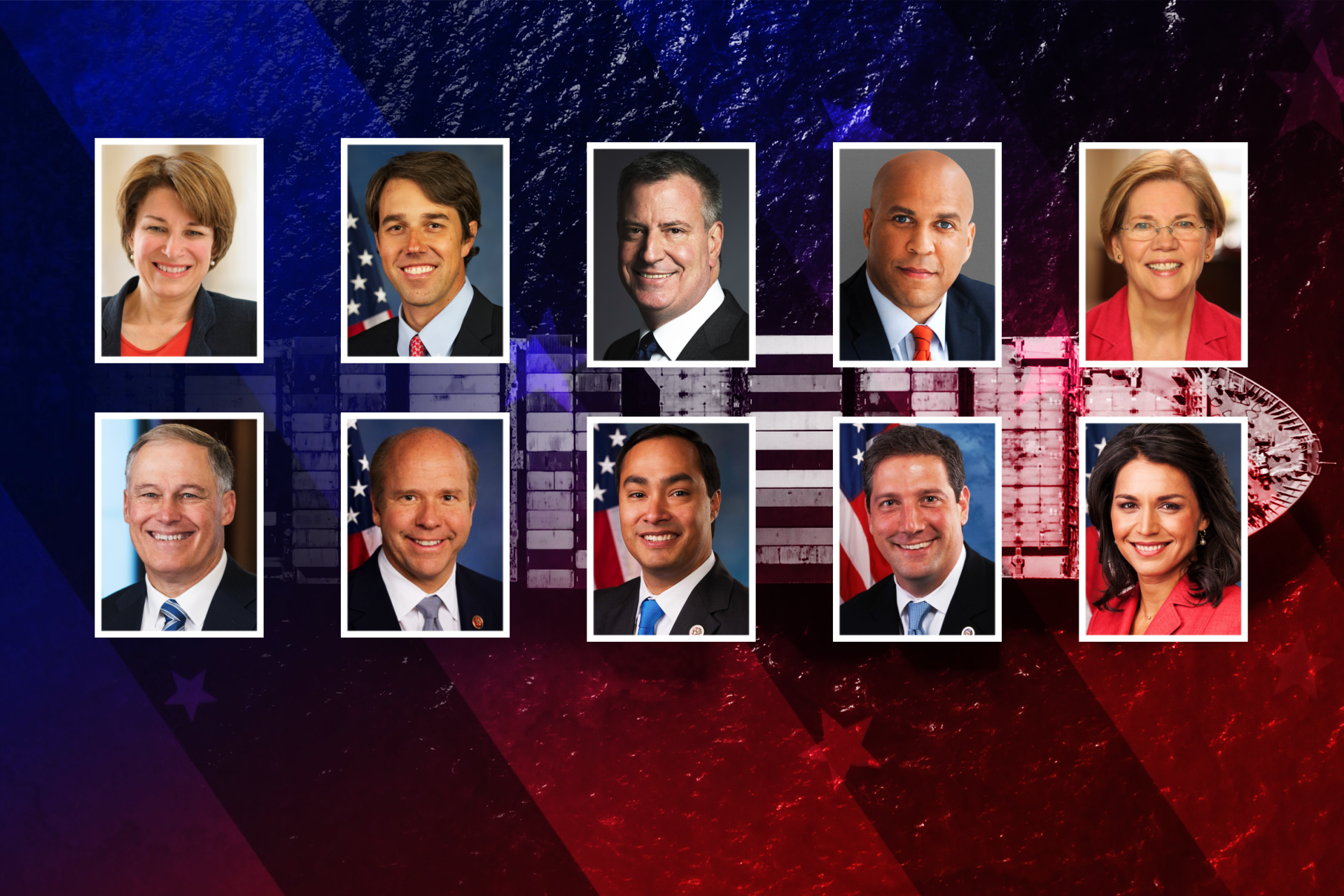
The opening question at the first Democratic presidential primary debate on Wednesday centered on how candidates would handle an economy that already shows signs of strength.
The presidential hopefuls mostly concurred that recent booms in the market have not been felt by all Americans equitably, and pointed primarily to disparities between corporations and the average American.
“So, I think of it this way — who is this economy really working for? It’s doing great, for thinner and thinner slices at the top. It’s doing great for giant drug companies. It’s not doing great for people trying to get a prescription filled,” said Sen. Elizabeth Warren.
Sen. Cory Booker shared a similar view. “The indicators that are being used, from GDP to Wall Street’s rankings, [are] not helping people in my community,” he said, pointing specifically to disparities felt by black and brown communities.
But while some emphasized tackling corporate power and consolidation, other candidates were more restrained, and chose to tout programs that would assist workers, such as paid parental leave and and raising the minimum wage.
Mayor Bill de Blasio endorsed popular initiatives among progressives, including free public college, a $15 minimum wage, and a 70 percent marginal tax rate on the wealthy — a proposal that’s been recently popularized by New York Rep. Alexandria Ocasio-Cortez.
Despite being pressed by the moderators, Rep. Beto O’Rourke would not endorse that rate, and instead said he supported raising the corporate tax rate from 21 to 28 percent.
Sen. Amy Klobuhar took a shot at the president, saying, “Donald Trump just sits in the White House and gloats about what’s going on, when you have so many people that are having trouble affording college and having trouble affording their premiums.”
Candidates appeared to disagree on how far they would go in taking on big companies directly.
Warren has gained particular attention for her call to break up major corporations, such as Facebook ($FB), Amazon ($AMZN), and Google ($GOOGL), a move that other candidates have been more hesitant to endorse.
“I want to return government to the people, and that means calling out the names of the monopolists and saying I have the courage to go after them,” said Warren. She also rejected the criticism that she was picking “winners and losers.”
Meanwhile, Sen. Cory Booker eschewed the notion that he wouldn’t take on companies directly and said that he’s previously called out both the multinational oil giant Halliburton and e-commerce titan Amazon, neither of which pay federal taxes. He explained that he would appoint judges that would enforce antitrust laws, and that he would further empower the Department of Justice and the Federal Trade Commission to investigate corporate consolidation.
However, Booker has previously rejected calls to break up Facebook.
Former Maryland Rep. John Delaney chose not to criticize large corporations and instead emphasized doubling the earned-income tax credit, raising the minimum wage, and instituting paid family leave.
Washington Governor Jay Inslee discussed his support for unions, and used his time to pitch wide-ranging initiatives that would support green jobs, a suggestion Ohio Rep. Tim Ryan and Warren both appeared to agree with.
Meanwhile, Julián Castro, the former Housing and Urban Development Secretary and mayor of San Antonio, was asked specifically about the role of women in the U.S. economy, and used his time, in part, to discuss his support for the Equal Rights Amendment.
When asked about the same topic, Hawaii Rep. Tulsi Gabbard spoke about her military experience, though she closed the debate by briefly criticizing the power of the rich, and promising that her White House would be a “beacon of light.”