By Kate Brumback
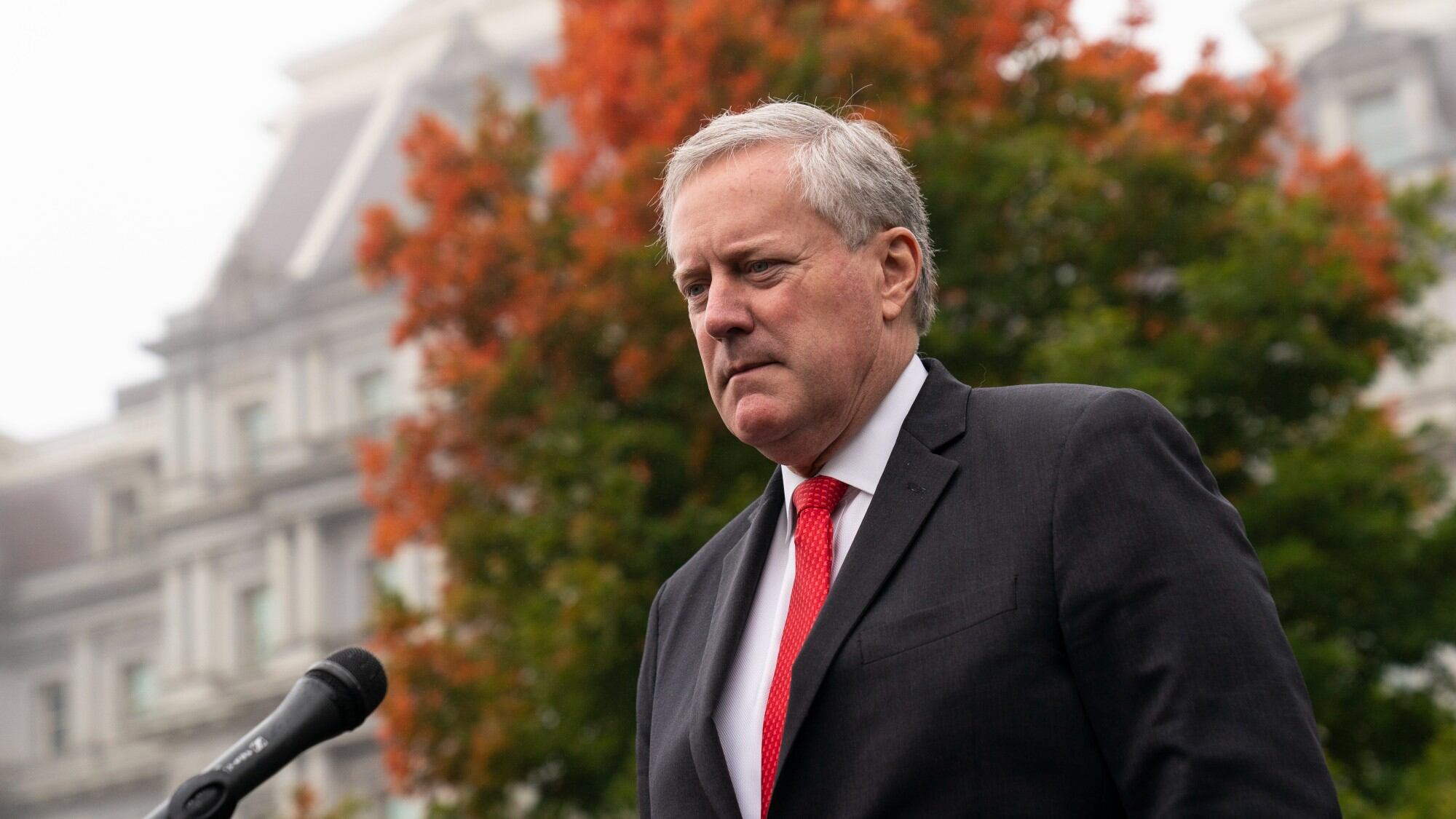
A federal appeals court on Monday ruled that former Trump White House chief of staff Mark Meadows cannot move charges related to efforts to overturn the 2020 election in Georgia to federal court.
Meadows was indicted in August along with former President Donald Trump and 17 others on charges that they illegally conspired to keep the Republican incumbent in power despite him losing the election to Democrat Joe Biden.
A three-judge panel of the 11th U.S. Circuit Court of Appeals rejected Meadows' request, affirming a lower court opinion from September. The ruling is a win for Fulton County District Attorney Fani Willis, who brought the case and is seeking to try the remaining defendants in a single trial in a Georgia state court.
Lawyers for Meadows did not immediately respond Monday to a request for comment on the ruling. A spokesperson for Willis declined to comment.
Meadows' attorneys had asserted during oral arguments before the panel on Friday that he should be allowed to move the case to federal court because the actions outlined in the indictment were directly related to his duties as a federal official. Prosecutors argued that Meadows failed to show any connection between the actions and his official duties and that the law allowing federal officials to move a case to federal court doesn't apply to former officials.
Circuit Chief Judge William Pryor, who was appointed by President George W. Bush, wrote in Monday's 35-page ruling that the law “does not apply to former federal officers, and even if it did, the events giving rise to this criminal action were not related to Meadows's official duties.”
Circuit Judge Robin Rosenbaum, who was appointed by President Barack Obama, wrote a 12-page concurring opinion that was joined by Circuit Judge Nancy Abudu, a Biden appointee.
The U.S. Supreme Court has said that the purpose of allowing federal officers to move cases against them to federal court is to protect the federal government from operational interference that could occur if federal officials were arrested and tried in state court for actions that fall within the scope of their duties, Pryor wrote.
“Shielding officers performing current duties effects the statute's purpose of protecting the operations of federal government,” he wrote. “But limiting protections to current officers also respects the balance between state and federal interests" by preventing federal interference with state criminal proceedings.
Pryor also rejected Meadows' argument that moving his case to federal court would allow him to assert federal immunity defenses that may apply to former officers, writing that he “cites no authority suggesting that state courts are unequipped to evaluate federal immunities.”
The conspiracy to overturn the election alleged in the indictment and the acts of “superintending state election procedures or electioneering on behalf of the Trump campaign” were not related to Meadows' duties as chief of staff, Pryor wrote.
“Simply put, whatever the precise contours of Meadows's official authority, that authority did not extend to an alleged conspiracy to overturn valid election results,” Pryor wrote.
In her concurring opinion, Rosenbaum expressed some concerns about the removal statute as it currently stands.
She raised a hypothetical scenario that she had also mentioned during oral arguments on Friday. She suggested that states, where a president’s actions aren’t popular, could indict him and his cabinet members the day they leave office “simply for carrying out their constitutionally authorized duties.” She said it's possible a state court would “fairly, correctly, and promptly” resolve the dispute, but it's also possible it might not.
“In short, foreclosing removal when states prosecute former federal officers simply for performing their official duties can allow a rogue state's weaponization of the prosecution power to go unchecked and fester,” Rosenbaum wrote.
She said this “nightmare scenario keeps me up at night.” But she said her role as a judge doesn't allow her to rewrite laws, only to interpret them, which is why she joined the majority opinion in this case. She urged Congress to amend the law to allow former federal officers prosecuted for actions related to their official duties to move their cases to federal court.
Rosenbaum also clarified in a footnote that the hypothetical situation she described doesn't apply to Meadows' situation since he had not established that he was charged for activities related to his official duties.
That could have serious consequences, including discouraging federal officers from faithfully performing their duties or discouraging talented people from pursuing public service, she wrote.
Meadows was one of five defendants seeking to move his case to federal court. The other four were also rejected by the lower court and have appeals pending before the 11th Circuit.
Moving Meadows' charges to federal court would have meant drawing from a jury pool that includes a broader area than just overwhelmingly Democratic Fulton County. It would have also meant an unphotographed and televised trail, as cameras are not allowed inside. But it would not have opened the door for Trump, if he’s reelected in 2024, or another president to pardon anyone because any convictions would still happen under state law.
Four people have already pleaded guilty in the Georgia election case after reaching deals with prosecutors. The remaining 15, including Trump, Meadows and former New York Mayor Rudy Giuliani, have pleaded not guilty.