U.S. markets had a strong open Monday morning on President Trump's announcement that U.S. and Chinese officials are willing to continue talks in an effort to de-escalate mounting trade tensions.
Speaking from the G7 summit in Biarritz, France, Trump said that Chinese negotiators had called U.S. officials and requested a new round of talks. "We'll be getting back to the table. And I think they want to do something," he said. "This is a very positive development for the world."
China's Foreign Ministry spokesperson Geng Shuang, however, said at a press conference Monday that he was not aware of any calls, but that the trade feud should be solved "through dialogue and consultation."
Meanwhile, Chinese Vice Premier Liu He said at an economics conference in Chongqing that China favored "calm negotiations" to resolve trade tension. "We resolutely oppose the escalation of the trade war, which is not beneficial for the U.S. or China. It is also not beneficial to the world," Liu said, according to multiple reports citing government transcripts.
By midday, the Dow was up more than 250 points, while the S&P 500 and Nasdaq Composite were up more than one percent. Yet the news came too late for Asian markets, which had plummeted by close Monday local time.
The Hang Seng Index in Hong Kong and the Shanghai Composite Index ended the day down 1.91 percent and 1.17 percent respectively. The Nikkei in Tokyo closed down 2.17 percent and South Korea's Kospi Index fell 1.6 percent.
On Monday, Trump also repeatedly lauded Chinese President Xi Jinping as a "great leader" and a "brilliant man" — a far cry from the "enemy" characterization that Trump gave Xi last week.
The enduring trade dispute between the U.S. and China, which has both ebbed and surged in recent months, significantly escalated last week. China announced on Friday that it would hit $75 billion worth of U.S. goods with new retaliatory tariffs and proceed with a steep tariff levied on U.S. vehicles and car parts.
In response, Trump announced that the U.S. would hike its 25 percent tariff on $250 billion worth of Chinese imports to 30 percent, and increase the forthcoming 10 percent tariff on $300 billion worth of goods to 15 percent. Friday's culmination sent U.S. stocks into a nosedive and led to an outcry from industry against the escalation.
Trump added he was confident that Liu's remarks on calm negotiations were sincere and were not a bid to quell market woes. "I think they want to make a deal. I think they should make a deal, and I think if they don't make a deal it will be very bad for China," he said during a press conference with President Emmanuel Macron of France.
At a separate event, Treasury Secretary Steven Mnuchin said Liu's remarks were "very significant statements" and that the U.S. was communicating with the vice premier, who is China's chief negotiator, through intermediaries.
China, nonetheless, urged the U.S. on Monday not to "miscalculate the situation" and to cease its "erroneous ways."
"China firmly opposes and rejects such stark trade bullying and maximum pressuring tactics," Shuang said. "I would like to remind the U.S. once again that threats and intimidation will never work on China."
In response to a question on the trade uncertainty fueling market volatility, Trump said "Sorry, it's the way I negotiate ... and it has done very well for me over the years."
Verizon and AT&T have agreed to delay the launch of their 5G networks for two weeks following pressure from the Federal Aviation Administration, airline companies and even Transportation Secretary Pete Buttigieg. The aviation industry is concerned the 5G rollout could bring technical challenges or safety concerns on top of the current disruptions they're already dealing with from COVID and severe weather. Hugh Odom, founder and president of Vertical Consultants and former AT&T attorney, discusses how the Biden administration was able to come to this agreement with the wireless carriers.
Angelo Zino, Senior Industry Analyst & Vice President at CFRA Research, breaks down the tech giants' valuation milestone and discusses the areas of Apple's business that could see further growth.
Housing has been one of the bright spots in the broader economy in 2021, as Americans borrowed more than ever to buy homes. Mortgage lenders issued an estimated $1.61 trillion in purchase loans this past year with sales of existing homes expected to reach their highest level since 2006. Orla McCaffrey, reporter at The Wall Street Journal, joins Cheddar News.
Brian Walker, Chief Strategy Officer at Bloomreach, breaks down the impact returning gifts have on retailers and how stores can benefit from the rise in ecommerce.
Events and media company Emerald X has acquired Colorado-based news company Marijuana Business Daily for $120 million, which includes the live business conference, MJBizCon. David Doft, chief financial officer at Emerald X, and Chris Walsh, CEO at MJBizDaily, joined Cheddar to talk about the deal and what it means for the growth of the legal cannabis industry. As cannabis becomes more mainstream, Walsh noted that part of the industry's growth will come from major corporations that now "feel more comfortable" conducting business with the industry.
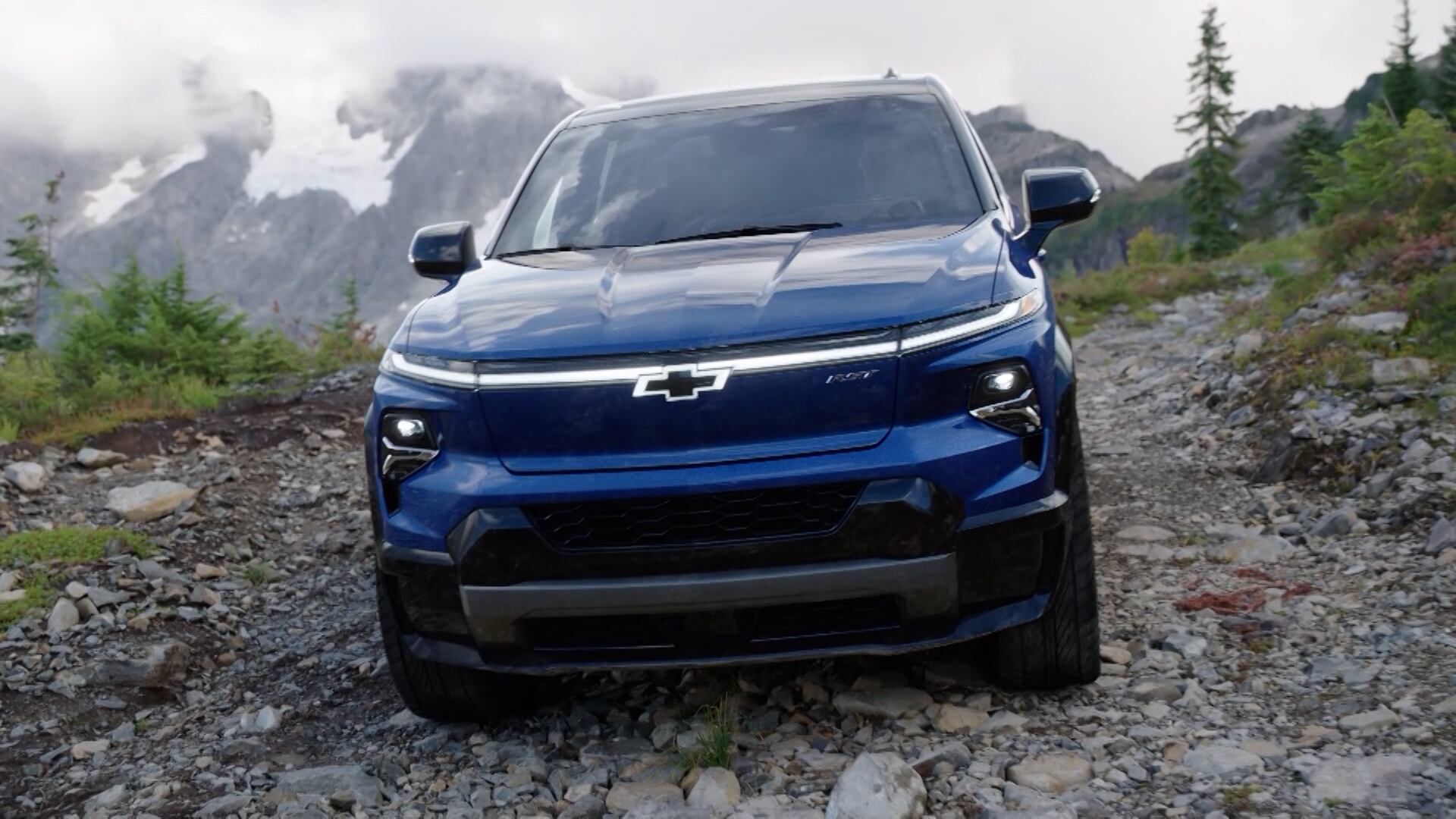
General Motors rolled out the newest addition to its EV fleet with the all-electric Silverado pickup truck. Deborah Wahl, chief marketing officer at GM, joined Cheddar to talk about the latest EV offering and how it matches up to its past gas-powered versions. She said she expects demand to soar after the "first-level truck" sold out in just 12 minutes and talked about steps GM plans to take to regain its title as top U.S. auto seller after being dethroned by Toyota in 2021 with emphasis on the EV market. "I think this is an exciting new inflection point for the market overall, for [an] idea of an all-electric future, and certainly shows that we're extremely committed to the idea of everybody in an electric vehicle," said Wahl.
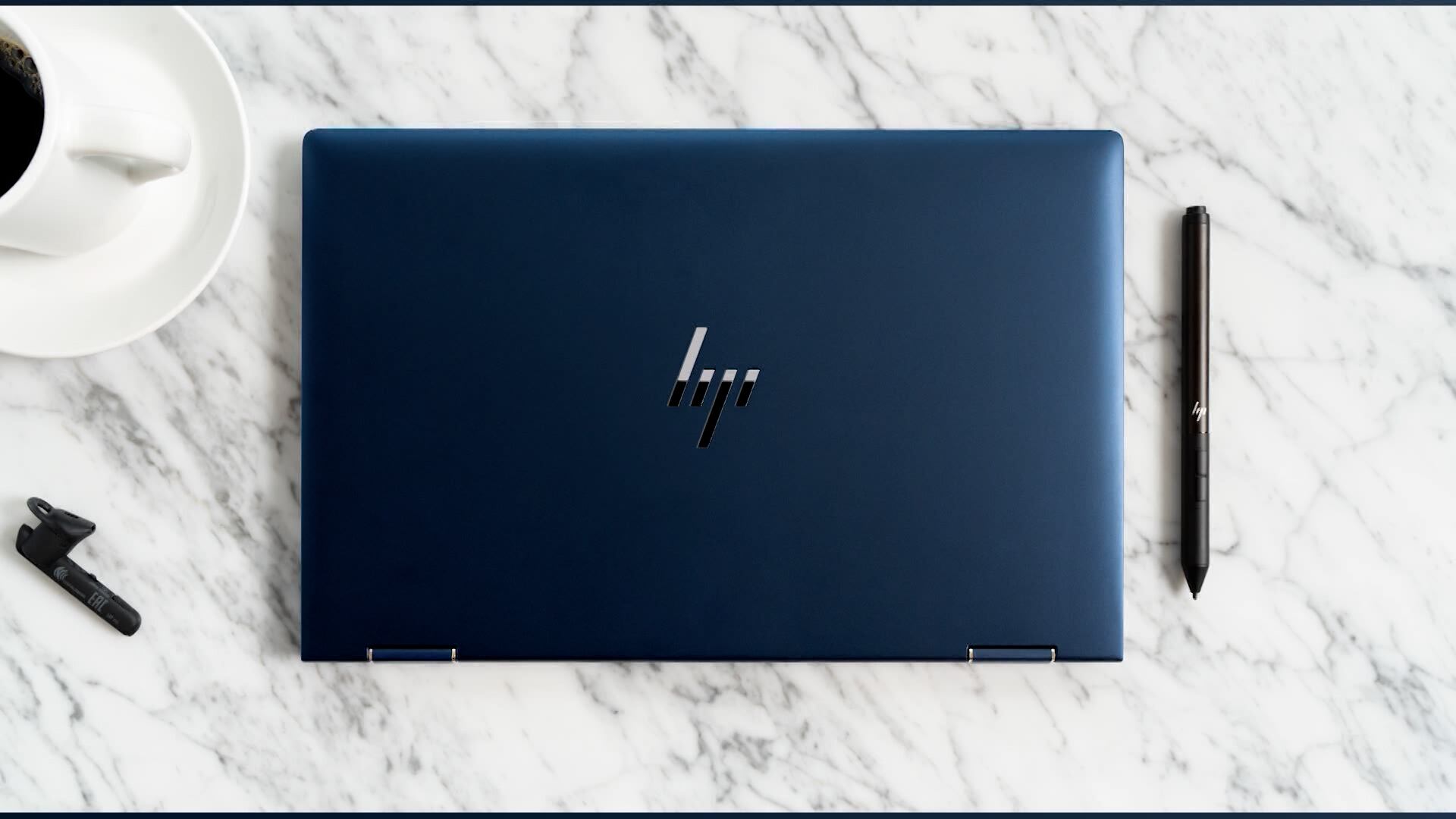
With the annual CES convention underway amid COVID, HP unveiled rolled out a number of new products virtually this year, including new gaming PCs and 4K display monitors. But as industries look toward a greener future, HP is working with the climate crisis in mind. James McCall, chief sustainability officer at HP, joined Cheddar's Kristen Scholer to discuss the company's climate goals, which includes reducing its carbon footprint to net-zero by 2040. He admitted that reaching the ambitious goal will be difficult because much of the company's emissions totals come from third parties. "A large part of our footprint is outside of HP's direct control. A lot of it comes either from our incoming supply chain, the materials, our manufacturing process, or about 30 to 40 percent of it comes from our consumer-use base," McCall told Cheddar.
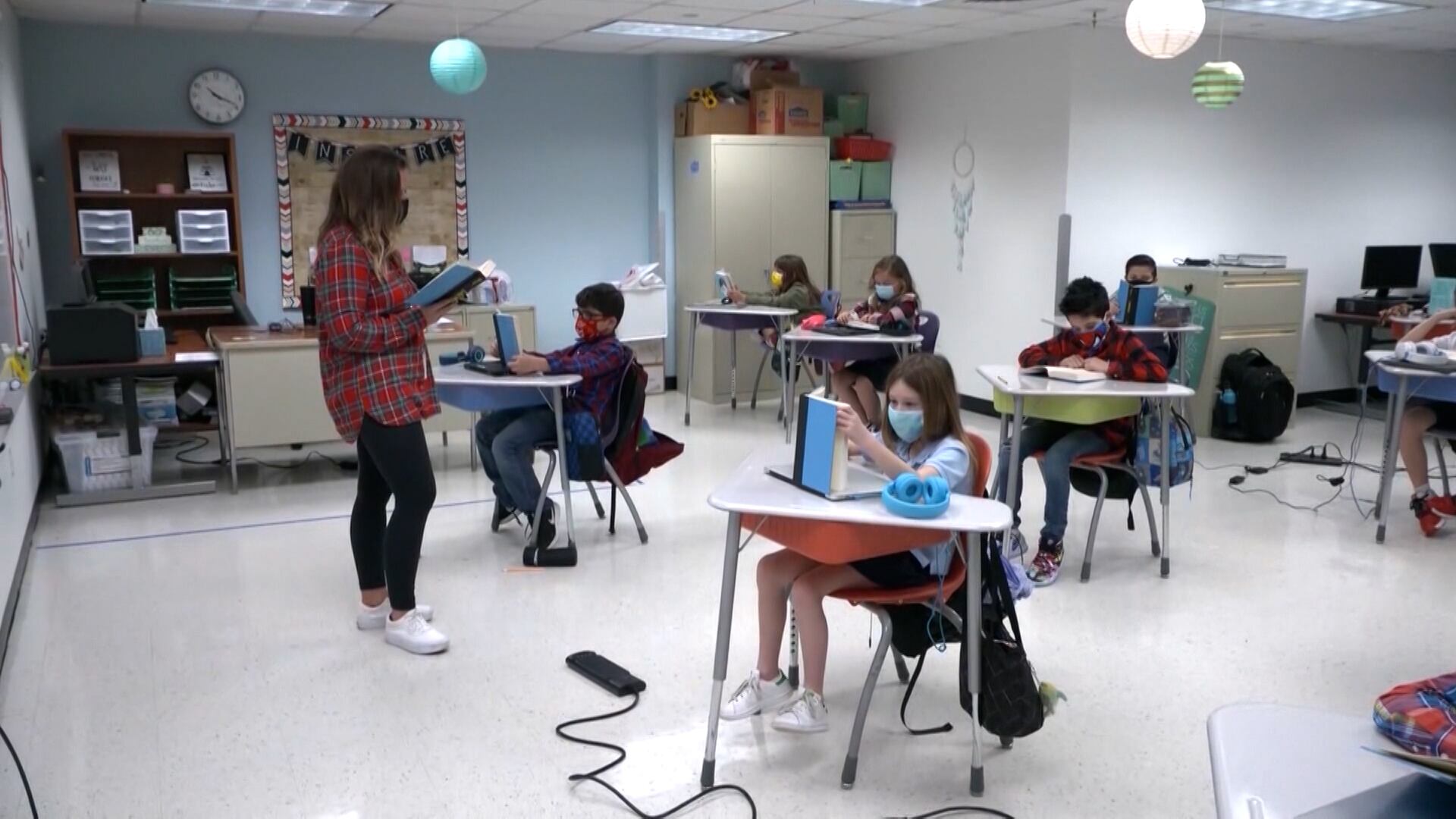
Jared C. Bass, senior director for Higher Education at the Center for American Progress, joins Cheddar News to discuss how schools are navigating the Omicron variant.