By Mark Sherman
The Supreme Court ruled Tuesday that state courts can act as a check on their legislatures in redistricting and other issues affecting federal elections, rejecting arguments by North Carolina Republicans that could have transformed contests for Congress and president.
The justices by a 6-3 vote upheld a decision by North Carolina’s top court that struck down a congressional districting plan as excessively partisan under state law.
The high court did, though, suggest there could be limits on state court efforts to police elections for Congress and president.
Chief Justice John Roberts wrote for the court that “state courts retain the authority to apply state constitutional restraints when legislatures act under the power conferred upon them by the Elections Clause. But federal courts must not abandon their own duty to exercise judicial review.”
The practical effect of the decision is minimal in that the North Carolina Supreme Court, under a new Republican majority, already has undone its redistricting ruling.
Justices Samuel Alito, Clarence Thomas and Neil Gorsuch would have dismissed the case because of the intervening North Carolina court action.
Another redistricting case from Ohio is pending, if the justices want to say more about the issue before next year’s elections.
Former President Barack Obama applauded the outcome. “This ruling is a resounding rejection of the far-right theory that has been peddled by election deniers and extremists seeking to undermine our democracy. And it makes clear that courts can continue defending voters’ rights — in North Carolina and in every state,” Obama said in a statement.
Derek Muller, a University of Iowa law professor and elections expert, said Tuesday's decision leaves some room to challenge state court rulings on federal election issues, “but these are likely to be rare cases”
"The vast majority of state court decisions that could affect federal elections will likely continue without any change,” Muller said.
The North Carolina case attracted outsized attention because four conservative justices had suggested that the Supreme Court should rein in state courts in their oversight of elections for president and Congress.
Opponents of the idea, known as the independent legislature theory, had argued that the effects of a robust ruling for North Carolina Republicans could be much broader than just redistricting and could exacerbate political polarization.
Potentially at stake were more than 170 state constitutional provisions, over 650 state laws delegating authority to make election policies to state and local officials, and thousands of regulations down to the location of polling places, according to the Brennan Center for Justice at the New York University School of Law.
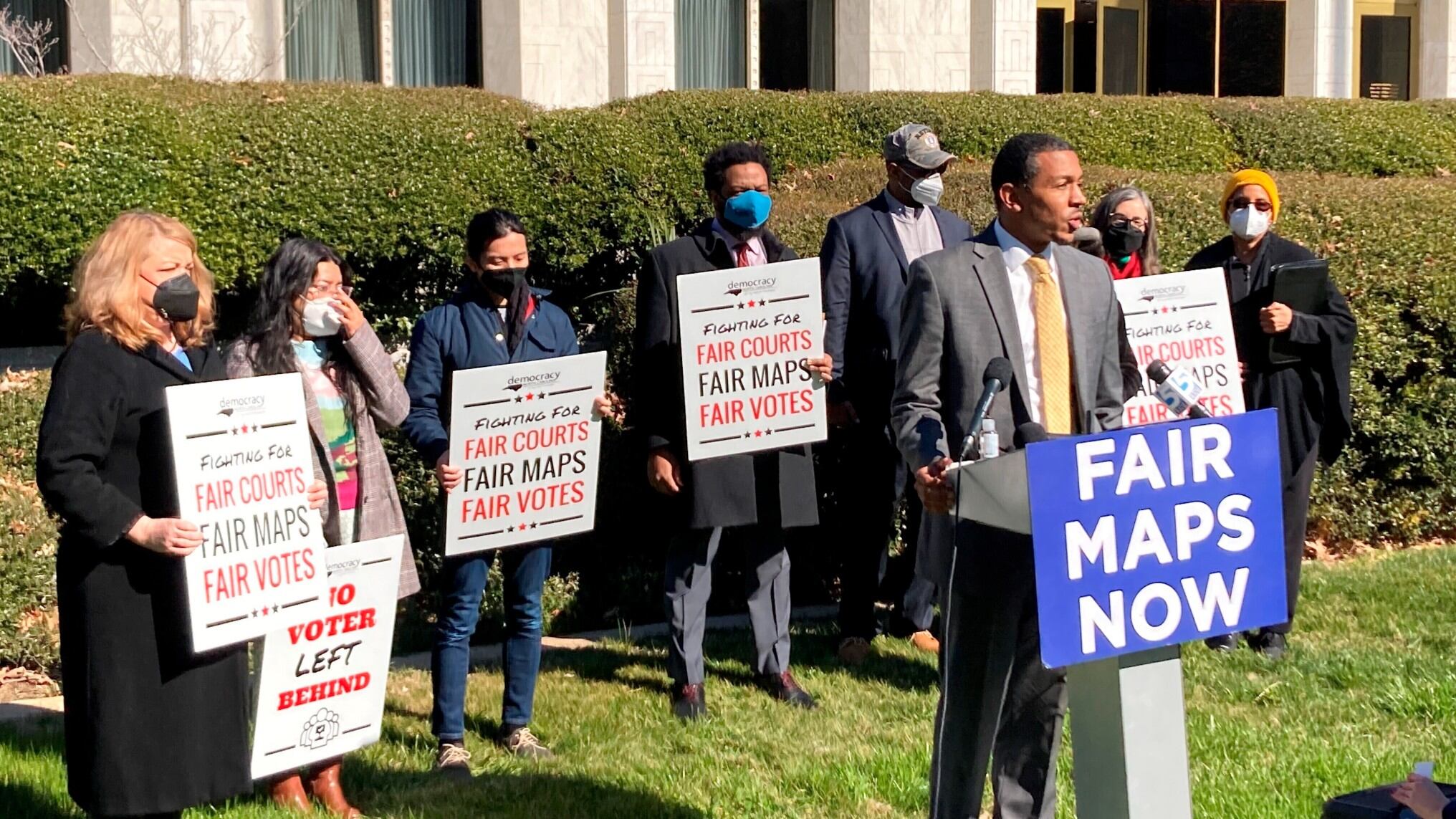
The justices heard arguments in December in an appeal by the state’s Republican leaders in the legislature. Their efforts to draw congressional districts heavily in their favor were blocked by a Democratic majority on the state Supreme Court because the GOP map violated the state Constitution.
A court-drawn map produced seven seats for each party in last year’s midterm elections in highly competitive North Carolina.
The question for the justices was whether the U.S. Constitution’s provision giving state legislatures the power to make the rules about the “times, places and manner” of congressional elections cuts state courts out of the process.
Former federal judge Michael Luttig, a prominent conservative who has joined the legal team defending the North Carolina court decision, said in the fall that the outcome could have transformative effects on American elections. “This is the single most important case on American democracy — and for American democracy — in the nation’s history,” Luttig said.
Leading Republican lawmakers in North Carolina told the Supreme Court that the Constitution’s “carefully drawn lines place the regulation of federal elections in the hands of state legislatures, Congress and no one else.”
During nearly three hours of arguments, the justices seemed skeptical of making a broad ruling in the case. Liberal and conservative justices seemed to take issue with the main thrust of a challenge asking them to essentially eliminate the power of state courts to strike down legislature-drawn, gerrymandered congressional district maps on grounds that they violate state constitutions.
In North Carolina, a new round of redistricting is expected to go forward and produce a map with more Republican districts.
The state's Democratic governor, Roy Cooper, praised Tuesday's decision, but also implicitly acknowledged that it does nothing to inhibit Republicans who control the legislature from drawing a congressional map that is more favorable to them.
Cooper, who by state law can't block redistricting plans approved by lawmakers, said that "Republican legislators in North Carolina and across the country remain a very real threat to democracy as they continue to pass laws to manipulate elections for partisan gain by interfering with the freedom to vote.”