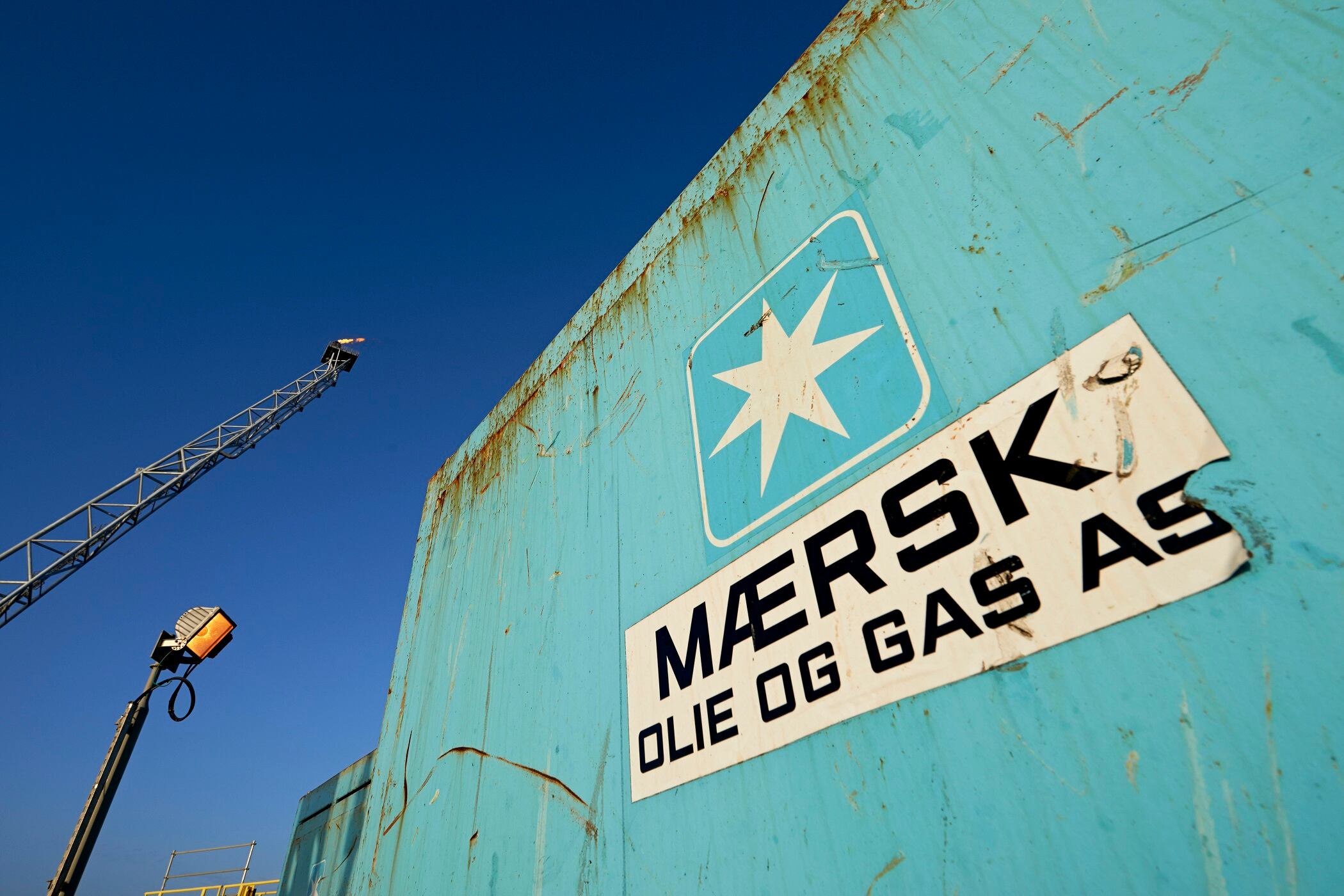
An A.P. Moller-Maersk's oil rig in the North Sea named Halfdan, on Oct. 23, 2013. The world’s biggest shipping company, Denmark’s A.P. Moller-Maersk, has reported a sharp rise in earnings amid strong worldwide demand for shipments of goods. (Claus Bonnerup/Polfoto File via AP)
The world’s biggest shipping company, Denmark’s A.P. Moeller-Maersk, reported Tuesday a sharp rise in earnings amid strong worldwide demand for shipments of goods as the economy bounces back from the coronavirus pandemic.
The Copenhagen-based company said revenue grew nearly 68% in the third quarter, to a record-high $16.6 billion, up from $9.9 billion in the same three-month period last year. It reported profits of $5.5 billion, up from $947 million in the same period last year.
“In the ongoing exceptional market situation, with high demand in the U.S. and global disruptions to the supply chains, we continued to increase capacity and expand our offerings to keep cargo moving for our customers,” CEO Soren Skou said.
The urgent need for more shipping capacity comes amid soaring consumer demand for everything from cars to furniture and labor shortages in the rebounding economy, leading to major backups at ports and higher prices. The supply chain issues have caused a shortage of key equipment: shipping containers.
In a statement, Maersk said its key ocean business is now “expected to grow below the global container demand" amid uncertainty around the supply chain logjams.
The company also announced its intention to acquire Senator International, a global freight forwarding company with strong air freight offerings. And to expand its own air network, Maersk is adding aircraft to its operations: three leased cargo planes to be operational from 2022 and two Boeing aircraft to be deployed by 2024.
Fast Company's Christopher Zara breaks down the OpenAI-Apple legal battle, the AI chip race, and what's next for the future of artificial intelligence.
Glacier CEO Rebecca Hu-Thrams explains how AI-powered robots are making recycling smarter, reducing landfill waste, and transforming the future of waste.
Deep Fission CEO Liz Muller discusses underground nuclear reactors, powering AI, cutting energy costs, and why the future of clean power may be below ground.
Adidas shares how FIFA World Cup 2026 will drive innovation, fan engagement, and billions in opportunity with new gear, technology, and business strategy.
Kristian Kerr, Head of Macro Strategy at LPL Financial, breaks down the firm's 2026 Mid-Year Outlook, recession risks, AI, the Fed, and what's next for markets.
Jess Inskip, Director of Investor Research at StockBrokers.com, breaks down Q2, the AI trade, Fed policy, earnings, and where investors should look next.
Quantum computing is moving from science fiction to national strategy. Infleqtion CEO Matt Kinsella explains Trump's new executive order and what it means.
Americans traveled in record numbers over July 4th despite rising costs. Skift's Sarah Kopit explains what it says about consumers, airfares, and summer travel.