With Trump Consumed by Shutdown, Brazilian President Makes Inroads at Davos
*By Carlo Versano*
He's known as the "Trump of the Tropics." Brazil's new president, Jair Bolsonaro, may grab headlines for his far-right, populist rhetoric and positions ー he's staunchly anti-gay, anti-abortion, anti-affirmative action, and anti-drug decriminalization ーbut he differs from President Trump in one major respect, which is currently on display at the World Economic Forum in Davos, Switzerland.
Bolsonaro wants to form closer economic ties with the developed world, as he made clear in a speech to the global elite gathered in the snowy Swiss enclave.
“We represent a turning point in the eyes of the Brazilian people — a turning point in which ideological bias will no longer take place,” he told attendees on Tuesday.
Vanessa Neumann, the founder of the risk consultancy firm Asymmetrica and author of the book "Blood Profits," told Cheddar that Bolsonaro is at Davos in an attempt to shed his global image as a populist bomb thrower by making clear that the Brazilian economy, the world's ninth largest, is open for business and investment from the outside world.
"He's talking that talk to investors," Neumann said.
Bolsonaro is "the unintended winner" in the ongoing U.S.-China trade war, she noted, as Brazil is a major producer of consumer staples that range from soybeans to beef to oil ー commodities that the Chinese are now importing from Latin America rather than the U.S.
But Bolsonaro is also cognizant that he needs to forge an alliance with the White House. "He wants to increase trade with the U.S.," Neumann said.
Luckily for him, Trump sees in Bolsonaro a kindred spirit, evidenced by his New Year's Day tweet as Bolsonaro took office:
"Congratulations to President @JairBolsonaro who just made a great inauguration speech — the U.S.A. is with you!”
Meanwhile, conservationists and climate change activists worry that part of that openness will come at the expense of Brazil's vast natural beauty ー particularly its protected rainforests. On his first day in office, Bolsonaro transferred rainforest protections to a ministry that is heavily influenced by the agribusiness lobby. He pulled out of hosting a UN climate change conference and is expected by some to follow the U.S. by canceling Brazil's participation in the Paris climate accord, though he has not done so yet.
Bolsonaro's appearance at Davos suggests he is focused on re-engaging with the world economically, even if his domestic policies are far less liberal.
Neumann noted a famous saying about Brazil: It's a country of the future ... and it always will be.
For full interview [click here](https://cheddar.com/videos/far-right-brazilian-president-speaks-of-new-brazil-in-davos).
California's new composting law will affect what residents do in their kitchens. As of this week, Californians will have to recycle excess food in an effort to reduce emissions caused by food waste. Cities and counties will turn recycled food into compost or use it as a renewable energy source. California's new law is the largest mandatory residential food waste recycling program in the country. Rachel Wagoner, Director of the California Department of Resources, Recycling and Recovery called the law 'the biggest change to trash' since recycling started in the 1980s. She joined Cheddar Climate to discuss.
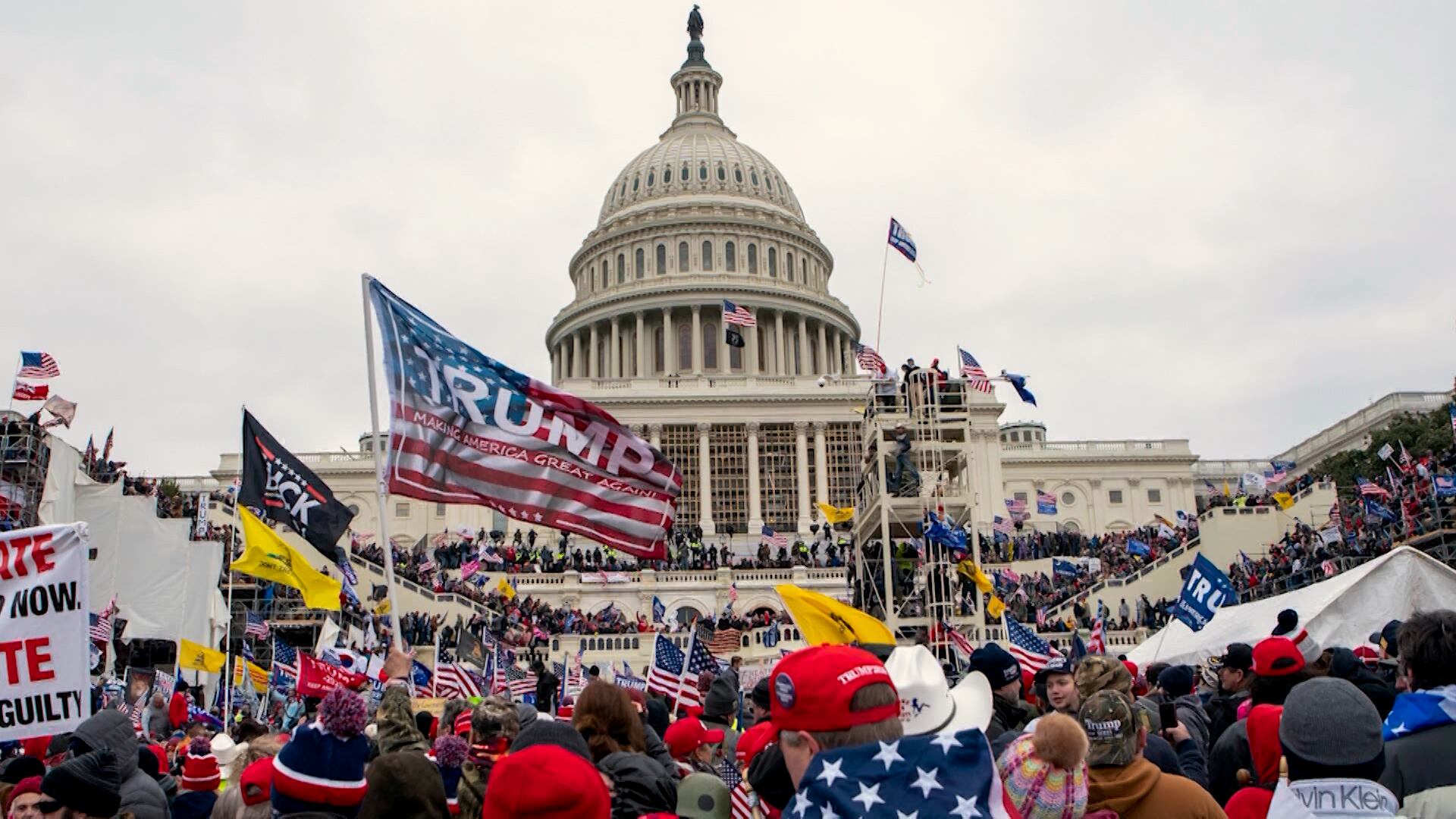
As the U.S. comes up on the first anniversary of the January 6 insurrection.,A.C. Thompson, investigative reporter at ProPublica, joined Cheddar's Baker Machado to discuss updates to American Insurrection by FRONTLINE, ProPublica and Berkeley Journalism’s Investigative Reporting Program. The documentary investigates the attack on the Capitol touched off by the lie that the presidential election was stolen from Donald Trump but with new information gleaned since the event including interviews with lawmakers and law enforcement and the evolution of groups like the Boogaloo Boys and the Proud Boys behind the attack. "In some ways those groups that were kind of the vanguard of January 6 are maybe no longer relevant because their message is everywhere," he said.
A new report from ProPublica and the Washington Post found that Facebook Groups played a major role in the spread of misinformation linked to the January 6 insurrection with more than 650,000 posts claiming that Joe Biden's election victory was illegitimate.
Millions of Americans with young children have relied on the child tax credit since the federal government began issuing checks in July 2021. The last round of payments was sent out just before the Christmas holiday — at the same time as the omicron variant surged. Leah Hamilton, associate professor of social work at Appalachian State University, joined Cheddar to discuss what the end to the tax credit means as the U.S. sees the end of many relief programs and its highest number of COVID cases since the start of the pandemic. "It'll become harder for families to meet their basic needs, increasing national childhood poverty rates and the proportion of families who have difficulty putting food on the table, maintaining stable housing, and paying their bills," Hamilton said. She also pointed to research that the credit as a long-term investment in children offsets claims that it contributes to macroeconomic impacts like inflation.
U.S. President Joe Biden spoke with Ukrainian President Volodymyr Zelensky over the week-end, just days after he spoke with Russian President Vladimir Putin. The call comes as Washington prepares to meet with Moscow on January 10, as tensions mount over Russia's military build up near its border with Ukraine. Cheddar News speaks with Mustafa Tameez, a former advisor to the U.S. Department of Homeland Security, about the issue.
Several Silicon Valley insiders are being accused of contorting a 1990s-era tax break to avoid taxes on millions of dollars of investment profits. The tax break is known as the qualified small business stock exemption, and it allows early investors in certain companies to avoid half of the taxes on up to $10 million in capital gains. A piece recently published in the New York Times says venture capital firms like Andreessen Horowitz replicated the tax exemption by giving shares of companies to friends and family, who would otherwise face a 23.8% capital gains bill. The CEO of Roblox is also accused of replicating the tax break for his family members at least 12 times. Although the loophole known as 'stacking' is considered to be legal, the Times piece implies that the exemption has been manipulated for the ultra-wealthy to become more wealthy. Greycroft co-founder and Chairman Emeritus Alan Patricof joins Cheddar News' Closing Bell to discuss.
Chris Sommerfeldt, City Hall reporter for the New York Daily News, joins Cheddar News' Closing Bell, where he discusses both the wins and losses of Bill de Blasio's eight years as New York City Mayor.