Will SpaceX's Internet Satellite Change the Broadband Game?
Elon Musk’s latest mission is to deliver Americans their internet from space.
The billionaire’s company SpaceX is set to launch two experimental satellites Saturday, the first step in building a large network that could disrupt the broadband industry.
“Satellite internet today, which does exist and is accessible in rural areas, is taken from geostationary orbits, which means they’re super high up, and they stay over one spot on the Earth all the time,” said Space.com associate editor Sarah Lewin. “Whereas SpaceX’s technology would be a lot more satellites, smaller, and not in geostationary orbits. They would be moving around the Earth and giving a lot more coverage.”
Musk is testing a project called Starlink, a constellation of thousands of non-stationary satellites, which aims to improve internet access in hard-to-serve and rural areas. The project is part of an initiative that Musk announced back in 2014, in which he promised “unfettered” and “very low-cost” internet for the masses.
But SpaceX is not the only company in the game. OneWeb, Space Norway, and Telesat have also submitted applications to the FCC.
For full interview [click here](https://cheddar.com/videos/spacexs-mission-wifi).
Joe Cecela, Dream Exchange CEO, explains how they are aiming to form the first minority-controlled company to operate an exchange in U.S. history. Watch!
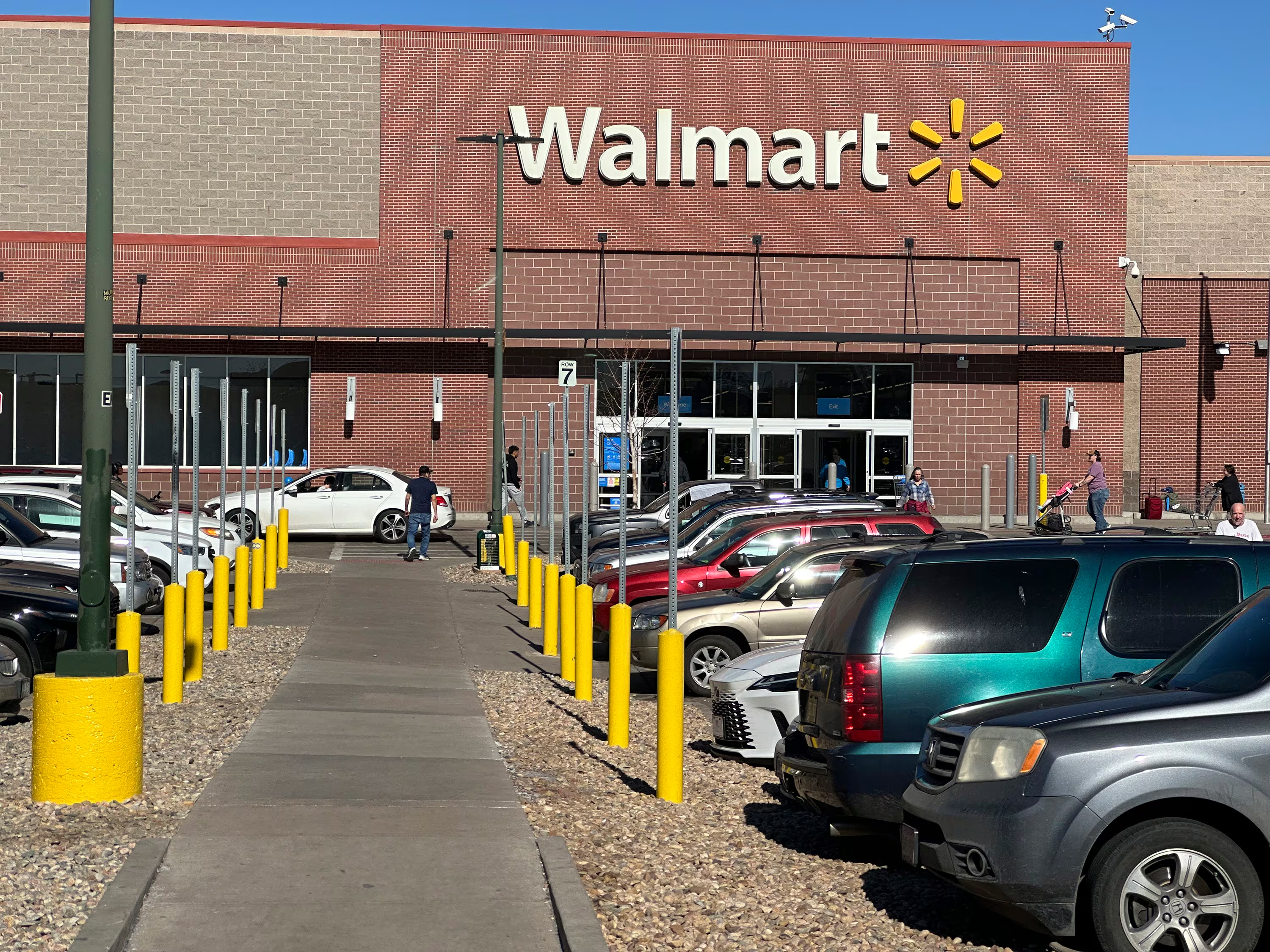
A Michigan judge is putting sponges in the hands of shoplifters and ordering them to wash cars in a Walmart parking lot when spring weather arrives. Genesee County Judge Jeffrey Clothier hopes the unusual form of community service discourages people from stealing from Walmart. The judge also wants to reward shoppers with free car washes. Clothier says he began ordering “Walmart wash” sentences this week for shoplifting at the store in Grand Blanc Township. He believes 75 to 100 people eventually will be ordered to wash cars this spring. Clothier says he will be washing cars alongside them when the time comes.
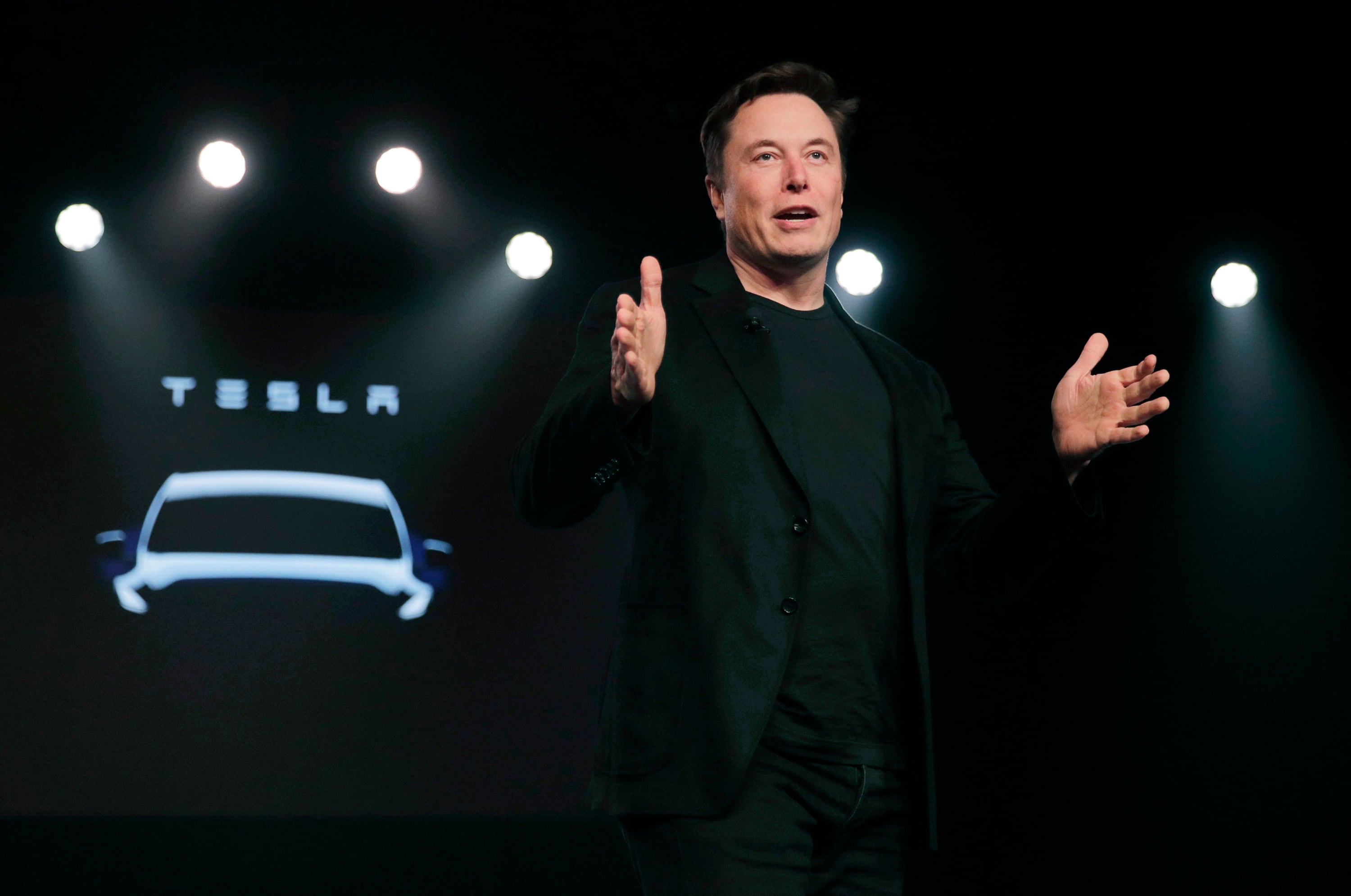
The State Department had been in talks with Elon Musk’s Tesla company to buy armored electric vehicles, but the plans have been put on hold by the Trump administration after reports emerged about a potential $400 million purchase. A State Department spokesperson said the electric car company owned by Musk was the only one that expressed interest back in May 2024. The deal with Tesla was only in its planning phases but it was forecast to be the largest contract of the year. It shows how some of his wealth has come and was still expected to come from taxpayers.
At 100 years old, the Goodyear Blimp is an ageless star in the sky. The 246-foot-long airship will be in the background of the Daytona 500 — flying roughly 1,500 feet above Daytona International Speedway, actually — to celebrate its greatest anniversary tour. Even though remote camera technologies are improving regularly and changing the landscape of aerial footage, the blimp continues to carve out a niche. At Daytona, with the usual 40-car field racing around a 2½-mile superspeedway, views from the blimp aptly provide the scope of the event.
You'll just have to wait for interest rates (and prices) to go down. Plus, this deal's a steel, the big carmaker wedding is off, and bribery is back, baby!
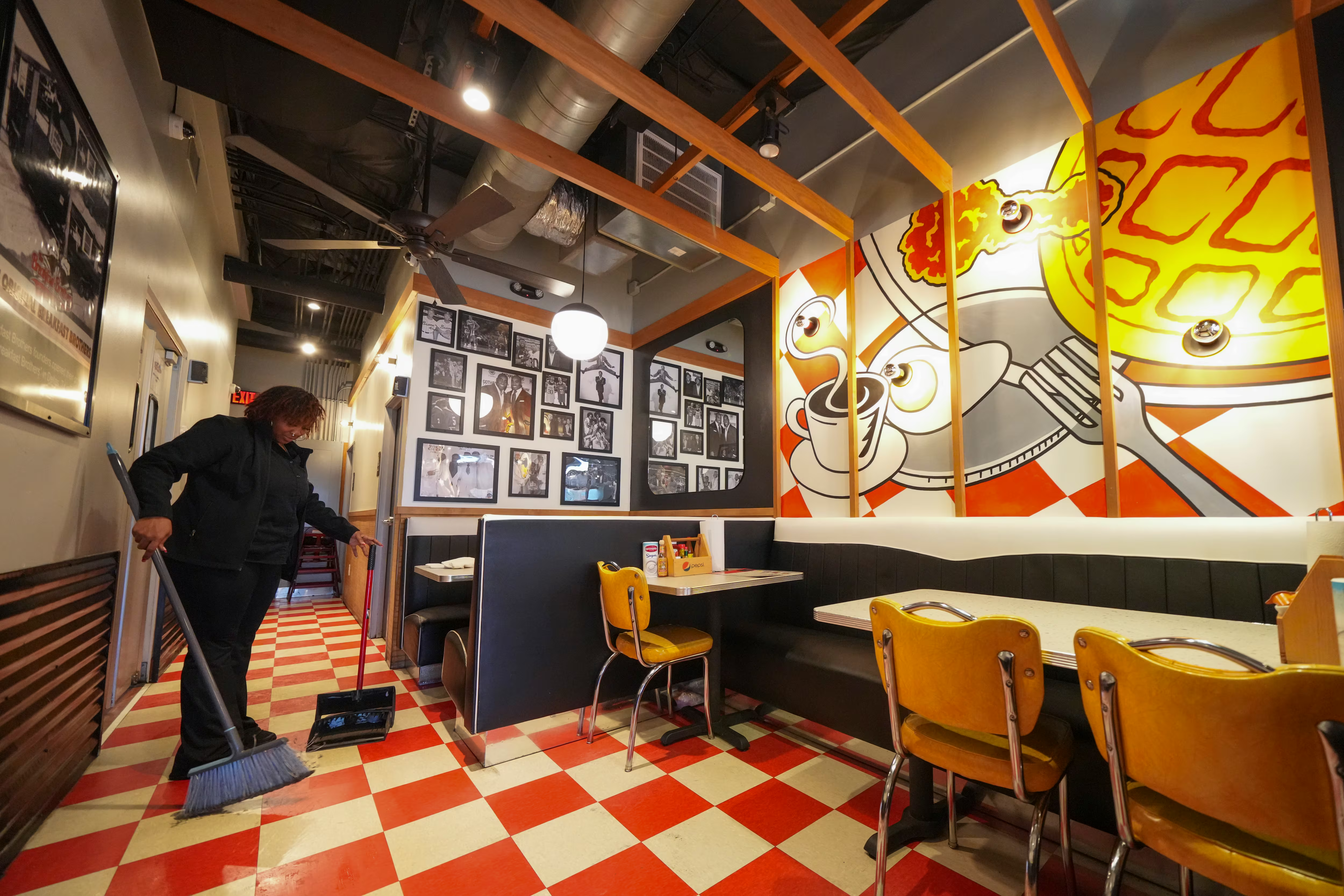
It’s a chicken-and-egg problem: Restaurants are struggling with record-high U.S. egg prices, but their omelets, scrambles and huevos rancheros may be part of the problem. Breakfast is booming at U.S. eateries. First Watch, a restaurant chain that serves breakfast, brunch and lunch, nearly quadrupled its locations over the past decade to 570. Fast-food chains like Starbucks and Wendy's added more egg-filled breakfast items. In normal times, egg producers could meet the demand. But a bird flu outbreak that has forced them to slaughter their flocks is making supplies scarcer and pushing up prices. Some restaurants like Waffle House have added a surcharge to offset their costs.
William Falcon, CEO and Founder of Lightning AI, discusses the ongoing feud between Elon Musk and Sam Altman, and how everyday people can use AI in their lives.