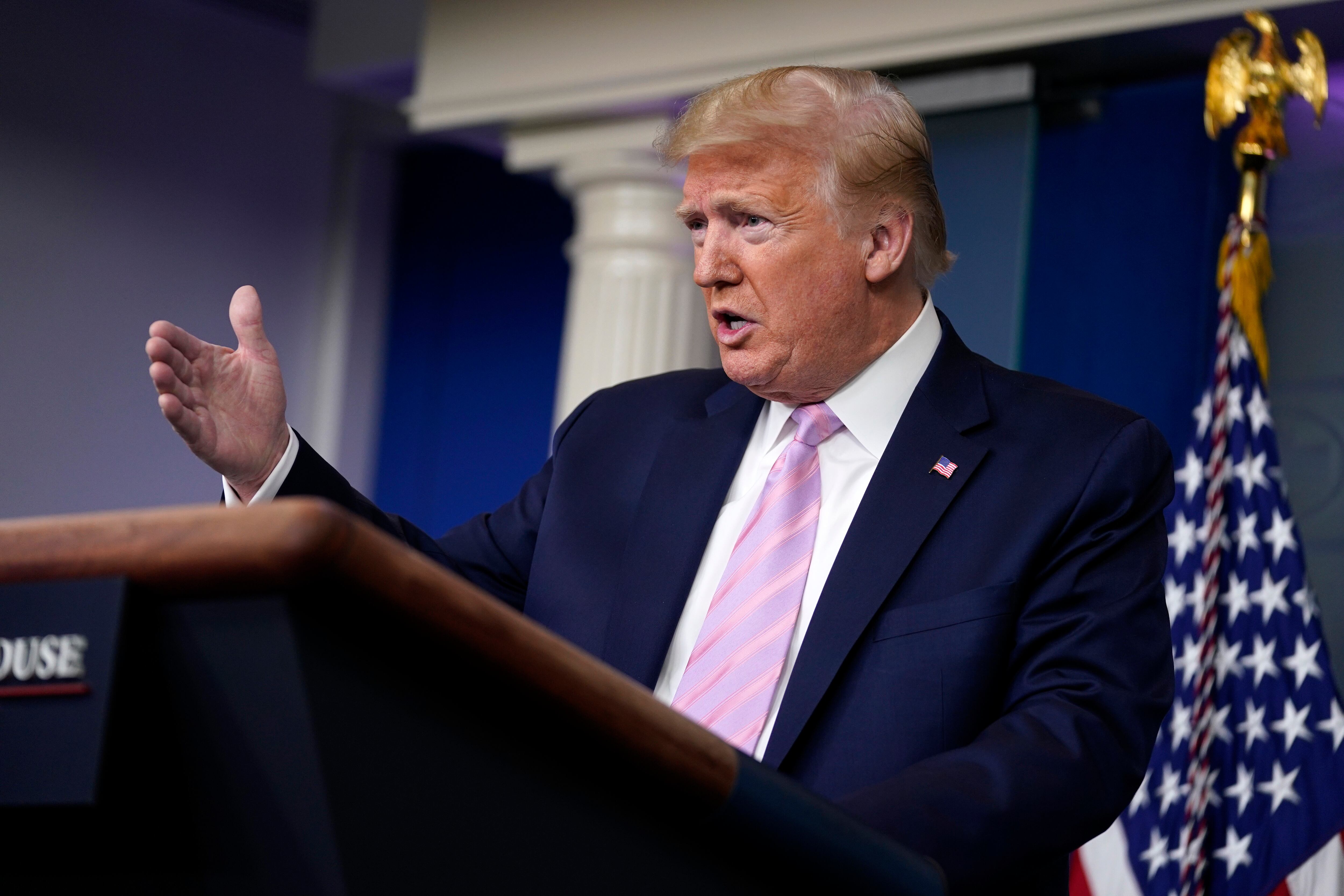
President Donald Trump speaks during a coronavirus task force briefing at the White House, Friday, April 10, 2020, in Washington. (AP Photo/Evan Vucci)
By Jill Colvin and Darline Superville
At the end of a week officials had warned would be this generation's Pearl Harbor, White House officials pointed to hopeful signs Friday that the spread of the coronavirus could be slowing, even as President Donald Trump insisted he would not move to reopen the country until it is safe.
At the same time, Trump said he would be announcing the launch of what he dubbed the "Opening Our Country" task force next Tuesday to work toward that goal.
"I want to get it open as soon as possible," he said at a Good Friday briefing while adding: "The facts are going to determine what I do."
With the economy reeling and job losses soaring, Trump has been itching to reopen the country, drawing alarm from health experts who warn that doing so too quickly could spark a deadly resurgence that could undermine current distancing efforts.
But Trump, who had once set Easter Sunday as the date he hoped people in certain parts of the country might begin to return to work and pack church pews, said he would continue to listen to health experts like Drs. Anthony Fauci and Deborah Birx as he considers what he described as the "biggest decision I've ever had to make."
"I listen to them about everything," he claimed, adding: "We're not doing anything until we know that this country is going be healthy. We don't want to go back and start doing it over again."
Trump's comments came at the end of a week that officials had warned would be a devastating one for the country. Hours earlier, Johns Hopkins University announced that the worldwide death toll from the coronavirus had hit a bleak milestone: 100,000 people. That includes about 18,000 in the U.S., where about half-million people have been confirmed infected.
More than 40 percent of the deaths in the U.S so far have happened in New York state, which reported 777 new deaths on Friday.
But there were also signs of hope, with state officials reporting that the number of people in intensive care dropped for the first time there since mid-March. Hospitalizations are also slowing, with 290 new patients admitted in a single day versus daily increases of more than 1,000 last week.
While bemoaning the death numbers as "so horrible," Trump also said, "Tremendous progress is being made."
"In the midst of grief and pain, we're seeing clear signs that our aggressive strategy is saving countless lives," he said, pointing to models that are now forecasting far fewer U.S. deaths than had originally been predicted.
Health experts have warned, however, that if the country rolls back restrictions too quickly, case levels could once again begin to soar, especially without widespread testing to determine who might be a carrier of the virus. While the new coronavirus causes mild or moderate symptoms for most people, for some, especially older adults and people with existing health problems, it can cause more severe illness or death. And research has shown that people can be highly infectious even if they are not displaying symptoms.
"When we decide, at a proper time, when we're going to be relaxing some of the restrictions, there's no doubt you're going to see cases," he said. "The question is how you respond to them."
Liana Guzmán, CEO of FOLX Health, joins Cheddar News to discuss the company launching billboards across the country in response to anti-LGBTQ+ legislation.
President Biden has announced an additional $800 million in military assistance to Ukraine, including artillery, armored personnel carriers, and helicopters. It comes as Russian forces appear to be preparing for a new, aggressive offensive in the eastern part of Ukraine. Paul McLeary, defense reporter for Politico, joined Cheddar to discuss this new round of aid and what it means for the U.S. commitment to arming the embattled country.
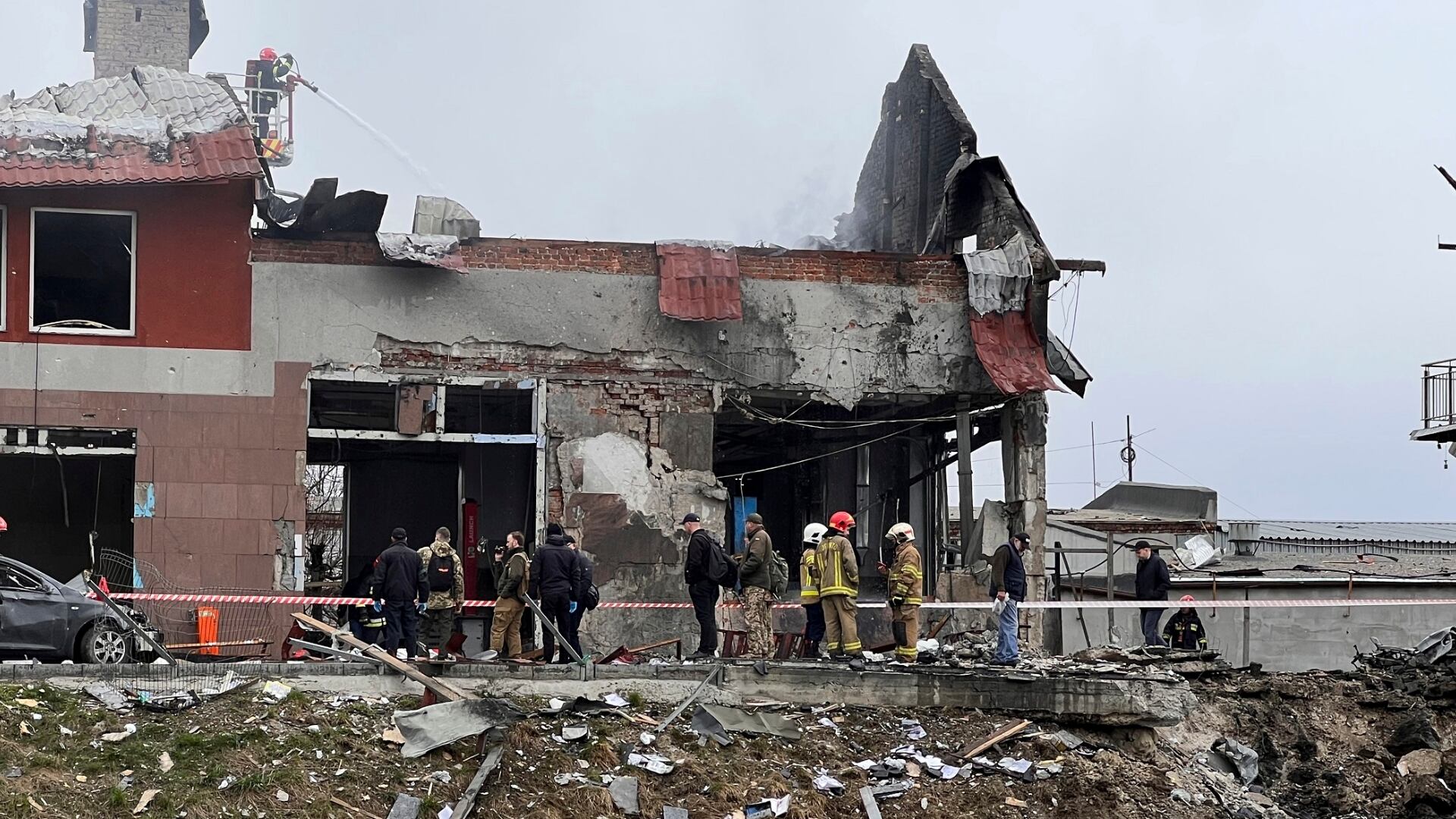
Catching you up on what you need to know on April 18, 2022, with Russian missile attacks on the Ukrainian city of Lviv killing seven, mass shootings in South Carolina and Pittsburgh, Lucky Charms cereal under official investigation by the FDA, and more.
Activism is growing around the country in response to school boards banning books from shelves that focus on sexuality, gender, identity, or race. Jen Cousins, co-founder of The Florida Freedom to Read Project, joins Cheddar News to discuss.
As the Russian invasion of Ukraine intensifies, President Biden has announced a ban on importing Russian oil, gas, and energy. To discuss how this ban will impact the war and Americans, Amir Handjani, non-resident fellow at Quincy Institute, joins Cheddar News.
Thousands of protesters around the world are expressing their solidarity with Ukraine against Russia's invasion.
Jason Beardsley, national executive director of the Association of the U.S. Navy and national security expert, joins Cheddar News to discuss.
As gas prices surge amid the Russian invasion of Ukraine, other nations could potentially transition faster to using clean energy than previously expected. Philip K. Verleger, a senior fellow at the Niskanen Center, joined Cheddar News to explain how this could be a possibility in the near future. "Part of the reason I think we have this invasion and the tantrum that's being thrown by Russia, terrible tantrum, is because the Russians were trying to slow down the transition," he said. "Ironically they speeded it up."
Following the invasion of Ukraine, a multitude of Western companies have paused doing business with Russia. PepsiCo, Coca-Cola, McDonald's, and Starbucks are the most recent companies to temporarily cease operations in Russia. Dean of Miami Herbert Business School at the University of Miami, John Quelch, joined Cheddar News to discuss what message this sends to Russia and the Russian consumer. “I would not underestimate the collective strength of all of these multinational companies, essentially coming together to make their collective statement in support of the political statements that have come out of Washington," he said.
The war in Ukraine continues to reveal heartbreaking gut-wrenching stories. The war in itself is not only devastating but also expensive. Experts estimate that Russia is draining nearly $20 million dollars each day to continue occupying and invading Ukraine. All this could force the country to turn to cryptocurrencies. It's a major turn for the country that briefly considered outlined digital assets entirely, but it could also have serious implications for cryptos. Managing Director at Quantum Fintech Group, Harry Yeh, joined Cheddar to discuss more.