The weather is breaking in parts of the U.S., and people are anxious to get outside and meet up. White Claw Hard Seltzer is hoping to capitalize as friends begin to mingle after a year of pandemic lockdowns.
The boozy beverage brand is introducing White Claw Surge, available in blood orange and cranberry flavors, which takes summer sipping to a new level with its 8 percent alcohol content, a 3 percent jump from existing products. John Shea, chief marketing officer at White Claw Hard Seltzer, said the brand was inspired by its consumer base to create the new line of beverages.
"We've got the biggest fanbase, extremely passionate. We don't have to look too far when we're looking for new inspiration on new products," Shea told Cheddar. "They're vocal about it and we've got kind of built-in consumer research just by following social media, so that's where we take our lead."
The brand is also rolling out a line of alcoholic iced teas that will be available in lemon, raspberry, peach, and mango. Those teas, however, will retain the typical 5 percent alcohol content.
With demand for hard seltzer on the rise in the U.S. Shea said the company has already taken steps to make sure there is enough product heading to store shelves by building two "breweries." He said the factories will help the brand remain the leader in the hard seltzer category.
"There's been a big wave into the hard seltzer market. Last year at this time we had about six competitors. Now there's about 170. White Claw's bigger than all of them combined. So our fans have really gotten behind the product and are looking for new innovation, and that's what we're bringing to them," he said.
Shea said the company plans to maintain its position at the top of the hard seltzer category by continuing to listen to its consumers and elevating its offerings with quality products.
"It really starts with the liquid, an amazing, refreshing liquid, and then for White Claw, it's just about pure uncomplicated fun. It's a simple product, light flavors, really refreshing," he noted.
General Motors reported its Q4 earnings Tuesday. While chip shortages impacted sales and revenue last quarter, Paul Jacobson, GM Chief Financial Officer, told Cheddar chip availability has gotten better since Q3. This is crucial as GM has pivoted its focus toward electric vehicles. It recently announced it will be building a new battery plant in Michigan, making $35 billion in EV investments, and producing a million electric vehicles by 2025.
Google’s philanthropy arm, Google.org, recently announced a $10 million grant for the AARP Foundation to aid in teaching digital skills to low income older workers. As the implementation of hybrid work expands, a greater emphasis is being placed on helping workers 50 years old and up — especially among women and people of color — to be digitally literate in order to keep the workplace generationally diverse. Lisa Marsh Ryerson, president of the AARP Foundation, joined Cheddar News to talk about the curriculum of the partnership. "Those of us who are 50 and older are not digital natives, so we do have a learning curve that we have to address," she noted.
AT&T announced earlier today it is spinning off its media properties in WarnerMedia in a merger with Discovery in a $43 billion deal.Scott Rostan, founder and CEO at Training The Street, joined Cheddar to talk about what the unwinding of the telecom giant's Time Warner media properties means for investors. "I think the investor sentiment is they're digesting the new information, and they're looking into the dividend, especially the reduction of the dividend," said Rostan, noting the transaction allows AT&T to focus on its core telecommunications business.
Greg Bishop, Senior Writer for Sports Illustrated, joins Cheddar News' Closing Bell, where he says Tom Brady's legacy is all about 'progress' and expects the future Hall of Famer to bolster his entrepreneurial ventures following his retirement.
Anthony Saccaro, Founder and President of Providence Financial, joins Cheddar News' Closing Bell, where he elaborates on why he is excited that the market is beginning to rebound and believes February has the potential to be a good month after a turbulent January.
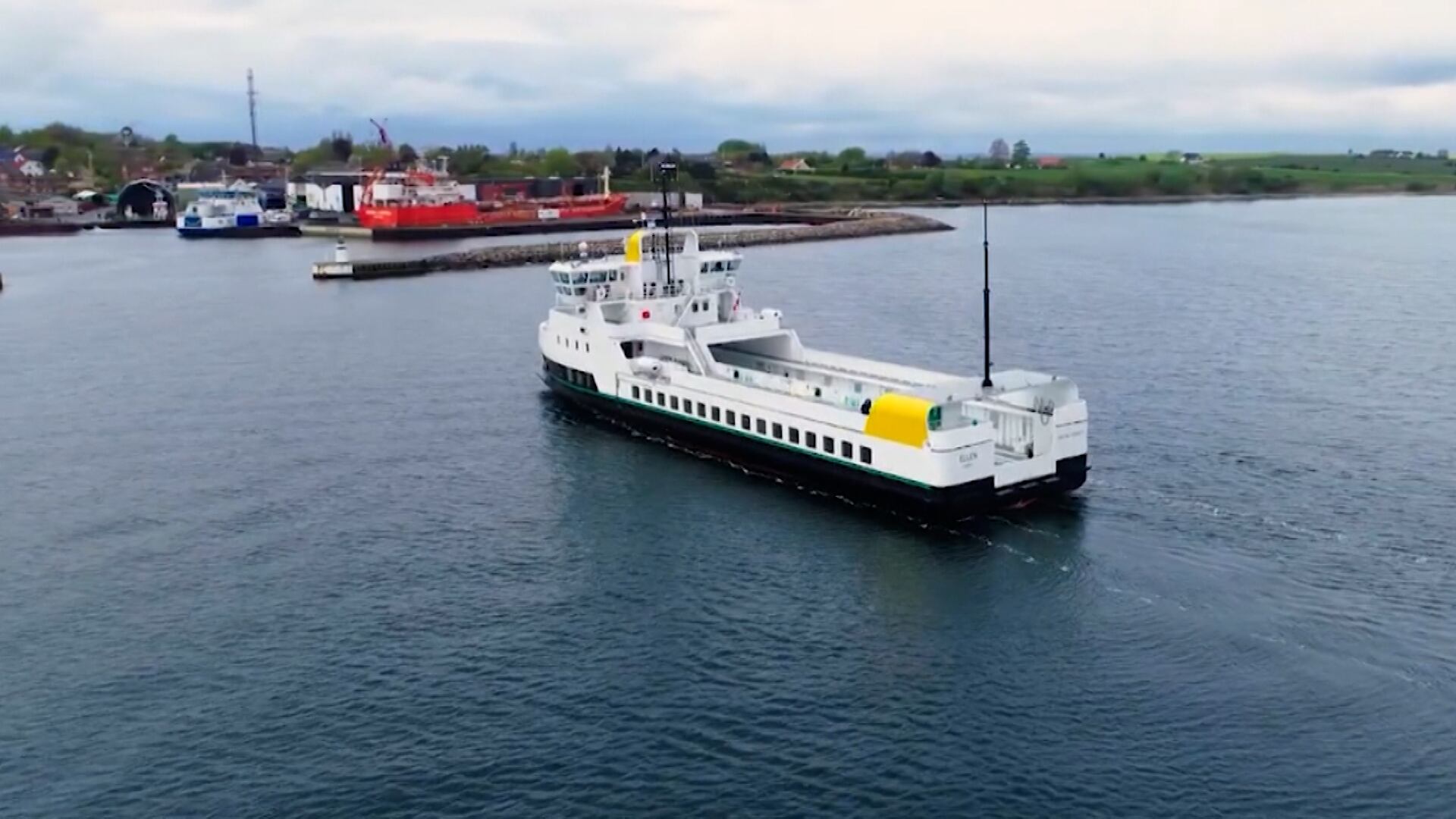
A 2021 report from UK Research and Innovation found that the shipping industry makes up at least 2.5 percent of the world's total CO2 emissions. It's a problem that energy solutions company, Leclanché, is trying to solve. Founded in 1909, the company has been developing and producing batteries for more than 100 years. Today, Leclanché's lithium-ion battery is used to electrify not just ships, but also railroad locomotives, trucks, and specialty vehicles. Cheddar News spoke with Pierre Blanc, chief technology and industrial officer of Leclanché, to discuss.