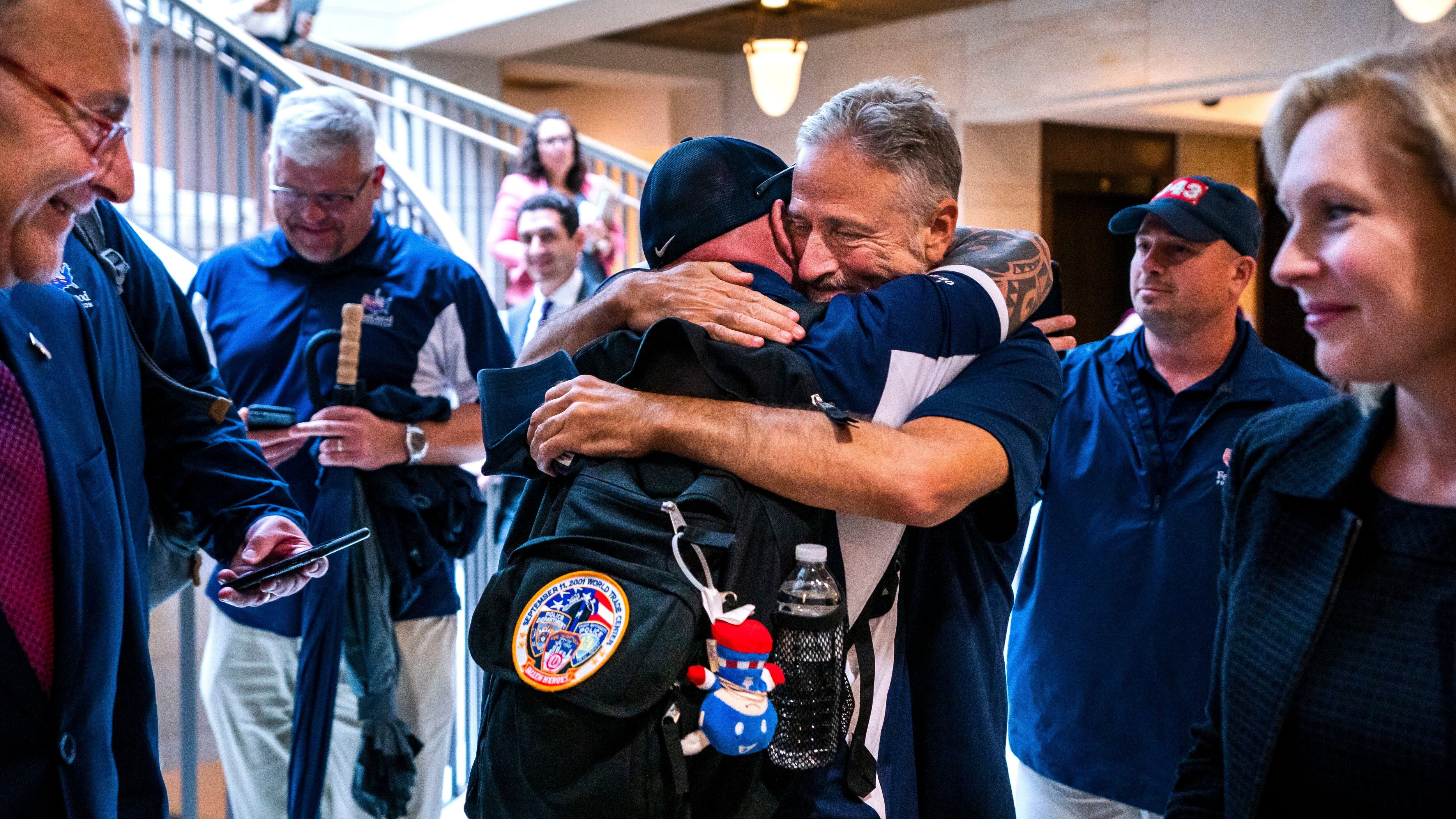
Tuesday’s 97-2 vote in the Senate to extend permanent protections for 9/11 first responders came after many years of visits to Capitol Hill — more than 280 for John Feal alone, a former demolition specialist and responder from Long Island whose advocacy has helped bring a national conversation to the issue.
And minutes after the lopsided vote, Feal made sure to alert lawmakers that his days of tirelessly knocking down their doors are thankfully coming to a close.
“We’ll put down our swords,” he said on Capitol Hill, acknowledging the good-faith efforts that Senate Majority Leader Mitch McConnell exhibited in recent months to get the bill a clean vote.
After all, during a recent trip to Washington, Feal came bearing a special memento for McConnell: the NYPD badge of Detective Luis Alvarez who died on June 29, a gesture that Jon Stewart recently told Cheddar he had hoped would secure passage of the measure.
McConnell’s commitment to Feal was widely noticed.
Jake Lemonda, the president of the Uniformed Fire Officers Association, told Cheddar, “When someone gives you their word, that’s their bond. I have so much respect. He stuck to his word. And I thank him.”
Republican Rep. Pete King added, “You have to give [McConnell] credit.” King was joined by his GOP colleague in the Senate Cory Gardner to gather support for the compensation fund from skeptical conservatives, although two Republicans — Senator Rand Paul of Kentucky and Senator Mike Lee of Utah — were on full blast Tuesday with their no votes.
“Trying to block this was inexcusable,” Rep. King told Cheddar about Paul and Lee.
There is a line that some New York Democrats like Rep. Carolyn Maloney and House Judiciary Chairman Jerry Nadler say about the immediate post-9/11 reality: that New Yorkers were told, as Maloney puts it, a “toxic lie” — that the air at Ground Zero was safe to breathe. (Former EPA Administrator Christine Todd Whitman apologized in 2016 for her role in government-led misinformation in the fall of 2001.)
“Government told them to go back,” Maloney told Cheddar Tuesday on Capitol Hill. History] will show it was a "horrible, horrible judgment and horrible decision.”
But Tuesday was not the day for the sharpest of barbs, nor the most accusatory of finger-pointing. It was, instead, a day of muted celebration: a victory of a hard-fought battle that has come — and continues to come — with devastating consequences (members of Congress have indicated that 18 people have died in the past month alone from 9/11-related illnesses). And while the bill got its final push over the goal line from McConnell, a simple credo has united the advocacy efforts for so many others along the way. As Maloney told Cheddar Tuesday, “We promised we would never forget.”
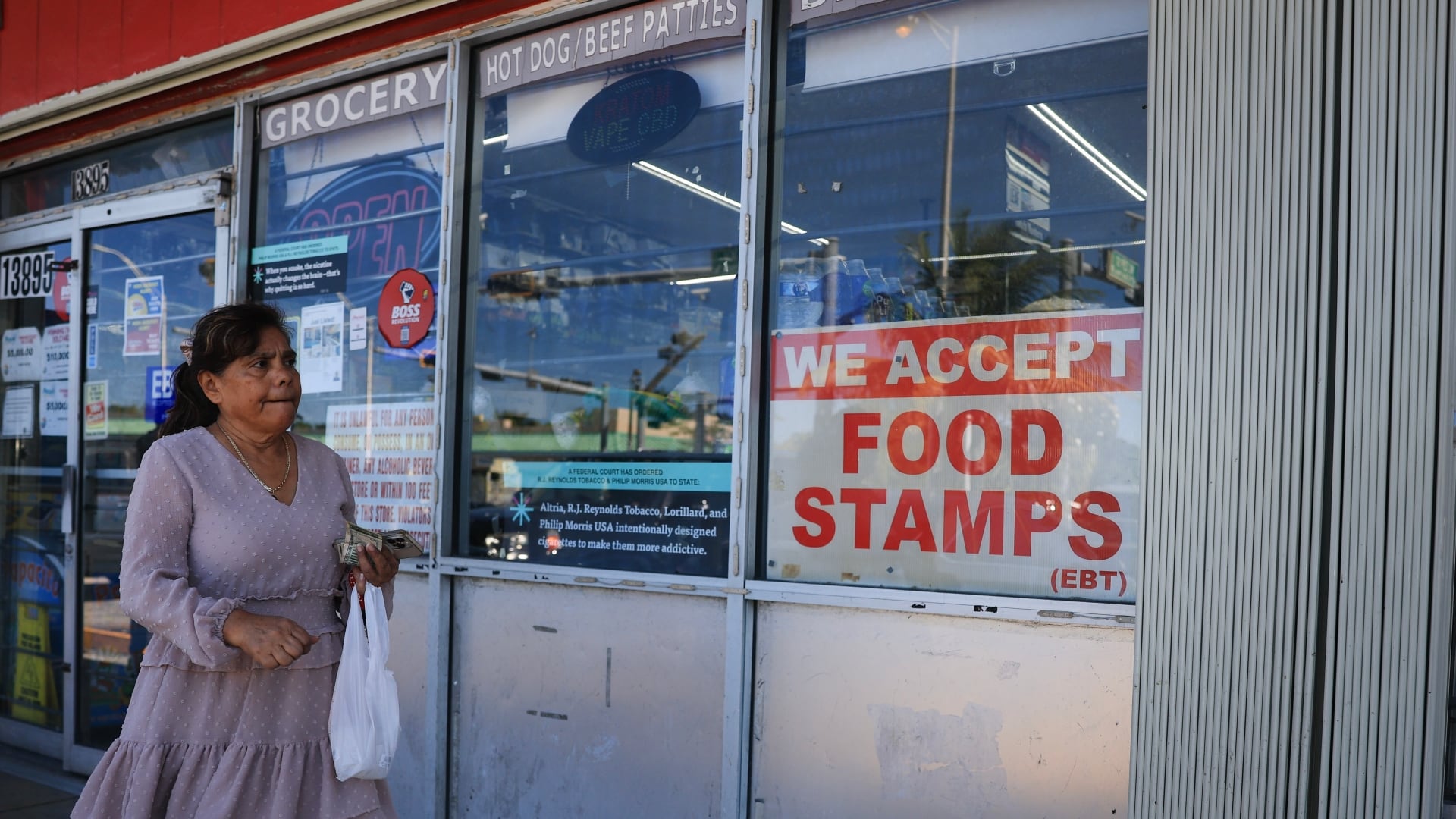
Many U.S. consumers say they’ve noticed higher than usual prices for holiday gifts in recent months, according to a a December poll from The Associated Press-NORC Center for Public Affairs Research. A contributing factor is the unusually high import taxes the Trump administration put on foreign goods. While the worst-case consumer impact that many economists foresaw from the administration’s trade policies hasn’t materialized, some popular gift items have been affected more than others. Most toys and electronics sold in the U.S. come from China. So do most holiday decorations. Jewelry prices have risen due to the cost of gold.
Serbia’s prosecutor for organized crime has charged a government minister and three others with abuse of position and falsifying of documents related to a luxury real estate project linked to U.S. President Donald Trump’s son-in-law Jared Kushner. The charges came on Monday. The investigation centers on a controversy over a a bombed-out military complex in central Belgrade that was a protected cultural heritage zone but that is facing redevelopment as a luxury compound by a company linked to Kushner. The $500 million proposal to build a high-rise hotel, offices and shops at the site has met fierce opposition from experts at home and abroad. Selakovic and others allegedly illegally lifted the protection status for the site by falsifying documentation.
President Donald Trump has signed an executive order to block states from regulating artificial intelligence. He argues that heavy regulations could stifle the industry, especially given competition from China. Trump says the U.S. needs a unified approach to AI regulation to avoid complications from state-by-state rules. The order directs the administration to draw up a list of problematic regulations for the Attorney General to challenge. States with laws could lose access to broadband funding, according to the text of the order. Some states have already passed AI laws focusing on transparency and limiting data collection.
The New York Times and President Donald Trump are fighting again. The news outlet said Wednesday it won't be deterred by Trump's “false and inflammatory language” from writing about the 79-year-old president's health. The Times has done a handful of stories on that topic recently, including an opinion column that said Trump is “starting to give President Joe Biden vibes.” In a Truth Social post, Trump said it might be treasonous for outlets like the Times to do “FAKE” reports about his health and "we should do something about it.” The Republican president already has a pending lawsuit against the newspaper for its past reports on his finances.
President Donald Trump says he will allow Nvidia to sell its H200 computer chip used in the development of artificial intelligence to “approved customers” in China. Trump said Monday on his social media site that he had informed China’s leader Xi Jinping and “President Xi responded positively!” There had been concerns about allowing advanced computer chips into China as it could help them to compete against the U.S. in building out AI capabilities. But there has also been a desire to develop the AI ecosystem with American companies such as chipmaker Nvidia.
House Republicans in key battleground districts are working to contain the political fallout expected when thousands of their constituents face higher bills for health insurance coverage obtained through the Affordable Care Act. For a critical sliver of the GOP majority, the impending expiration of the enhanced premium tax credits after Dec. 31 could be a major political liability as they potentially face midterm headwinds in a 2026 election critical to President Donald Trump’s agenda. For Democrats, the party’s strategy for capturing the House majority revolves around pinning higher bills for groceries, health insurance and utilities on Republicans.
Load More