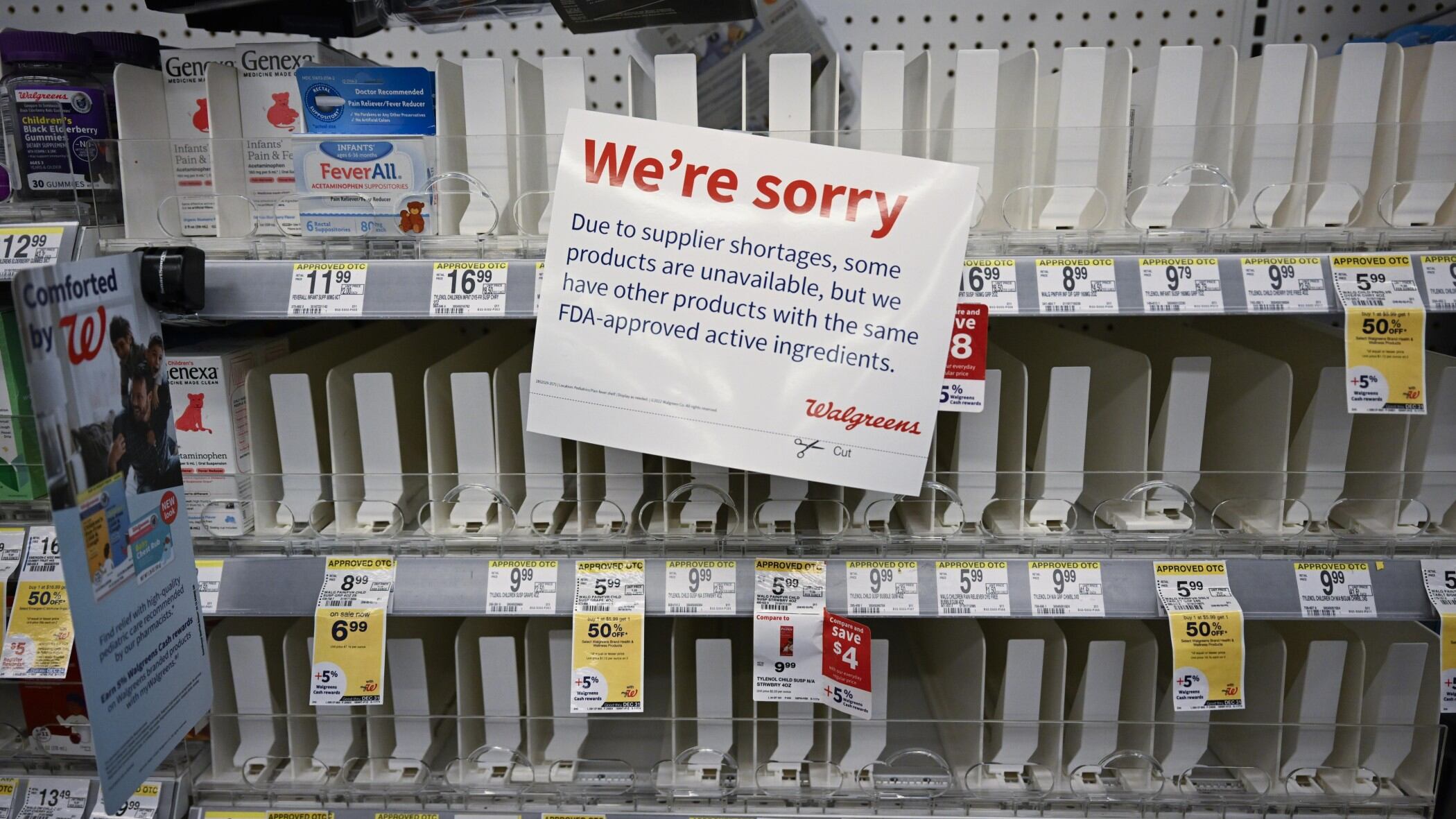
A sign hangs near the section for children's medicine at a Walgreens in New York City on Dec.19, 2022. (Photo by Fatih Aktas/Anadolu Agency via Getty Images)
Walgreens has ended limits it had imposed recently for online purchases of children’s over-the-counter fever reducing products.
The drugstore chain said improved supplies allowed it to lift its restriction of six products. The company had placed no limit on in-store purchases.
Last month both Walgreens and CVS Health restricted purchases of some over-the-counter children’s medicines citing supply issues. CVS Health put a two-product limit on all children’s pain relief products bought through its pharmacies or online.
A CVS Health spokeswoman said Tuesday that limits on some children's medicines remain in place. She did not offer a time frame for when it might end.
An unusually fast start to the annual U.S. flu season, plus a spike in other respiratory illnesses, created a surge in demand for fever relievers and other products people can buy without a prescription.
Shortages of medicines like Children’s Tylenol developed, varying around the country and sometimes even within communities.
Experts who track medicine shortages said in December that the problem could persist through the winter cold-and-flu season. But they noted that it should not last as long as other recent shortages of baby formula or prescription drugs.
For Trump, markets matter more than polls. Luke Broadwater, White House correspondent for The New York Times, examines how Wall Street guides decisions.
As political and economic uncertainty rises, Americans are seeking second passports and golden visas. Latitude Group’s CEO explains what’s driving the surge.
As AI and electrification drive record power demand, nuclear energy returns to the spotlight. Lightbridge CEO explains how advanced fuel could reshape the grid.
Shark Tank’s Kevin O’Leary breaks down his Hollywood debut, Marty Supreme’s $100M box office run, Oscar buzz, and what business taught him about movies.