Venezuela's New Cryptocurrency Is 'Dead on Arrival'
*By Amanda Weston*
Faced with a financial crisis, Venezuela has turned to cryptocurrency to fight rising inflation. But Eduardo Gómez, head of support at [Purse](https://purse.io/shop), said it may not be the best solution.
"The Venezuelan government is really now in a desperate situation," Gómez said Tuesday in an interview on Cheddar. "They're trying to get cash. They're trying to get money from international markets, and due to the U.S. sanctions, they're not able to do so."
Venezuelan President Nicolás Maduro outlined policies for the new digital currency, the petro, last Friday. One unit would equal the price of one barrel of oil, about $60 dollars, effectively devaluing the nation's existing currency, the bolivar, [by 96 percent](https://www.reuters.com/article/us-venezuela-currency/maduro-orders-96-percent-devaluation-in-hyperinflation-stricken-venezuela-idUSKBN1L22EZ).
Gómez said the government is trying to minimize the impact of economic sanctions from the U.S. It's an understandable priority ー The International Monetary Fund [estimates](https://blogs.imf.org/2018/07/23/outlook-for-the-americas-a-tougher-recovery/) inflation in Venezuela will reach 1 million percent this year. But Gómez said success for the latest petro strategy is highly unlikely.
"So far it has been a total failure," he said. "There's no real token out there. There's no real system in place. The technology has not been created yet. As, of now, it looks very bad for the government."
Venezuela's own parliament [believes](https://www.cnbc.com/2018/08/20/venezuela-is-pegging-its-economic-recovery-to-a-cryptocurrency--thats-widely-considered-a-scam.html) petro is being used illegally, and ICOindex has [labeled the currency a scam](https://icoindex.com/profile/petro-ptr).
Among the other moves announced by Maduro: raising the corporate tax rate, increasing previously-subsidized gas prices, and hiking the minimum wage by 3,000 percent.
Gómez pointed out that the current minimum wage, on which 70 percent of Venezuelans live, is about $1 per month. Such a low salary is the biggest hurdle for cryptocurrency adoption, Gómez said, since so many residents have barely any savings.
"Pretty much, petro is dead on arrival, as of now," Gómez said.
For full interview, [click here] (https://cheddar.com/videos/venezuela-looks-to-cryptocurrency-amid-financial-crisis).
Sam Burd, president of Dell Technologies Client Solutions Group, joined Cheddar to talk about the firm's Q3 earnings beat and what consumers can expect from the tech company in the future. He noted a return to offices alongside the overall change to how people work as sources for the earnings beat. Burd also discussed how the company has been able to navigate the ongoing global semiconductor chip shortage.
Sarav Arunachalam, air pollution scientist at the University of North Carolina at Chapel Hill, joins Cheddar Climate, where he discusses what he needs to happen when it comes to EV production on a global level to help reduce the effects of climate change.
In recent years, extreme weather events like flooding and wildfires have become more frequent, and more severe - and scientists say global warming is to blame. Climate crises could leave people in need of help, and that's where Global Rescue steps in. The crisis response firm employs former Navy Seals and Army Rangers to rescue travelers from climate-related emergencies. Global Rescue CEO Dan Richards joins Cheddar Climate to discuss.
Cloud-based AI-powered writing assistant Grammarly recently raised $200 million in a funding round that values the company at $13 billion. The funding will be used to help Grammarly achieve its goal of becoming more ubiquitous, as the company says it wants to be the go-to writing assistant for wherever people type. Grammarly also says it aims to solve what it calls one of the most critical problems facing people and businesses today -- ineffective communication. Grammarly global head of product Rahul Roy-Chowdhury joins Cheddar News' Closing Bell to discuss.
The Competition and Markets Authority in the UK moved to block Facebook parent company Meta from acquiring the image sharing platform Giphy after saying advertisers and consumers would be adversely impacted. Hatem Dhiab, managing partner at Gerber Kawasaki Wealth & Investment, joined Cheddar to break down the decision and noted that the CMA's order could also halt other big tech firms from making similar purchases in the future. "I think this is going to be true for Facebook, it's going to happen for other big tech companies — Amazon, perhaps Google, so it's interesting that the UK is starting this wave," he said.
Namita Dhallan, Chief Product Officer at Brightcove, joins Cheddar to discuss how artificial intelligence and machine learning are creating room for more personalization in video, and how these technologies are shaping the future of the video tech industry.
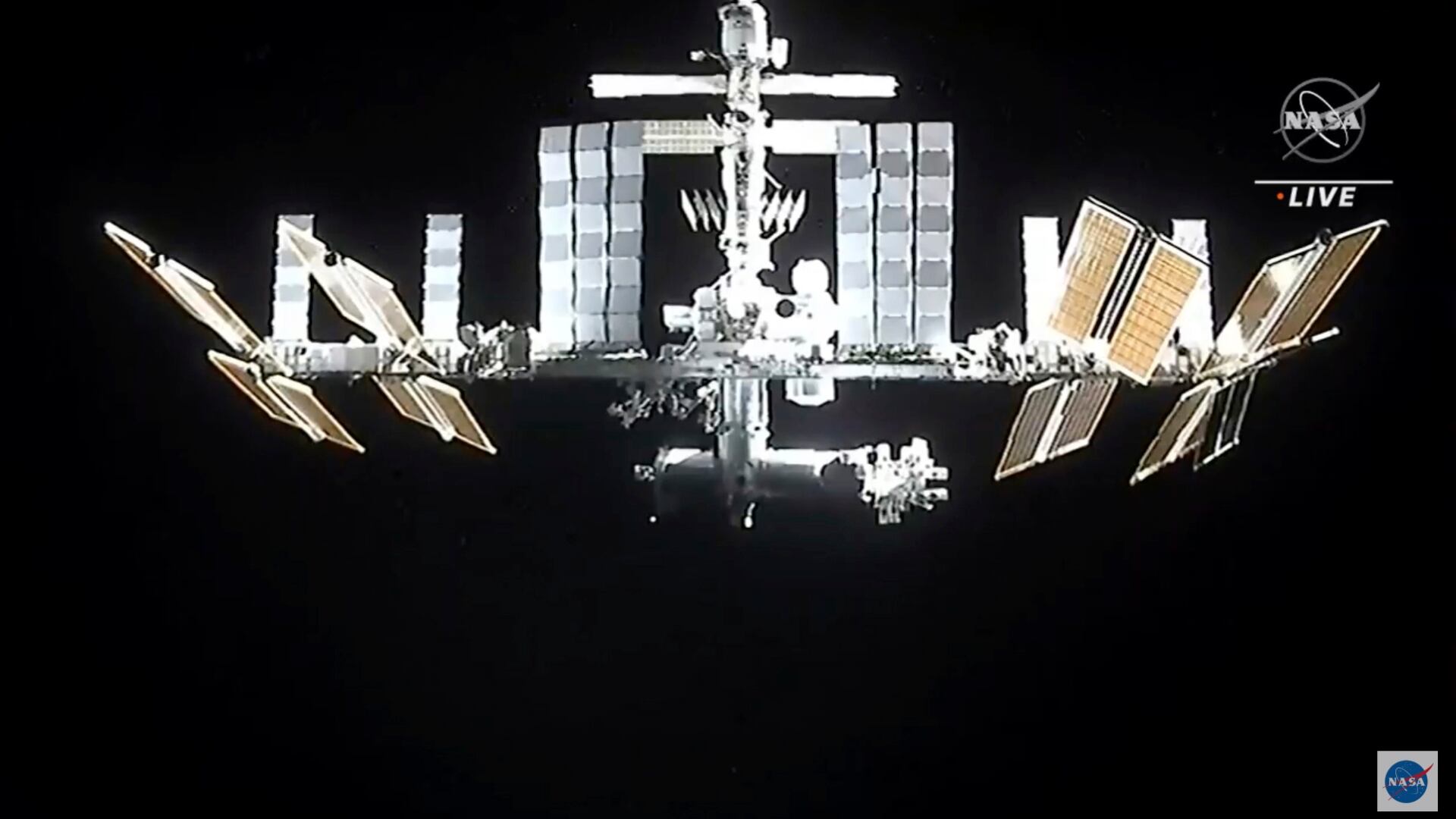
NASA indefinitely delayed a spacewalk to repair an ISS antenna, citing concerns about space debris. It was unclear if the warning from the space agency to astronauts aboard the ISS was related to the recent destruction of a non-functioning Russian satellite.
Jack Dorsey has officially stepped down as CEO of Twitter.
In a statement -- he says he is leaving because the company is ready to move on from its founders. Tom Morton, Global Chief Strategy Officer, R/GA joined Cheddar's Opening Bell to discuss the implications of the move.
Mike Proulx, VP and research director at Forrester, joined Cheddar to talk about what Jack Dorsey's departure from Twitter as CEO means for the social media platform. He noted that while Dorsey had been the face of the company, "he's been a part-time CEO" since also taking on the leadership position at Square. Stepping down from leading Twitter allows his replacement Parag Agrawal, the former CTO, to be a dedicated leader of the company. However, Proulx noted that Agrawal faces headwinds on policy and political ramifications that will come with the job.