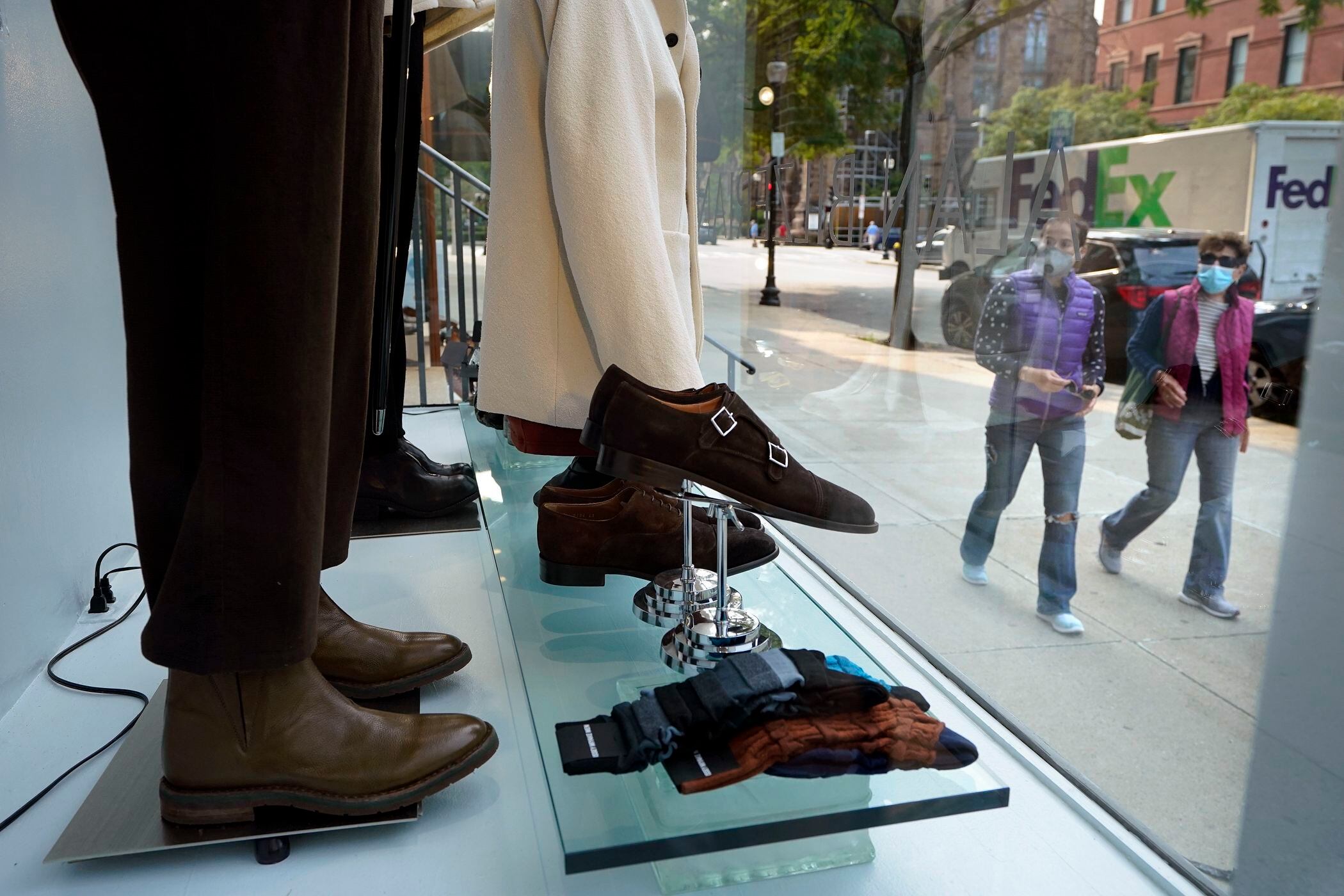
In this Tuesday, Sept. 15, 2020, file photo, passers-by examine a storefront window in Boston's fashionable Newbury Street shopping district. U.S. consumer confidence dipped slightly in October as a new wave of coronavirus cases began across the country. The Conference Board reported Tuesday, Oct. 27, 2020, that its consumer confidence index fell to a reading of 100.9, from 101.8 in September. (AP Photo/Steven Senne)
By Martin Crutsinger
U.S. consumer confidence fell to a reading of 96.1 in November as rising coronavirus cases pushed American optimism down to the lowest level since August.
The November reading released Tuesday by the Conference Board said represents a drop from a revised 101.4 in October. The decline reflected a big drop in consumer expectations for income, business, and labor market conditions.
The consumer confidence index is set on a scale with 100 equaling the confidence level in 1985.
In the leadup to the pandemic with the country enjoying unemployment at a half-century low of 3.9%, the confidence index had risen above 130. It stood at 132.6 in February but plunged to 85.7 in April as millions of Americans lost their jobs after the country went into lockdown to try to halt the spread of the pandemic.
The index has bounced around since its big April decline but remains well below the levels reached before the pandemic hit.
Wealthfront’s CFO Alan Iberman talks the $2.05B IPO and the major moment for robo banking as the company bets on AI, automation, and “self-driving money."
U.S. sports betting is booming as NFL and college football fuel massive activity. BetMGM CEO Adam Greenblatt breaks down trends, growth, and what’s next.
With a merger this big, creators, studios, and theaters all face uncertain futures. Here’s what experts are worried about and what good could come from it.
With disengagement rising and hybrid work shifting, 'Everybody Matters' author Bob Chapman explains why treating people well could define the future of work.
We sat down with Ali Furman, U.S. Consumer Markets Industry Leader at consulting firm PwC to ask what trends she garnered from the initial data this year.