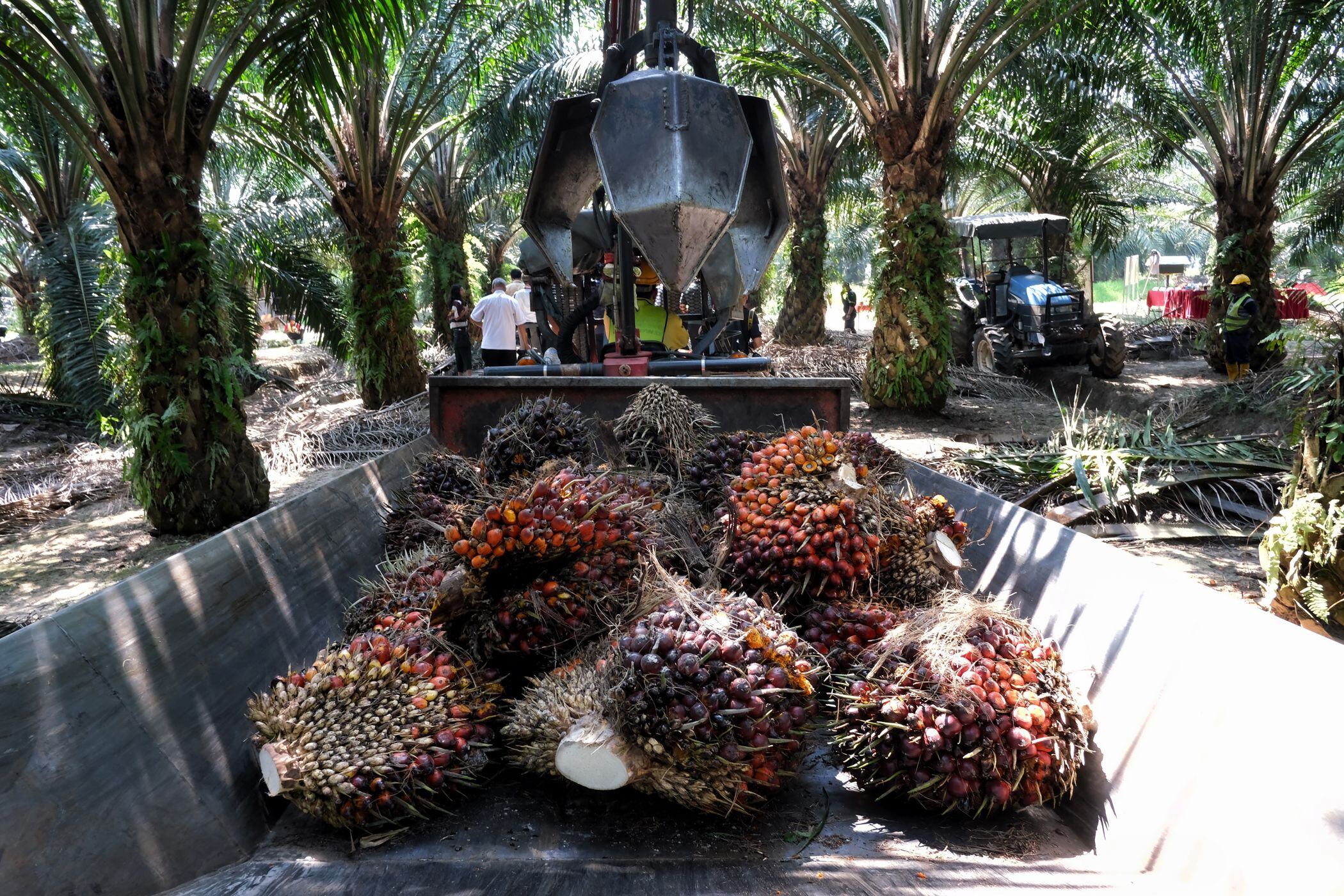
Palm Oil fruits are seen inside the tractors as Norwegian delegations visit the Sime Darby Plantations west estate palm oil plantation operation on February 25, 2019 in Carey Island outside Kuala Lumpur, Malaysia. (Photo by Mohd Samsul Mohd Said/Getty Images)
The U.S. said it will ban all shipments of palm oil from one of the world’s biggest producers after finding indicators of forced labor and other abuses on plantations that feed into the supply chains of some of America’s most famous food and cosmetic companies.
The order against Malaysian-owned Sime Darby Plantation Berhad and its local subsidiaries, joint ventures and affiliates followed an intensive months-long investigation by the U.S. Customs and Border Protection’s Office of Trade, said Ana Hinojosa, one of the agency’s executive directors.
Hinojosa said the findings “reasonably indicate” abuses against workers that included physical and sexual violence, restriction of movement, intimidation and threats, debt bondage, withholding of wages, and excessive overtime. Some of the problems appeared to be systemic, occurring on numerous plantations, which stretch across wide swaths of the country, she said.
“Importers should know that there are reputational, financial, and legal risks associated with importing goods made by forced labor into the United States,” Hinojosa said in a telephone press briefing.
The order was announced just three months after the federal government slapped the same ban on another Malaysian palm oil giant, FGV Holdings Berhad -- the first palm oil companies ever targeted by Customs over concerns of forced labor.
The moves, triggered by petitions filed by non-profit groups and a law firm, came in the wake of an in-depth investigation by The Associated Press into labor abuses on plantations in Malaysia and neighboring Indonesia, which together produce about 85% of the $65 billion supply of the world's most consumed vegetable oil. Palm oil can be found in roughly half the products on supermarket shelves and in most cosmetic brands. It’s in paints, plywood, pesticides, animal feed, biofuels, and even hand sanitizer.
The AP interviewed more than 130 current and former workers from two dozen palm oil companies for its investigation, finding everything from rape and child labor to trafficking and outright slavery on plantations in both countries.
Sime Darby supplies to some of the biggest names in the business, from Cargill to Nestle, Unilever, and L'Óreal, according to the companies’ most recently published supplier and palm oil mill lists.
Hinojosa said the agency’s decision to issue the ban should send an “unambiguous” message to the trade community.
“Consumers have a right to know where the palm oil is coming from and the conditions under which that palm oil is produced and what products that particular palm oil is going into,” she said.
James Gallagher, CEO and Co-Founder of GreenLite, discusses the challenges of rebuilding the fire-affected LA area and how permitting complicates the process.
Super Bowl Champion, Julian Edelman, talks Chiefs' conspiracies, his fave TSwift song and his bet for Super Bowl LIX. Plus, the best time for a bathroom break.
Ron Hammond, Sr. Director of Government Relations at the Blockchain Association, breaks down Trump’s plan to strengthen U.S. leadership in financial technology.
BiggerPockets Money podcast is now available on Cheddar Wednesdays at 10am ET! Mindy Jensen shares how her podcast is helping people gain financial freedom.
The social video platform's future remains in doubt, as players scramble to profit from the chaos. Plus: Big oil gets bigger, DOGE downsizes, and tariffs!
Ty Young, CEO of Ty J. Young Wealth Management, joins Cheddar to discuss Trump's moves as he returns to Washington D.C. and how it may affect the U.S. economy.
Starbucks’ decision to restrict its restrooms to paying customers has flushed out a wider problem: a patchwork of restroom use policies that varies by state and city. Starbucks announced last week a new code of conduct that says people need to make a purchase if they want to hang out or use the restroom. The coffee chain's policy change for bathroom privileges has left Americans confused and divided over who gets to go and when. The American Restroom Association, a public toilet advocacy group, was among the critics. Rules about restroom access in restaurants vary by state, city and county. The National Retail Federation says private businesses have a right to limit restroom use.
President Donald Trump is talking up a joint venture investing up to $500 billion for infrastructure tied to artificial intelligence by a new partnership formed by OpenAI, Oracle and SoftBank. The new entity, Stargate, will start building out data centers and the electricity generation needed for the further development of the fast-evolving AI in Texas, according to the White House. The initial investment is expected to be $100 billion and could reach five times that sum. While Trump has seized on similar announcements to show that his presidency is boosting the economy, there were already expectations of a massive buildout of data centers and electricity plants needed for the development of AI.
Chris Ruder, Spikeball Founder and CEO, explains how he and his friends put roundnet on the global map, plus, how Spikeball helps people "find their circle."