The U.S. is escalating the enduring trade war with China by announcing a new round of 10 percent tariffs that will be imposed on $300 billion worth of Chinese imports, President Trump announced on Twitter on Thursday.
Later in the day, Trump told reporters at the White House that the tariffs could be increased beyond 25 percent if progress is not made in negotiations. Chinese President Xi Jinping "wants to make a deal, but frankly he is not going fast enough," Trump said.
The tariff hike is expected to go into effect on September 1 and will be imposed separately from the 25 percent tariff that is already in place on $250 billion worth of Chinese goods. As a result, essentially all Chinese imports, which totaled roughly $558 billion in 2018, will now be levied with tariffs.
“We look forward to continuing our positive dialogue with China on a comprehensive Trade Deal, and feel that the future between our two countries will be a very bright one!” Trump tweet when announcing the tariff hike.
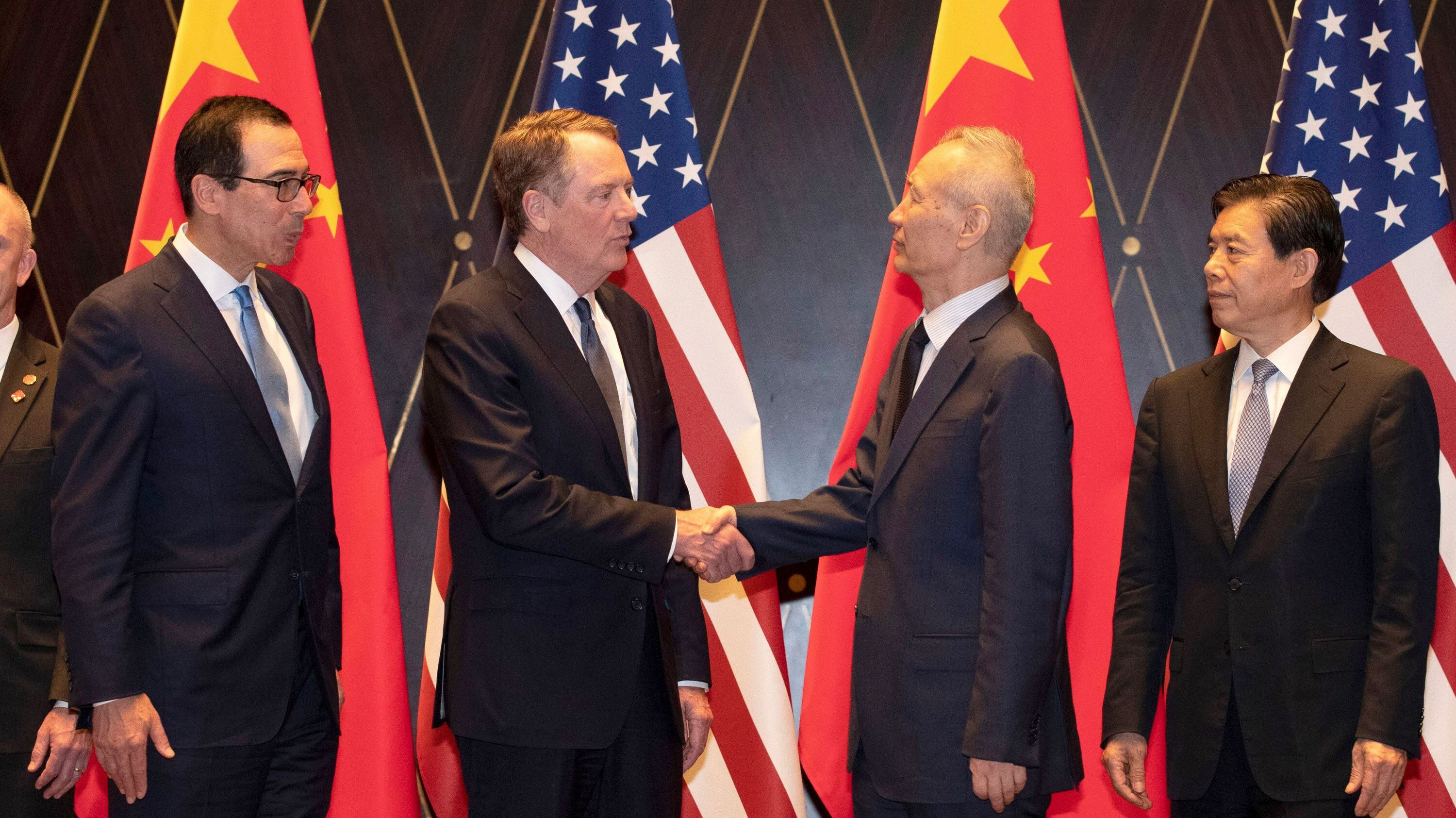
The move follows two days of trade talks in Shanghai, led by U.S. Trade Representative Robert Lighthizer and Treasury Secretary Steven Mnuchin. Vice Premier Liu He led the Chinese delegation.
In June, following a meeting with President Xi at the G-20 Summit, Trump pledged not to impose additional tariffs on Chinese goods in an effort to restore stalled trade talks. Trump said that China, in turn, agreed to buy American agricultural goods.
“We thought we had a deal with China three months ago, but sadly, China decided to re-negotiate the deal prior to signing.” Trump said in a series of tweets.
Just a day earlier, the White House had said that China had confirmed its commitment to buy agricultural exports.
Trump also said that China had failed to curb the flow of fentanyl into the U.S. “This never happened, and many Americans continue to die!” he tweeted on Thursday.
Trump added that trade negotiations will continue, but tariffs will be imposed until a deal is reached. On Wednesday, the White House said it expects negotiations to continue in Washington, D.C. early next month.
Raising tariffs "will only inflict greater pain on American businesses, farmers, workers and consumers, and undermine an otherwise strong U.S. economy," Myron Brilliant, the executive vice president and head of international affairs at the U.S. Chamber of Commerce, said in a statement in response to Trump's announcement.
"We urge the two sides to recommit to achieving progress in the very near term before these new tariffs come into effect, and to remove all remaining tariffs as swiftly as possible," Brilliant added.