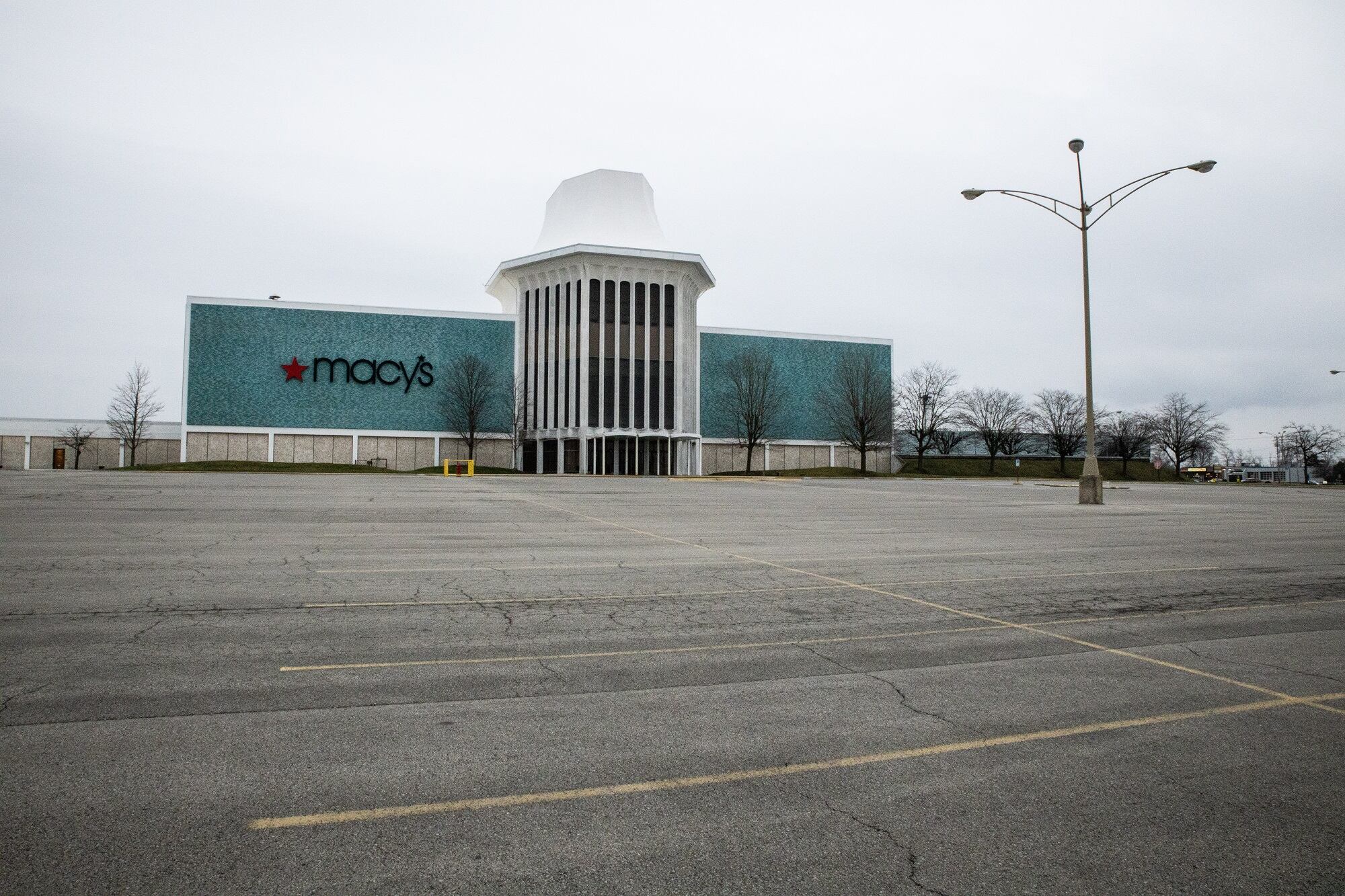
A closed shopping mall is seen in Lima, Ohio on March 24, 2020 amidst the coronavirus pandemic. (Photo by Megan JELINGER/Anadolu Agency via Getty Images)
By Christopher Rugaber
A record-long streak of U.S. job growth ended suddenly in March after nearly a decade as employers cut 701,000 jobs because of the viral outbreak that's all but shut down the U.S. economy. The unemployment rate jumped to 4.4% from a 50-year low of 3.5%.
Last month's actual job loss was likely even larger because the government surveyed employers before the heaviest layoffs hit in the past two week. Nearly 10 million Americans applied for unemployment benefits in the last two weeks of March, far exceeding the figure for any corresponding period on record.
Virus-induced shutdowns have forced widespread layoffs throughout the economy, from hotels, restaurants and movie theaters to auto factories, department stores and administrative offices.
One sign of how painfully deep the job losses will likely prove to be: During its nearly decade-long hiring streak, the U.S. economy added 22.8 million jobs. Economists expect the April jobs report being released in early May to show that all those jobs will have been lost.
Commercial Metals CEO Peter Matt reveals how a $2.5B acquisition spree is transforming the 111-year-old steelmaker into a construction solutions powerhouse.
Angelo Zino, Senior Vice President and Technology Equity Research Analyst at CFRA, breaks down Big Tech earnings, AI spending, and what's next for the Mag 7.
Big Tech is pouring billions into AI. Ray Wang, CEO of Constellation Research, explains what Meta and Microsoft's earnings reveal about those investments.
Morningstar equity analyst Nicolas Owens explains Boeing's latest earnings, deliveries, rising fuel costs, and what they mean for airlines and investors.
The 2026 FIFA World Cup is more than just a tournament. With over 6.5 million fans expected to attend, it's become one of the world's largest economic events.