By Christopher Rugaber
The number of Americans seeking unemployment benefits fell slightly last week to 793,000, evidence that job cuts remain high despite a substantial decline in new viral infections.
Last week’s total declined from 812,000 the previous week, the Labor Department said Thursday. That figure was revised higher from the previously-reported figure of 779,000. Before the virus erupted in the United States in March, weekly applications for jobless aid had never topped 700,000, even during the Great Recession.
The job market's improvement slowed through the fall and in the past two months has essentially stalled. Over the past two months combined, employers have cut 178,000 jobs. Nearly 10 million jobs remain lost to the pandemic.
Though the unemployment rate fell in January to 6.3% from 6.7%, that was mainly because many people who had lost jobs stopped looking for one. The government doesn't count people as unemployed unless they're actively seeking work.
All told, 20.4 million people were receiving unemployment benefits in the week that ended Jan. 23, the latest period for which data are available. That’s up from 17.8 million from the week before.
The job market’s persistent weakness is fueling President Joe Biden’s push for a $1.9 trillion economic rescue package. Biden’s proposal would extend, through August, two federal unemployment benefit programs that are set to expire in mid-March. His proposal would also raise the federal unemployment benefit to $400 a week from the current $300.
Some economists, including former Treasury Secretary Larry Summers, have raised concerns that such a huge spending package would risk igniting inflation by fueling a burst of consumer spending later this year as the virus is gradually brought under control.
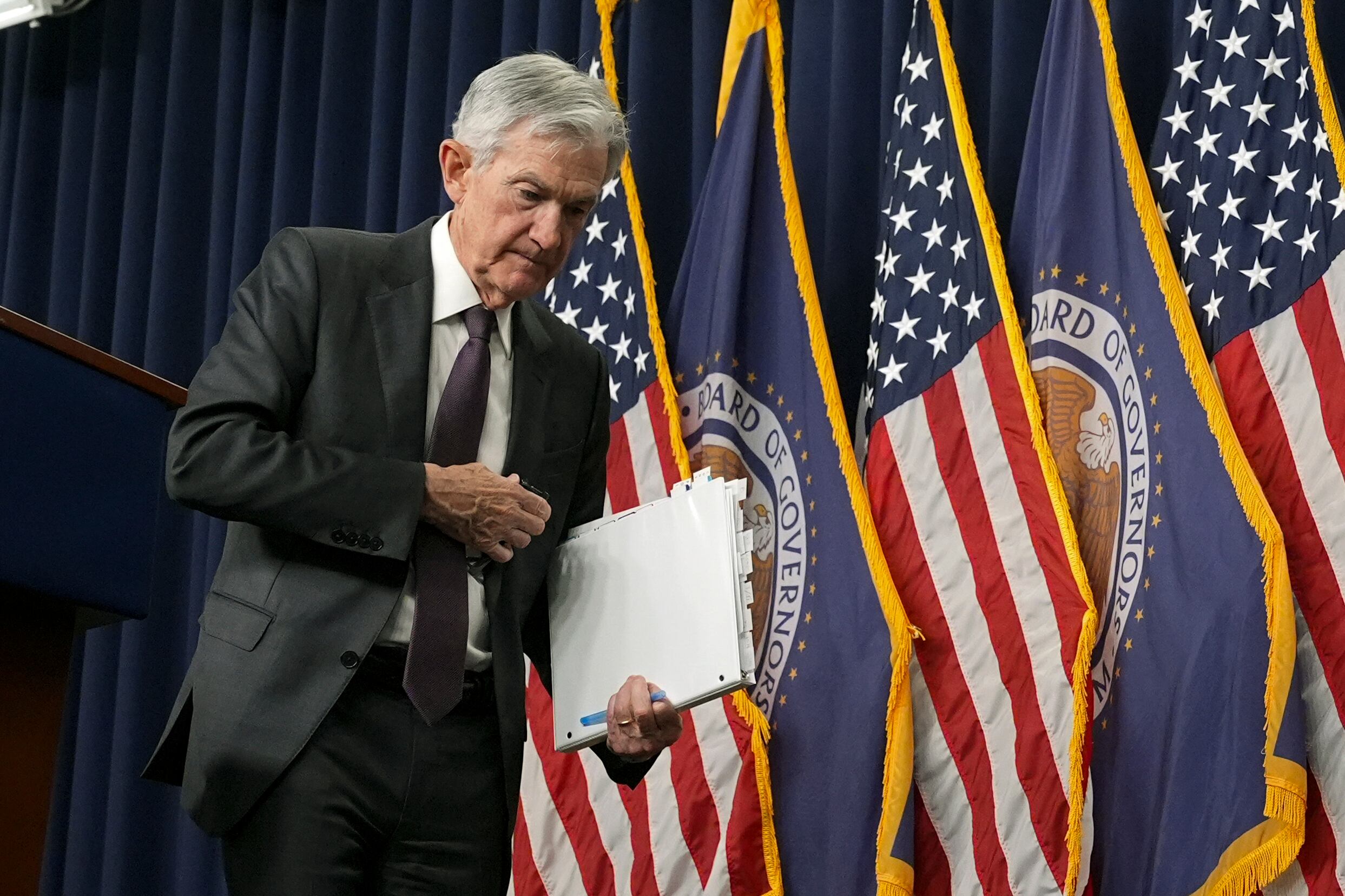
Yet on Wednesday, Federal Reserve Chair Jerome Powell highlighted the struggling job market and said he thought that any worrisome surge in inflation would be unlikely. If it did arise, Powell said, the Fed has the financial tools it needs to quell inflation. For now, inflation remains below the Fed’s target rate.
“We are still very far from a strong labor market whose benefits are broadly shared,” Powell said.
A driving force behind the Biden administration’s push for more aid is the impending expiration of the extended jobless benefits in barely more than a month. More than 11 million people would lose benefits as a result, according to a report by the Century Foundation. Unlike the previous expiration of extended unemployment aid, which occurred on Dec. 26, the cut-off would be phased in between March 14 and April 11.
The job market won’t likely be close to fully recovered by then. Many economists expect a burst of growth and hiring later this year after vaccines are more widely administered, especially if Congress provides significantly more aid to households, small businesses and states and cities. But that isn’t likely for many months.
Once vaccinations become more widely distributed and administered in the coming months, economists expect growth and hiring to pick up, particularly if Congress provides significantly more financial aid to households, small businesses and states and cities.
For now, the job market is sputtering. About 4 million people who are out of work have stopped searching for jobs and so aren’t counted as unemployed. Powell said that if these people were counted among the officially jobless, the unemployment rate would be nearly 10%.
In his remarks to the Economic Club of New York, the Fed chair also highlighted the uneven nature of the layoffs in this pandemic. Job losses among the highest-earning one-quarter of Americans have been just 4%, while job losses among the poorest one-quarter have been “a staggering 17%,” Powell said.
Layoffs have also fallen disproportionately on Black workers. In December, 18% of people who sought unemployment aid were black, even though African Americans make up 13.5% of the workforce, according to the Federal Reserve Bank of Atlanta. By contrast, nearly 50% of the applicants were white, even though 77% of workers are white.