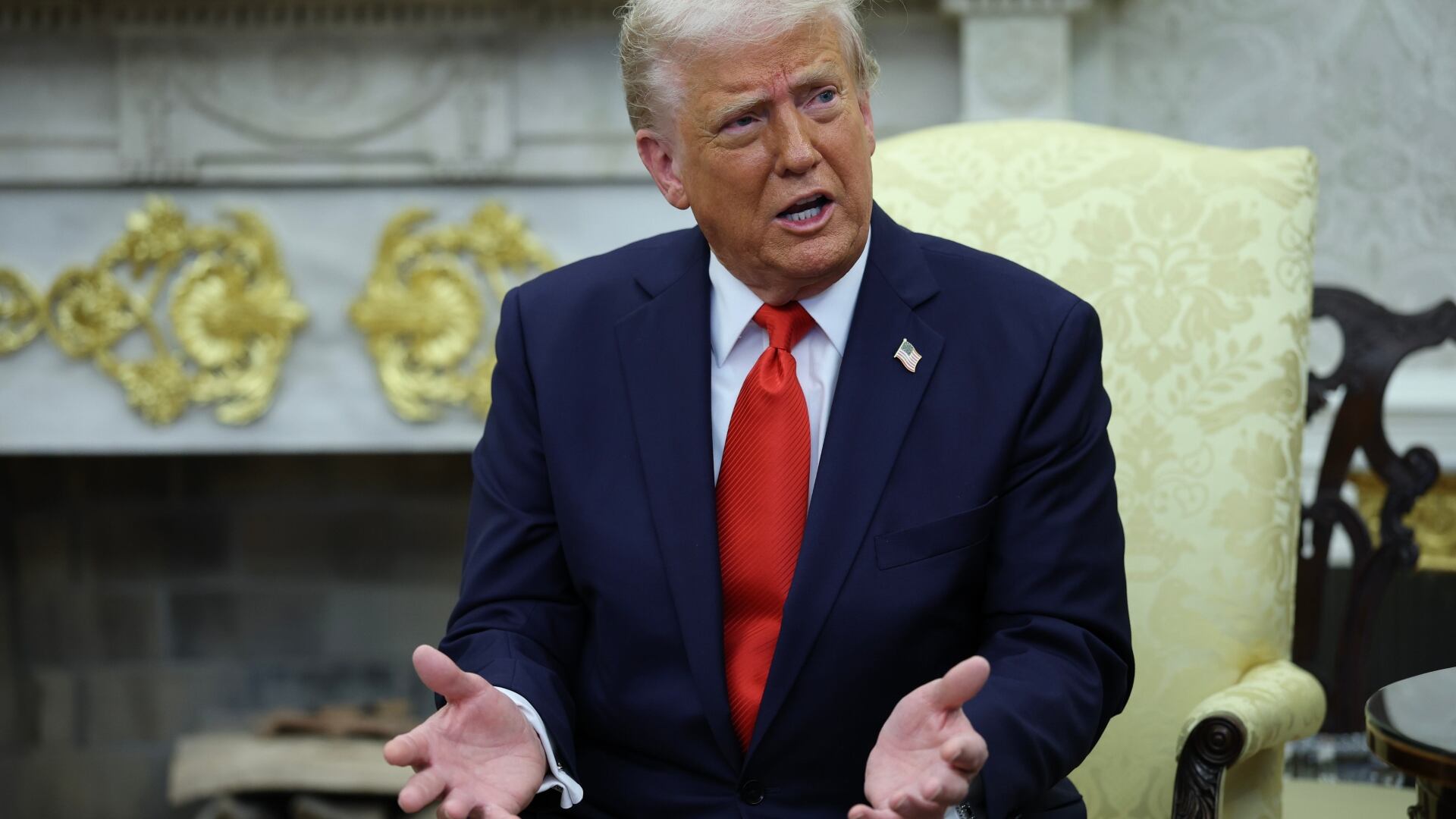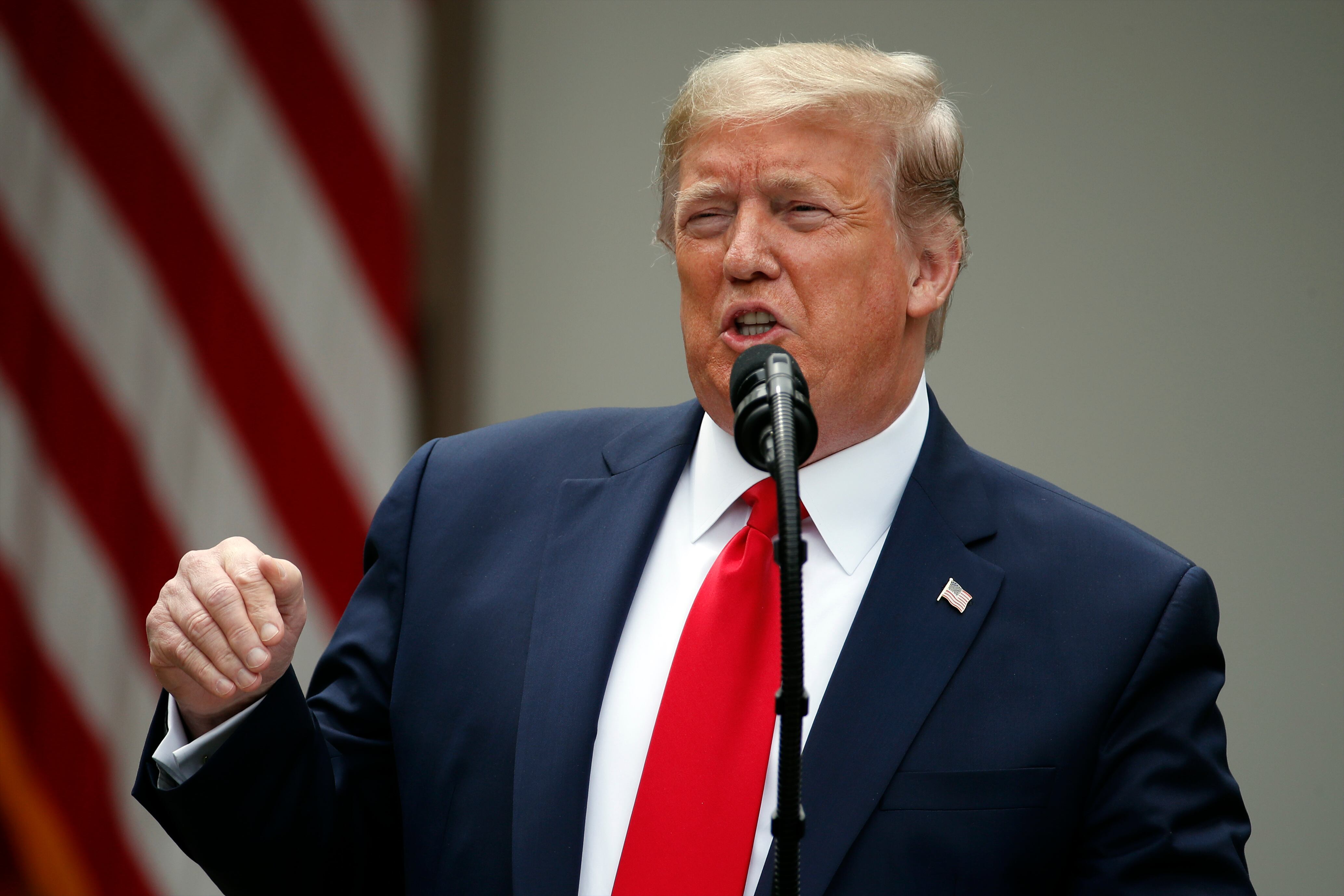
President Donald Trump said Friday that the U.S. will be terminating its relationship with the World Health Organization, saying it had failed to adequately respond to the coronavirus because China has “total control” over the global organization.
He said Chinese officials “ignored” their reporting obligations to the WHO and pressured the WHO to mislead the world when the virus was first discovered.
He noted that the U.S. contributes about $450 million to the world body while China provides about $40 million.
The U.S. is the largest source of financial support to the WHO and its exit is expected to significantly weaken the organization. Trump said the U.S. would be “redirecting” the money to “other worldwide and deserving urgent global public health needs,” without providing specifics.
“THIS IS A BREAKING NEWS UPDATE. AP’s earlier story follows below.”
The Trump administration may soon expel thousands of Chinese graduate students enrolled at U.S. universities and impose other sanctions against Chinese officials in the latest signs of tensions between Washington and Beijing that are raging over trade, the coronavirus pandemic, human rights and the status of Hong Kong.
President Donald Trump said he would make an announcement about China on Friday, and administration officials said he is considering a months-old proposal to revoke the visas of students affiliated with educational institutions in China linked to the People’s Liberation Army or Chinese intelligence.
Trump is also weighing targeted travel and financial sanctions against Chinese officials for actions in Hong Kong, according to the officials, who were not authorized to discuss the matter publicly and spoke on condition of anonymity.
“We’ll be announcing what we’re doing tomorrow with respect to China and we are not happy with China," Trump told reporters at an unrelated event Thursday, referring mainly to COVID-19. "We are not happy with what’s happened. All over the world people are suffering, 186 countries. All over the world they’re suffering. We’re not happy.”
Although the student expulsions aren't directly related to Hong Kong and China’s move to assert full control over the former British territory, potential sanctions against officials involved in that effort would be a result of Secretary of State Mike Pompeo's determination that Hong Kong can no longer be considered autonomous from mainland China.
Pompeo notified Congress on Wednesday that Hong Kong is no longer deserving of the preferential trade and commercial status it has enjoyed from the U.S. since it reverted to Chinese rule in 1997. Under a joint Sino-British agreement on the handover, Hong Kong was to be governed differently than the mainland for 50 years under a “one country, two systems” policy.
Pompeo's determination opened the door to possible sanctions and the loss of special perks Hong Kong has received from the United States. But neither Pompeo nor other officials were able Wednesday to describe what action the administration might take, an uncertainty related to the impact that such sanctions would have on U.S. companies that operate in Hong Kong and the city's position as Asia's major financial hub. Trump's comments sparked a drop in U.S. financial markets.
Serious consideration of the visa revocation proposal, first reported by The New York Times, has faced opposition from U.S. universities and scientific organizations that depend on tuition fees paid by Chinese students to offset other costs. In addition, those institutions fear possible reciprocal action from Beijing that could limit their students' and educators' access to China.
In a nod to those concerns, the officials said any restrictions would be narrowly tailored to affect only students who present a significant risk of engaging in espionage or intellectual property theft. The officials could not say how many people could ultimately be expelled, although they said it would be only a fraction of the Chinese students in the country.
Still, the possibility that the proposal may be implemented has drawn concerns from educators.
“We’re very worried about how broadly this will be applied, and we’re concerned it could send a message that we no longer welcome talented students and scholars from around the globe," said Sarah Spreitzer, director of government relations at the American Council on Education.
“We don’t have a lot of details about how they are going to define ties to Chinese universities, what type of universities are they going to target, what would constitute a university having ties to the Chinese military," she said. If the situation were reversed and another nation imposed limits on students from U.S. universities that receive Defense Department funding, she noted it would affect a wide range of schools.
The U.S. hosted 133,396 graduate students from China in the 2018-19 academic year, and they made up 36.1% of all international graduate students, according to the Institute of International Education. Overall, there were 369,548 students from China, accounting for 33.7% of international students who contributed nearly $15 billion to the U.S. economy in 2018.
The proposal to revoke the visas is not directly related to the dispute over Hong Kong, nor is it tied to U.S. criticism of China for its handling of the coronavirus outbreak. Rather, it is connected to various elements of trade and human rights issues that have seen U.S. officials complain about Chinese industrial espionage and spying and harassment of dissidents and religious and ethnic minorities.
But the timing of a potential announcement could come at a time of increasingly heated rhetoric about the imposition of national security laws on Hong Kong in violation of the Sino-British accord.
The proposal first began to be discussed last year when the administration moved to require Chinese diplomats based in the United States to report their domestic U.S. travel and meetings with American scientists and academics. At the time, U.S. officials said it was a reciprocal measure to match restrictions that American diplomats face in China.
Those limits were followed by a requirement that Chinese state-run media in the U.S. register as “foreign diplomatic missions” and report their property holdings and employee rosters to the government. That was, in turn, followed by the limiting of the number of visas for Chinese journalists allowed to work in the United States.
China retaliated for the visa limitations by expelling several reporters from U.S. media outlets, including The Washington Post and The New York Times.
____
AP Education Writer Collin Binkley in Boston contributed to this report.