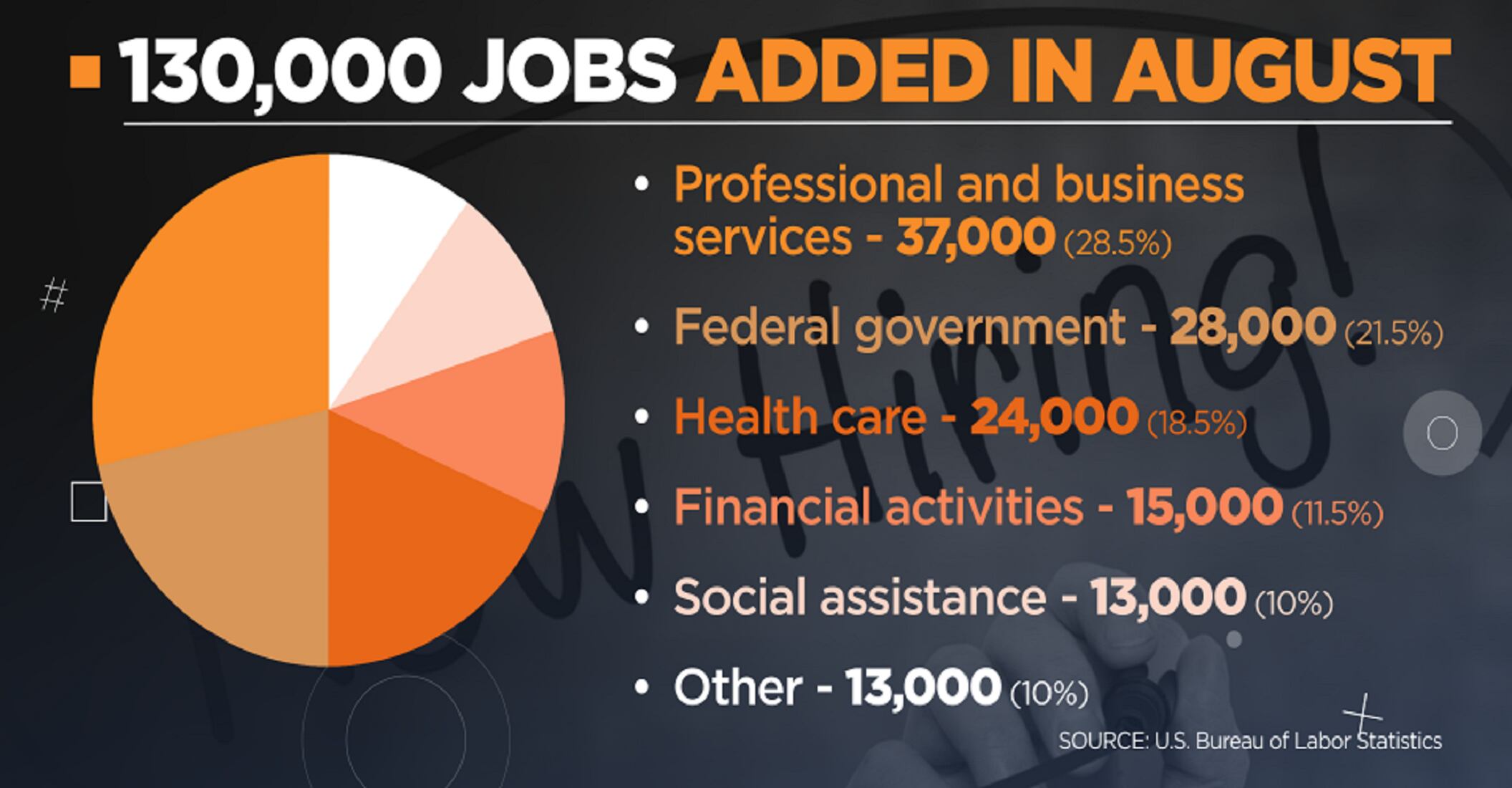
The U.S. economy added just 130,000 jobs in August, wrapping up a summer of tepid growth in the nation's job market, the Bureau of Labor Statistics (BLS) announced Friday. Unemployment last month remained at 3.7 percent — or 6 million people.
Despite the economy's sustained growth, the jobs added in August were less than the nearly 160,000 expected by analysts. Monthly employment growth so far this year now averages 158,000, which remains well below 223,000 average monthly gains in 2018.
Industries with the greatest gains included healthcare and financial services, which added 24,000 and 15,000 jobs respectively, the BLS reported. The federal government also added 28,000 employees to its ranks, the bulk of which came from temporary workers hired to conduct the 2020 Census.
Average hourly earnings for all private sector workers in August increased by $0.11, which was an increase from the $0.9 hikes in the two month prior.
Yet the signs of cautious hiring come amid a growing concern that the U.S. will enter a recession in the coming years. A survey released in August by the National Association for Business Economics found that 74 percent of U.S. economists believe the country will go into a recession by 2021.
"This morning's job report is consistent with our forecast of a gradually slowing economy," Doug Duncan, the chief economist at Fannie Mae, said in a statement.
In July, the Federal Reserve cut interests for the first time in over a decade to spur growth and sustain the historically strong U.S. economy. The central bank is widely expected to make another cut this month.
Concern among economists — and within the Fed — largely stems from slowing economic growth worldwide, and the uncertainty surrounding President Trump's enduring trade disputes and shifting economic policies. "The Economy is great. The only thing adding to 'uncertainty' is the Fake News!" Trump tweet following the BLS's release of the jobs report.
Larry Kudlow, the chief White House economic advisor, told CNBC Friday morning that the 130,000 jobs added was "a very solid number," but added that "August is always a quirky month."
Friday's jobs report also revised the employment gains in June and July, lowering them to 178,000 and 159,000 respectively. "Hiring in the U.S. is slowing, but not stopping," said Mark Hamrick, a senior economic analyst at Bankrate. "That should help to contain fears of a recession in the near-term percolating since last December."
August's figures also highlighted larger economic trends in the U.S. like healthcare and finance, the professional and business services industry made big gains last month, adding 37,000 new jobs. Mining and logging, however, lost 5,000 jobs in August and total gains in manufacturing was just 3,000.