Twitter’s quarterly profit, revenue and the number of daily users on its platform are rising but its quarterly report, released days after agreeing to be sold to billionaire Elon Musk, offered scant details about what it expects on the financial front for the rest of the year.
The social media company on Thursday reported net income of $513 million, or 61 cents a share, but that includes a big one-time gain from the sale of its MoPub business, clouding comparisons with the year-ago period.
Revenue rose 16% to $1.2 billion in the three months to March compared with the same period last year, though the company said the figure reflected “headwinds associated with the war in Ukraine,” without elaborating.
Twitter reported an average of 229 million daily active users in the quarter, which was about 14 million more than a revised 214.7 million daily users in the previous quarter.
The San Francisco company canceled a conference call with executives and industry analysts that usually accompanies its results, so there will be little further insight into the company’s current financial condition.
“Given the pending acquisition of Twitter by Elon Musk, we will not be providing any forward looking guidance, and are withdrawing all previously provided goals and outlook,” Twitter said, in what could be one of its final earnings reports as a public company before Musk acquires it.
Musk, who paid $54.20 for each outstanding share of Twitter, did not speak publicly on the quarterly report from his new company, perhaps among its last as a publicly traded entity.
Shares have yet to reach that buyout price and on Thursday, the company's stock edged slightly lower to $48.36.
Musk’s $44 billion deal to buy Twitter was announced earlier this week and is expected to close sometime this year. But before the deal is completed, shareholders will have to weigh in, as well as regulators in the U.S. and in countries where Twitter does business. So far though, few hurdles are expected, despite objections from some of Twitter's own employees, along with users who worry about Musk's stance on free speech and what it might mean for harassment and hate speech on the platform.
Musk, who also runs the electric car company Tesla, as well as SpaceX and other ventures, says he plans to take Twitter private. If he does, the company will no longer be beholden to shareholders or publicly report its financial results, which have been mixed at best since the company went public in 2013.
Twitter has struggled to consistently post profits as a public company while generating lackluster revenue growth compared to the two dominant forces in digital advertising, Google and Facebook.
On one hand, going private could give Twitter more room to experiment while focusing less on short-term profit and its stock price. On the other hand, even the world's richest man is likely to want the company to make money.
“I think there is nothing better for Twitter than Elon Musk buying it and ideally replacing the board, and also doubling down on investments into products and new revenue-generating sources,” John Meyer, a technology entrepreneur and investor, told The Associated Press earlier this week.
_____
Barbara Ortutay reported from Oakland, California.
Following a session in which investors saw gains across the major indexes, Wealth Consulting Group CEO Jimmy Lee says investors need to remember that midterm election years tend to be more volatile in general.
Stocks closed lower to end the last trading day of May, but the S&P 500 and the Dow Jones both rose over the past month. The Federal Reserve in early May raised interest rates by half a percentage point as it tries to fight inflation, but the question continues to linger: will we enter a recession as we try to tame inflation? Anthony Saccaro, Founder & President of Providence Financial, joins Closing Bell to discuss today's close, the possibility of a recession, where he is telling clients to look for opportunities, and more.
The semiconductor industry is at an inflection point as it tries to fully recover from the worst of pandemic-era headwinds. While Broadcom has announced it will buy cloud computing company VMware, Nvidia is lowering its current quarterly outlook. Meanwhile, TSMC and Intel are contemplating raising prices -- again -- thanks to higher materials costs. Where does the industry go from here? Ted Mortonson, technology strategist at Baird, joins Closing Bell to discuss.
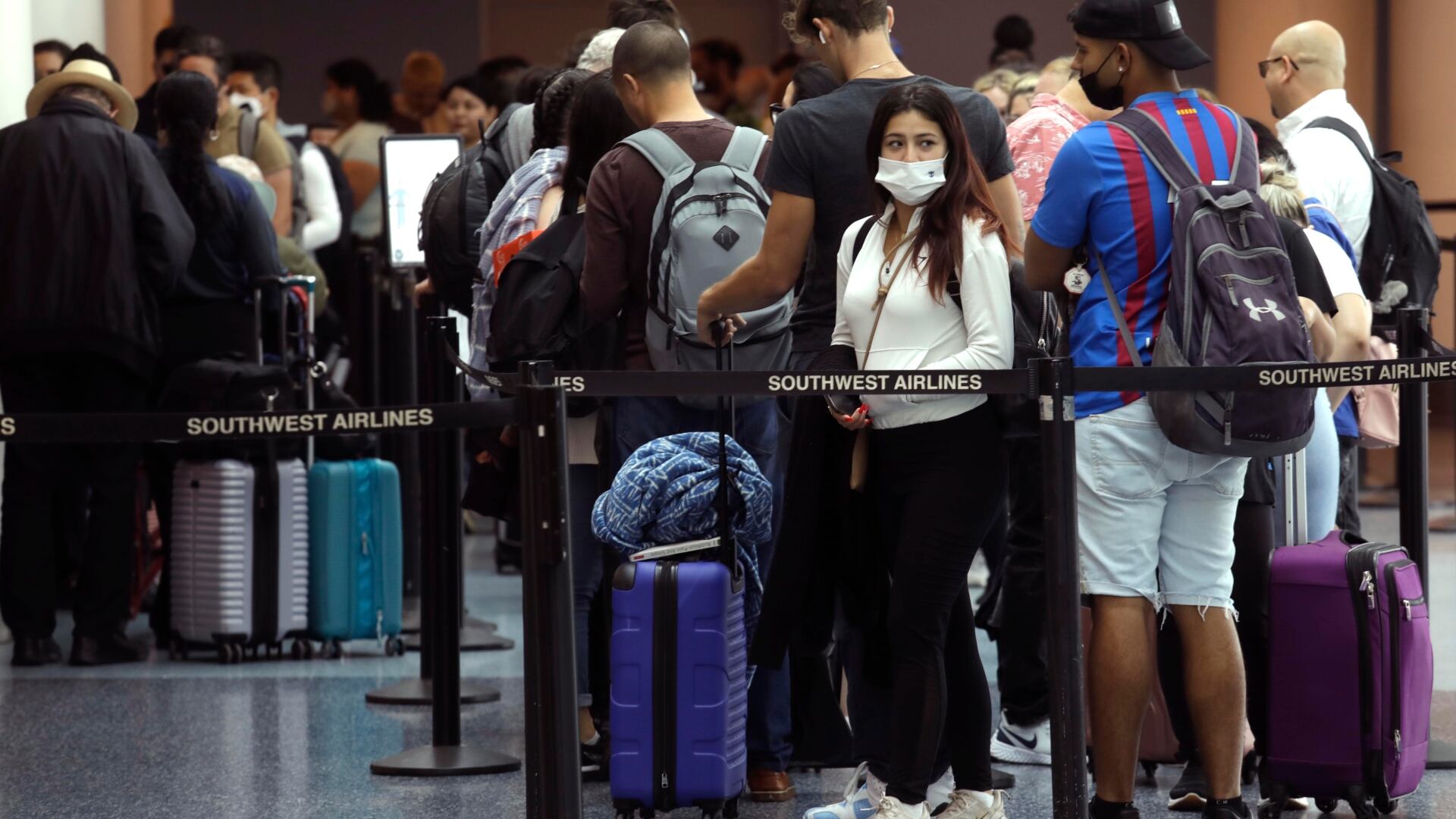
Memorial Day rang in the unofficial start of summer here in the United States -- and with it, the unofficial start of summer travel. Whether consumers traveled by air or by land, they probably experienced some form of frustration over the weekend. Flyers faced delays and cancellations, and drivers faced the most expensive gas prices ever recorded on Memorial Day. Zach Griff, Senior Aviation Reporter for the Points Guy, joins Cheddar News' Closing Bell to discuss.
Next-generation gaming ecosystem Joystick recently raised $8 million in a seed round and is in the process of raising a $110 million Series A funding round. Gaming ecosystems are a relatively new type of platform in the Web3 space, allowing users to maximize their play-to-earn gaming opportunities, exchange crypto-currencies, and sell their digital assets. Joystick says its platform is flipping the current model on its head by giving players the opportunity to keep 100% of the revenue they earn. Robin Defay, co-founder and CEO of Joystick, and Michael Le, co-founder of Joystick and TikTok content creator, join Cheddar News' Closing Bell to discuss.
Abe Stein, Head of Innovation at Sports Innovation Lab, joins Cheddar News' Closing Bell, where he explains why the top four spots on his company's 2022 list are European soccer clubs and discusses Sports Innovation Lab's plan to publish data on women's pro sports teams in the not-too-distant future.
Joel Birch, Co-Founder and CEO of Stacked, joins Cheddar News' Closing Bell, where he explains why he doesn't see any new catalysts that would lead to a Bitcoin rally at the moment. He also reiterates that now is a good time for long-term Bitcoin investors to buy low.
The dating app Bumble has sponsored bills and pushed lawmakers to criminalize the online practice of sending unsolicited nudes or “cyberflashing." Payton Iheme, Bumble's head of public policy for the Americas, joined Cheddar News to discuss why the app was going after the harassing behavior beyond its own platform. "Now, while we went to work internally in the company, and we created something called private detector to automatically blur those images so the user can decide if they want to see them, there's nothing for the rest of the internet," she said. "And so that's why we went to work with these laws."