The most talked-about moments during this year's Democratic National Convention and the Republican National Convention can be found on Twitter. But you won't find political ads.
"We had a long conversation and the decision was that political reach should really be earned," Twitter's vice president of policy and philanthropy in the Americas Jessica Herrera-Flanigan told Cheddar. "It shouldn't be bought."
In October 2019, Twitter CEO Jack Dorsey announced Twitter would ban all political ads. In several tweets, Dorsey explained machine-learned targeting, message optimization, misleading information, and manipulated media made it too easy to sway elections — not to mention the fact the candidates with the most money were often the most heard online.
"We wanted to level the playing field, and not make it about who was able to buy the most ads, especially when we know that Internet advertising was especially effective, and political ads, they present entirely new challenges to civil discourse around the elections," Herrera-Flanigan explained.
Though Twitter often hosts spirited political debates, it actually made very little of its revenue from political ads. Twitter's CFO Ned Segal said it made about $3 million from political ads during the 2018 midterm election cycle. For comparison, it made $683 million last quarter in total advertising revenue.
The decision to take a stand by blocking political dollars has put the company in the spotlight. President Donald Trump's campaign, which has been critical of the decision in the past, said it's a bad business decision and will "silence conservatives."
Herrera-Flanigan pointed out you can still talk about politicians on Twitter, but it's the natural conversations, that aren't paid for, that you'll see. The most tweeted about people during the DNC were Joe Biden, Michelle Obama, and Bernie Sanders, while the RNC's most tweeted about speakers were Donald Trump, Mike Pence, and Nikki Haley. The most tweeted moment during the DNC came about as Michelle Obama ended her speech, while the RNC's occurred during Donald Trump Jr.'s address.
"You have individuals now who can get on and speak, and provide their voices," she said. "There are so many different voices out there and rather than being a platform where only those people who could afford political ads can get on it, Twitter's a place where people who have something to say — politicians who have something to say — can get on the service and say it."
Further stepping into controversial territory, Twitter is also urging people to register to vote early, as well as file absentee ballots. It has been working with local election officials to address their needs, Herrera-Flanigan said President Trump has fought such moves by claiming mail-in ballots have high levels of fraud, which includes his accusation during the RNC that ballots could be sent to Democratic areas and not Republican areas. The FBI has stated there is no evidence of plans to manipulate election results through the mail this cycle.
"We are taking a strong stance on just trying to get everyone who's eligible to vote to register and vote, whatever mechanism that is and in a way that's safe," Herrera-Flanigan said.
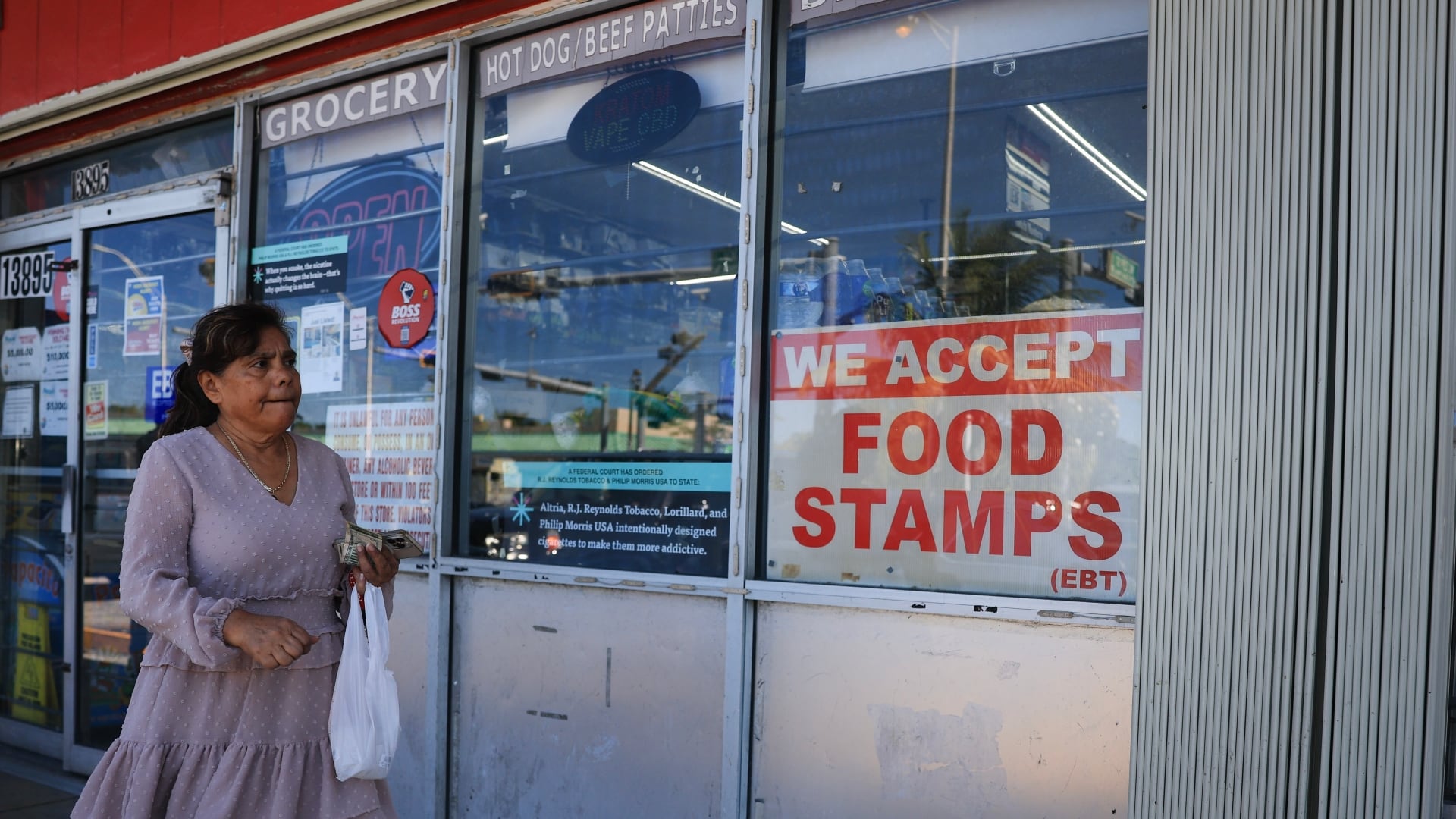
A legislative package to end the government shutdown appears on track. A handful of Senate Democrats joined with Republicans to advance the bill after what's become a deepening disruption of federal programs and services. But hurdles remain. Senators are hopeful they can pass the package as soon as Monday and send it to the House. What’s in and out of the bipartisan deal has drawn criticism and leaves few senators fully satisfied. The legislation includes funding for SNAP food aid and other programs while ensuring backpay for furloughed federal workers. But it fails to fund expiring health care subsidies Democrats have been fighting for, pushing that debate off for a vote next month.
Sabrina Siddiqui, National Politics Reporter at The Wall Street Journal, joins to break down the SNAP funding delays and the human cost of the ongoing shutdown.
Arguments at the Supreme Court have concluded for the day as the justices consider President Donald Trump's sweeping unilateral tariffs in a trillion-dollar test of executive power.
President Donald Trump said he has decided to lower his combined tariff rates on imports of Chinese goods to 47% after talks with Chinese leader Xi Jinping on curbing fentanyl trafficking.
The Federal Reserve cut its key interest rate Wednesday for a second time this year as it seeks to shore up economic growth and hiring even as inflation stays elevated. The move comes amid a fraught time for the central bank, with hiring sluggish and yet inflation stuck above the Fed’s 2% target. Compounding its challenges, the central bank is navigating without much of the economic data it typically relies on from the government. The Fed has signaled it may reduce its key rate again in December but the data drought raises the uncertainty around its next moves. Fed Chair Jerome Powell told reporters that there were “strongly differing views” at the central bank's policy meeting about to proceed going forward.
U.S. and Chinese officials say a trade deal between the world’s two largest economies is drawing closer. The sides have reached an initial consensus for President Donald Trump and Chinese leader Xi Jinping to aim to finalize during their high-stakes meeting Thursday in South Korea. Any agreement would be a relief to international markets. Trump's treasury secretary says discussions with China yielded preliminary agreements to stop the precursor chemicals for fentanyl from coming into the United States. Scott Bessent also says Beijing would make “substantial” purchases of soybean and other agricultural products while putting off export controls on rare earth elements needed for advanced technologies.
The White House budget office says mass firings of federal workers have started in an attempt to exert more pressure on Democratic lawmakers as the government shutdown continues.
President Donald Trump says “there seems to be no reason” to meet with Chinese leader Xi Jinping as part of an upcoming trip to South Korea after China restricted exports of rare earths needed for American industry. The Republican president suggested Friday he was looking at a “massive increase” of import taxes on Chinese products in response to Xi’s moves. Trump says one of the policies the U.S. is calculating is "a massive increase of Tariffs on Chinese products coming into the United States." A monthslong calm on Wall Street was shattered, with U.S. stocks falling on the news. The Chinese Embassy in Washington hasn't responded to an Associated Press request for comment.