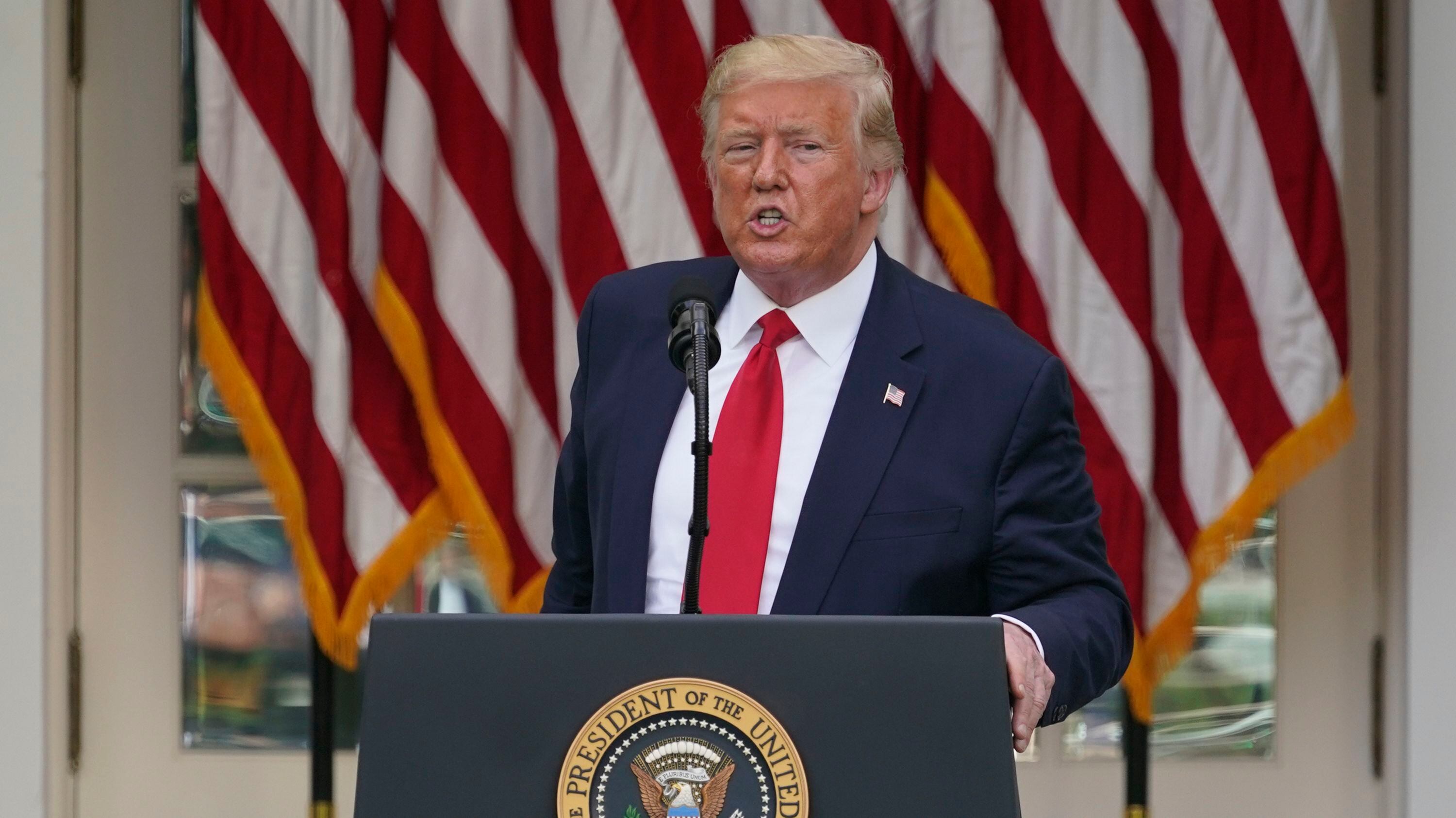
President Donald Trump answers questions from reporters during an event on protecting seniors with diabetes in the Rose Garden White House, Tuesday, May 26, 2020, in Washington. (AP Photo/Evan Vucci)
By Zeke Miller
President Donald Trump on Wednesday threatened social media companies with new regulations or even shuttering after Twitter added fact checks to two of his tweets.
The president can’t unilaterally regulate or close the companies, which would require action by Congress or the Federal Communications Commission. But that didn't stop Trump from angrily issuing strong warnings.
Claiming tech giants “silence conservative voices,” Trump tweeted early Wednesday, “We will strongly regulate, or close them down, before we can ever allow this to happen.” Later he tweeted without elaboration, “Big Action to follow.”
He repeated his unsubstantiated claim — which sparked his latest showdown with Silicon Valley — that expanding mail-in voting “would be a free for all on cheating, forgery and the theft of Ballots.”
There was no immediate reaction from Twitter or other social media companies to the president’s threats.
Trump and his campaign had lashed out Tuesday after Twitter added a warning phrase to two Trump tweets that called mail-in ballots “fraudulent” and predicted that “mail boxes will be robbed,” among other things. Under the tweets, there is now a link reading “Get the facts about mail-in ballots” that guides users to a Twitter “moments” page with fact checks and news stories about Trump’s unsubstantiated claims.
Trump replied on Twitter, accusing the platform of “interfering in the 2020 Presidential Election” and insisting that “as president, I will not allow this to happen.” His 2020 campaign manager, Brad Parscale, said Twitter’s “clear political bias” had led the campaign to pull “all our advertising from Twitter months ago.” Twitter has banned all political advertising since last November.
Trump did not explain his threat Wednesday, and the call to expand regulation appeared to fly in the face of long-held conservative principles on deregulation.
But some Trump allies, who have alleged bias on the part of tech companies, have questioned whether platforms like Twitter and Facebook should continue to enjoy liability protections as “platforms” under federal law — or be treated more like publishers, which can face lawsuits over content.
The protections have been credited with allowing the unfettered growth of the internet for more than two decades, but now some Trump allies are advocating that social media companies face more scrutiny.
“Big tech gets a huge handout from the federal government," Republican Sen. Josh Hawley told Fox News. “They get this special immunity, this special immunity from suits and from liability that’s worth billions of dollars to them every year. Why are they getting subsidized by federal taxpayers to censor conservatives, to censor people critical of China?”
There was no immediate reaction from Twitter or other social media companies to the president's threats.
Stocks closed sharply higher Thursday after several days of investor skittishness over the COVID-19 Omicron variant. This rebound comes despite several cases of the variant being reported in the United States. Gene Goldman, Chief Investment Officer at Cetera, joins Cheddar News' Closing Bell to discuss today's close, the Fed's recent announcement about speeding up their taper timeline, and more.
Austin Winsberg, creator of the NBC series "Zoey's Extraordinary Playlist" joined Cheddar's "Closing Bell" to dish out some details about the holiday movie special "Zoey's Extraordinary Christmas" now on Roku. Despite initial plans for producing a new Season 3 despite being canceled by the network, Winsberg said that it is not necessary to have seen the first two seasons in order to enjoy the movie. He noted that following cancellation fans rallied behind the show, campaigning for it to come back, which led to a movie being greenlit by Lionsgate to be completed within just a four-month window, according to Winsberg.
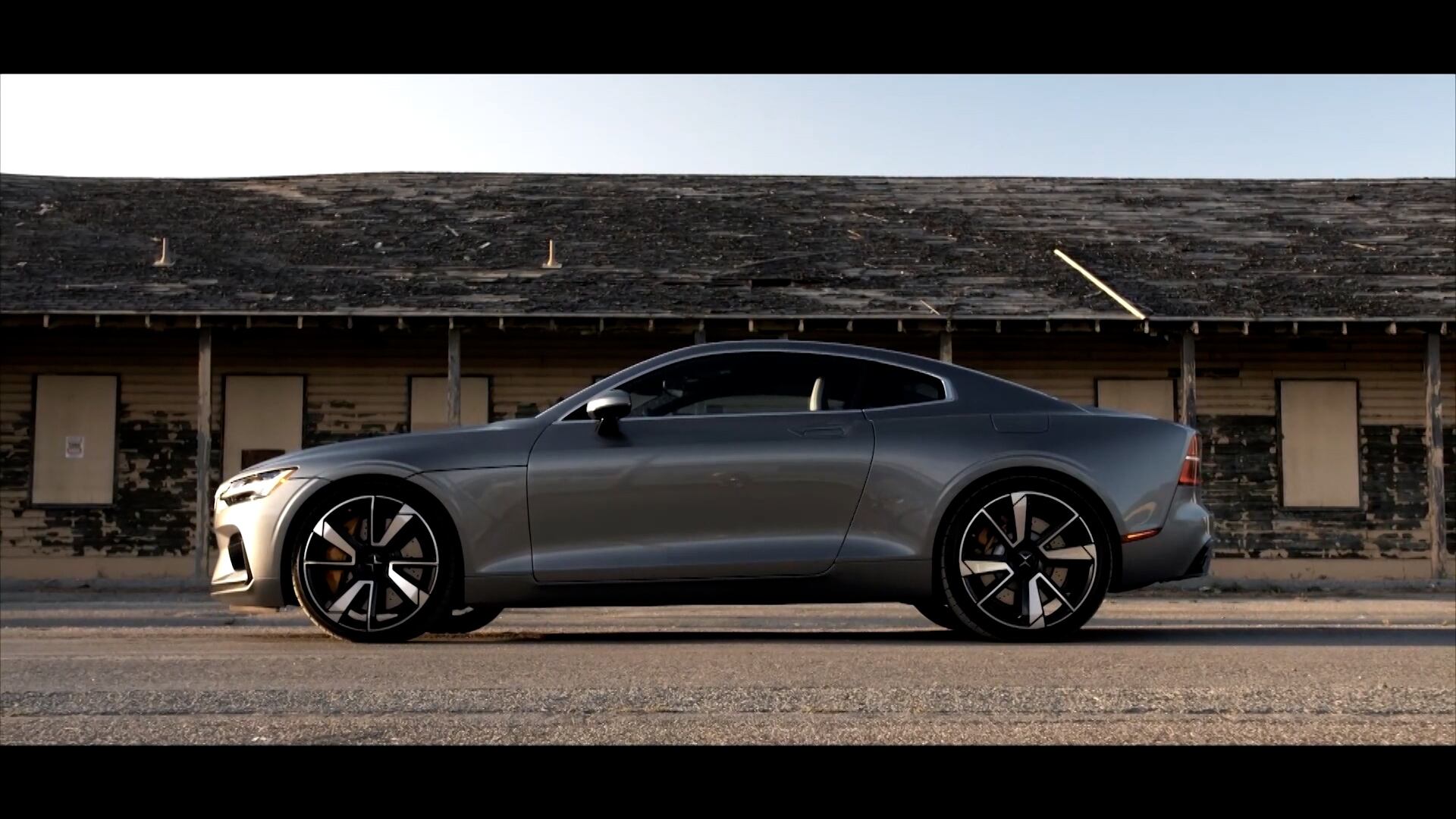
As the Leonardo DiCaprio-backed, pure-play electric vehicle company Polestar plans to close a SPAC IPO with Gores Guggenheim, CEO Thomas Ingenlath talked to Cheddar about how the company positioned itself to be able to go public. With competition tightening in the electric vehicle sector, Ingenlath noted what differentiates his cars from the competitors. "Scandinavian cool design and of course the road to zero emissions is something that we take very, very seriously," he said.
Bitcoin is slowly coming back to life after plunging recently, but everyone's favorite cryptocurrency needs to chart a 77% rally in the next four weeks to reach the widely forecast year-end value of $100,000. Bitcoin was trading more than 0.8% percent lower on Thursday morning, Ethereum was also declining. David Nage, portfolio manager at Arca, joins Cheddar News to talk discuss the market.
Jack Dorsey is stepping down as CEO of Twitter. In a statement, he says he is leaving because the company is ready to move on from its founders. Twitter's chief technology office Parag Agrawal will take over as CEO. Ian Sherr, editor at large at CNET, joins Cheddar News to talk about the announcement.
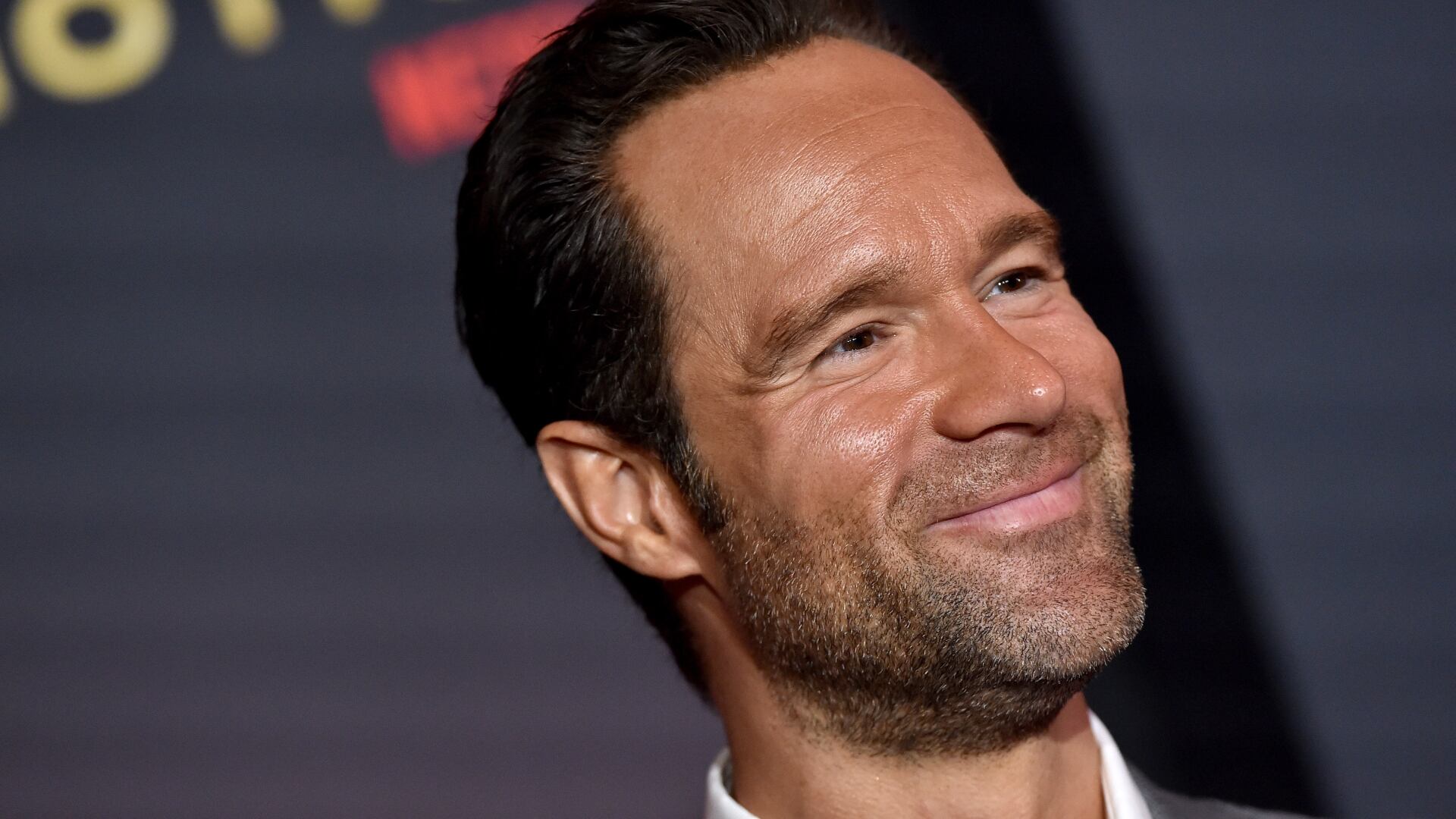
Actor Chris Diamantopolous joined Cheddar's "Between Bells" to talk about his new Netflix movie "Red Notice," starring alongside Ryan Reynolds, Dwayne Johnson, and Gal Gadot, and the massive success it has seen since its release. Diamantopoulos discussed what it was like stepping into the role of the villain, being able to play a character so different from himself in real life. He also talked about playing a heavy in another hit Netflix production, "True Story," and what it was like working with Kevin Hart and Wesley Snipes.
Michelle Holder, president of the Washington Center for Equitable Growth and a labor economist at John Jay College joins Cheddar News to discuss the October jobs report.
If your kid was on Santa's "nice list" this year, maybe you're willing to shell out $1,900 for Tesla's new Cyberquad. The automaker's all-electric ATV for children 8 years old and up is available to order now and is expected to begin shipping in two to four weeks.
Grab, a Southeast Asia-based ride sharing, e-wallet, and delivery service, made its public debut on the Nasdaq via SPAC merger. CFO Peter Oey joined Cheddar's Brad Smith to talk about the IPO and why it was an ideal time for the company to go public. Oey noted that while Grab operates in 465 cities in eight Southeast Asian countries, there is still more opportunity to grow and expand while balancing profitability and growth.