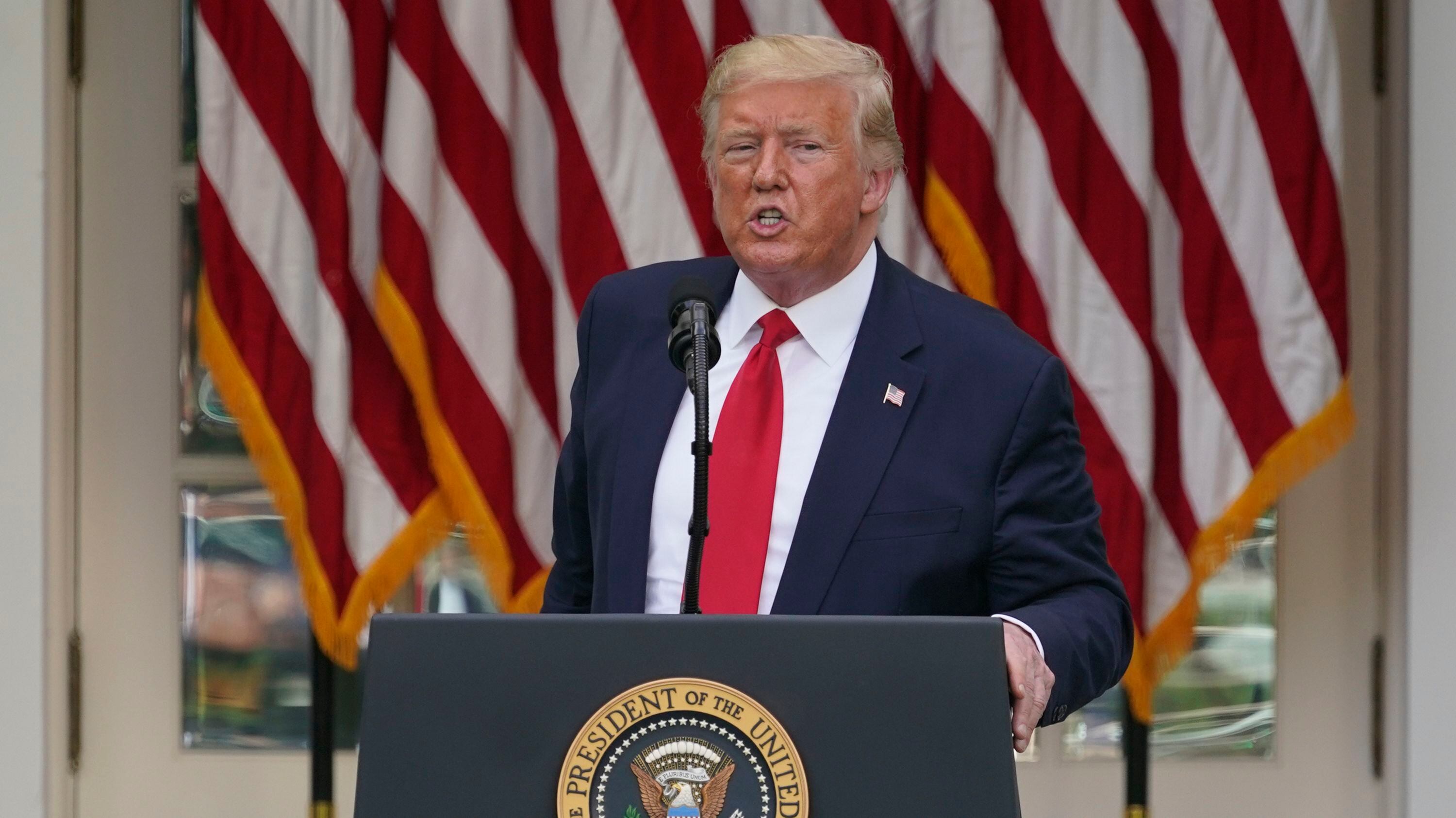
President Donald Trump answers questions from reporters during an event on protecting seniors with diabetes in the Rose Garden White House, Tuesday, May 26, 2020, in Washington. (AP Photo/Evan Vucci)
By Zeke Miller
President Donald Trump on Wednesday threatened social media companies with new regulations or even shuttering after Twitter added fact checks to two of his tweets.
The president can’t unilaterally regulate or close the companies, which would require action by Congress or the Federal Communications Commission. But that didn't stop Trump from angrily issuing strong warnings.
Claiming tech giants “silence conservative voices,” Trump tweeted early Wednesday, “We will strongly regulate, or close them down, before we can ever allow this to happen.” Later he tweeted without elaboration, “Big Action to follow.”
He repeated his unsubstantiated claim — which sparked his latest showdown with Silicon Valley — that expanding mail-in voting “would be a free for all on cheating, forgery and the theft of Ballots.”
There was no immediate reaction from Twitter or other social media companies to the president’s threats.
Trump and his campaign had lashed out Tuesday after Twitter added a warning phrase to two Trump tweets that called mail-in ballots “fraudulent” and predicted that “mail boxes will be robbed,” among other things. Under the tweets, there is now a link reading “Get the facts about mail-in ballots” that guides users to a Twitter “moments” page with fact checks and news stories about Trump’s unsubstantiated claims.
Trump replied on Twitter, accusing the platform of “interfering in the 2020 Presidential Election” and insisting that “as president, I will not allow this to happen.” His 2020 campaign manager, Brad Parscale, said Twitter’s “clear political bias” had led the campaign to pull “all our advertising from Twitter months ago.” Twitter has banned all political advertising since last November.
Trump did not explain his threat Wednesday, and the call to expand regulation appeared to fly in the face of long-held conservative principles on deregulation.
But some Trump allies, who have alleged bias on the part of tech companies, have questioned whether platforms like Twitter and Facebook should continue to enjoy liability protections as “platforms” under federal law — or be treated more like publishers, which can face lawsuits over content.
The protections have been credited with allowing the unfettered growth of the internet for more than two decades, but now some Trump allies are advocating that social media companies face more scrutiny.
“Big tech gets a huge handout from the federal government," Republican Sen. Josh Hawley told Fox News. “They get this special immunity, this special immunity from suits and from liability that’s worth billions of dollars to them every year. Why are they getting subsidized by federal taxpayers to censor conservatives, to censor people critical of China?”
There was no immediate reaction from Twitter or other social media companies to the president's threats.
Payoneer CEO Scott Galit joined Wake Up With Cheddar to talk about the company's partnership with Walmart to provide working capital to retailers on Walmart's marketplace.
As the country continues to bounce back from the job losses felt at the start of the pandemic, businesses are still struggling to fill jobs, mainly due to the record number of people who have voluntarily left the workforce. and experts say that the challenge of finding the people to fill those roles will likely follow us well into 2022. Beth Ann Bovino, U.S. Chief Economist at S&P Global Ratings explains what’s behind the ‘Great Resignation’.
Between uncertainty over the Omicron variant, and the possibility of a sooner-than-expected taper from the Fed, it was an especially volatile week for the markets. The release of the November jobs report on Friday, with job growth coming in way lower than estimates also caused movement on the market. Frances Stacy, Director of Strategy at Optimal Capital explains why all of this, combined with Bitcoin’s huge drop over the weekend, could make for another rough week for investors.
It was a chaotic week for the market, as investors reacted to the new omicron variant. Today though is all about jobs. Just ahead of the November jobs report, David Riley, Chief Investment Strategist at Blue Bay Asset management gave a run down of what to expect from the report, and what it could mean for investors.
Developers for the video game "Call of Duty: Warzone" staged a walkout in protest of 12 quality assurance testers being laid off by parent company Activision Blizzard. This marks the latest work stoppage for the embattled game publishing giant.
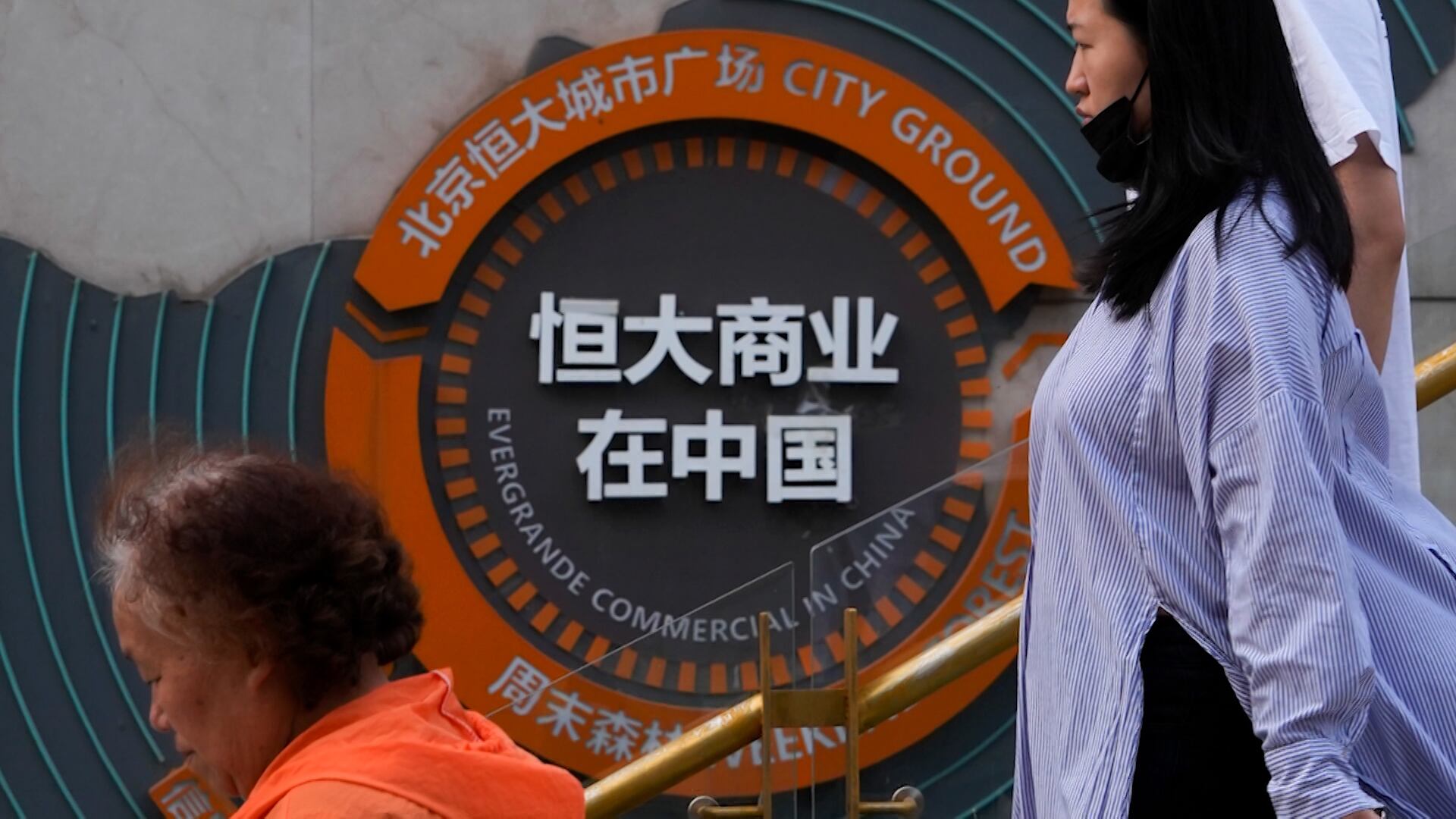
Troubled Chinese real estate giant Evergrande is once again nearing the brink of collapse. Shares of Evergrande sunk to a new record low on Monday, closing down 20 percent, as debt default fears resurfaced. Drew Bernstein, co-chairman at consultancy MarcumBP, joined Cheddar's Opening Bell to discuss. He said U.S. investors have to understand that "there is no company in China that's too big to fail, that's for sure," and that the Chinese government will be prioritizing the social welfare of the populace. Bernstein did note that it would be a managed collapse in some form.
Earlier this year, JetBlue flew its inaugural flight into the United Kingdom. It was a game changer — not only did the airline enter the transatlantic market, but the plane that completed the flight was a single-aisle jet. For decades, flying the distance was synonymous with jumbo jets, but today narrow-body aircraft are now proving they are up for the task — and maybe even the best option. In this episode, Cheddar examines why airlines are betting on narrow-body aircraft.
Carlo and Baker discuss the sweeping new vaccine mandate in NYC that will target all private businesses. Plus, Trump's media venture gets its CEO and more.