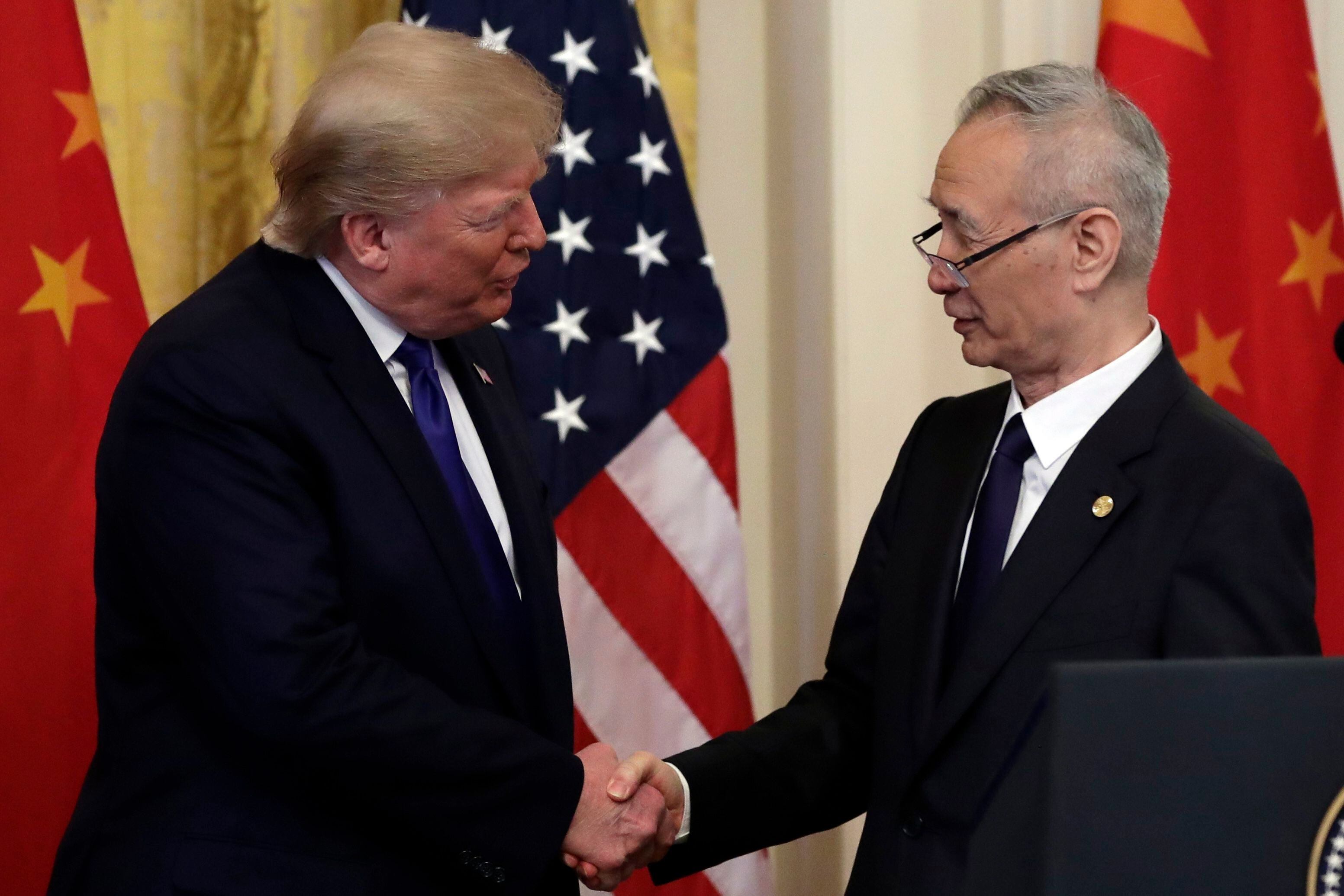
President Trump signed a so-called "phase one" trade deal with China on Wednesday, signaling a détente in a protracted trade war that resulted in hundreds of billions of dollars of tariffs being exchanged on exports between the world's two largest economies over the better part of two years.
Speaking in front of a packed crowd in the East Room of the White House ー Cabinet members and Republican lawmakers sitting side-by-side with some of the biggest names in American business ー Trump called it a "momentous step...toward a future of fair and reciprocal trade."
"Most people thought this could never happen," said the president. "It should've happened 25 years ago."
The initial agreement is expected to increase American agricultural exports to China, open up the Chinese market to more American companies, and institute new rules intended to protect American intellectual property from being stolen. But the 86-page pact, set to be released to the media soon after the signing ceremony, also keeps the majority of tariffs in place and gives the White House the ability to re-impose and escalate tariffs up and until the next phase of the deal is signed. Both sides will now begin negotiations on that phase.
In another split-screen moment in a split-screen presidency, the president and his counterpart, Chinese Vice Premier Liu He, sat at matching tables and signed the trade pact just as House Speaker Nancy Pelosi announced the seven lawmakers who will prosecute the impeachment case against President Trump in the Senate.
The trade deal signing comes less than 10 months ahead of the general election, and three weeks from the Iowa caususes ー a state that has borne the brunt of the trade war.
The Chinese delegation at the White House was noticeably smaller than the delegation that typically arrives for trade negotiations, and notably did not include Chinese President Xi. President Trump said he planned to travel to China to "reciprocate" the signing in the near future.
Though the phase one deal had largely been priced into markets, stocks nevertheless appeared to express relief that the day had finally come; a day investors and the business community hope will lead to a new era of trade and commerce between the U.S. and China. All three major averages hit record intraday highs on Wednesday, with the Dow Industrials looking to close above 29,000 for the first time.


