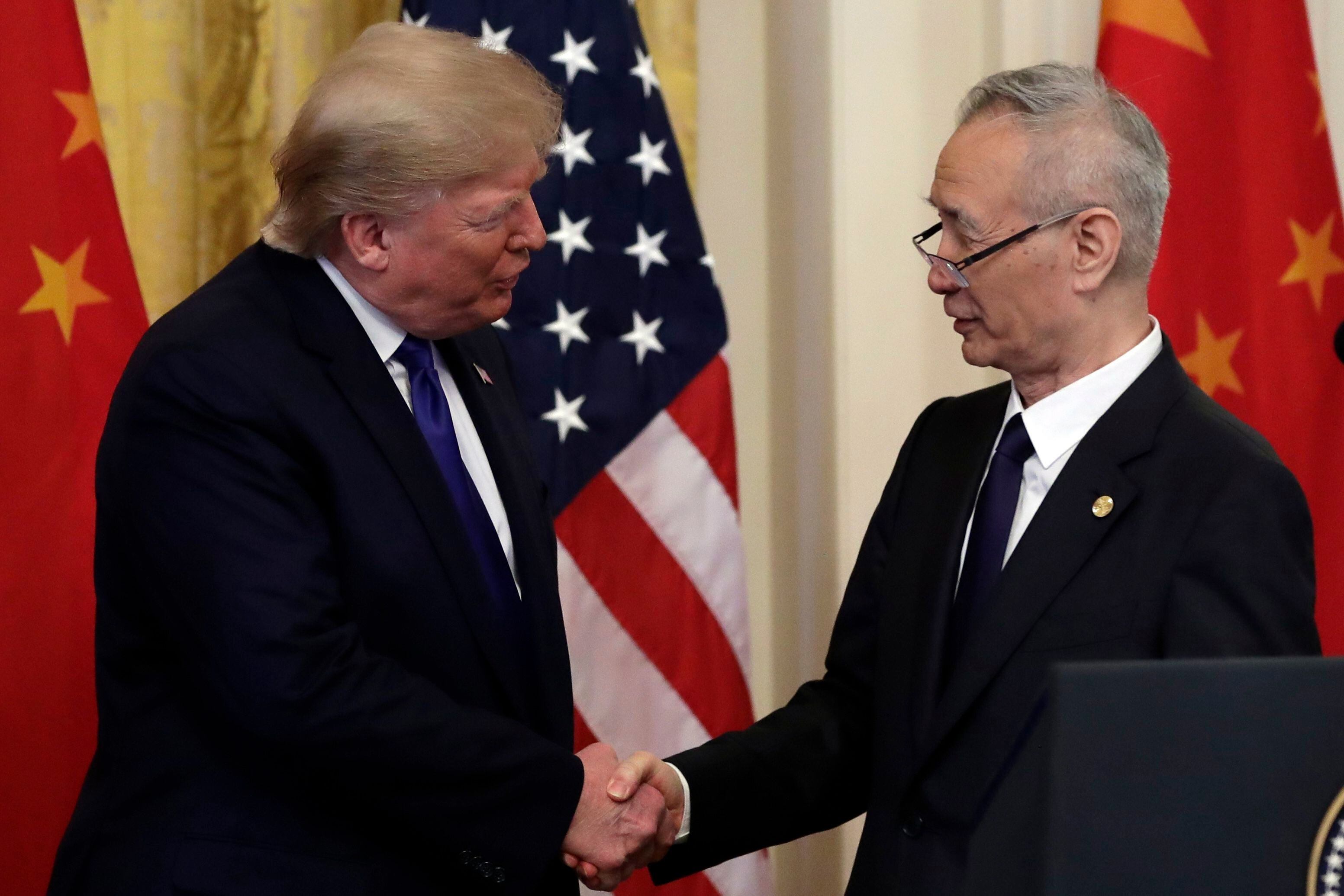
President Trump signed a so-called "phase one" trade deal with China on Wednesday, signaling a détente in a protracted trade war that resulted in hundreds of billions of dollars of tariffs being exchanged on exports between the world's two largest economies over the better part of two years.

Speaking in front of a packed crowd in the East Room of the White House ー Cabinet members and Republican lawmakers sitting side-by-side with some of the biggest names in American business ー Trump called it a "momentous step...toward a future of fair and reciprocal trade."

"Most people thought this could never happen," said the president. "It should've happened 25 years ago."

The initial agreement is expected to increase American agricultural exports to China, open up the Chinese market to more American companies, and institute new rules intended to protect American intellectual property from being stolen. But the 86-page pact, set to be released to the media soon after the signing ceremony, also keeps the majority of tariffs in place and gives the White House the ability to re-impose and escalate tariffs up and until the next phase of the deal is signed. Both sides will now begin negotiations on that phase.

In another split-screen moment in a split-screen presidency, the president and his counterpart, Chinese Vice Premier Liu He, sat at matching tables and signed the trade pact just as House Speaker Nancy Pelosi announced the seven lawmakers who will prosecute the impeachment case against President Trump in the Senate.

The trade deal signing comes less than 10 months ahead of the general election, and three weeks from the Iowa caususes ー a state that has borne the brunt of the trade war.

The Chinese delegation at the White House was noticeably smaller than the delegation that typically arrives for trade negotiations, and notably did not include Chinese President Xi. President Trump said he planned to travel to China to "reciprocate" the signing in the near future.

Though the phase one deal had largely been priced into markets, stocks nevertheless appeared to express relief that the day had finally come; a day investors and the business community hope will lead to a new era of trade and commerce between the U.S. and China. All three major averages hit record intraday highs on Wednesday, with the Dow Industrials looking to close above 29,000 for the first time.

Share:
More In Business
Rare Dom Pérignon champagne from Charles and Diana’s wedding fails to sell during Denmark auction
A rare magnum of Dom Pérignon Vintage 1961 champagne that was specially produced for the 1981 wedding of Prince Charles and Lady Diana has failed to sell during an auction. Danish auction house Bruun Rasmussen handled the bidding Thursday. The auction's house website lists the bottle as not sold. It was expected to fetch up to around $93,000. It is one of 12 bottles made to celebrate the royal wedding. Little was revealed about the seller. The auction house says the bids did not receive the desired minimum price.
New York Times, after Trump post, says it won’t be deterred from writing about his health
The New York Times and President Donald Trump are fighting again. The news outlet said Wednesday it won't be deterred by Trump's “false and inflammatory language” from writing about the 79-year-old president's health. The Times has done a handful of stories on that topic recently, including an opinion column that said Trump is “starting to give President Joe Biden vibes.” In a Truth Social post, Trump said it might be treasonous for outlets like the Times to do “FAKE” reports about his health and "we should do something about it.” The Republican president already has a pending lawsuit against the newspaper for its past reports on his finances.
OpenAI names Slack CEO Dresser as first chief of revenue
OpenAI has appointed Slack CEO Denise Dresser as its first chief of revenue. Dresser will oversee global revenue strategy and help businesses integrate AI into daily operations. OpenAI CEO Sam Altman recently emphasized improving ChatGPT, which now has over 800 million weekly users. Despite its success, OpenAI faces competition from companies like Google and concerns about profitability. The company earns money from premium ChatGPT subscriptions but hasn't ventured into advertising. Altman had recently announced delays in developing new products like AI agents and a personal assistant.
Trump approves sale of more advanced Nvidia computer chips used in AI to China
President Donald Trump says he will allow Nvidia to sell its H200 computer chip used in the development of artificial intelligence to “approved customers” in China. Trump said Monday on his social media site that he had informed China’s leader Xi Jinping and “President Xi responded positively!” There had been concerns about allowing advanced computer chips into China as it could help them to compete against the U.S. in building out AI capabilities. But there has also been a desire to develop the AI ecosystem with American companies such as chipmaker Nvidia.
Load More