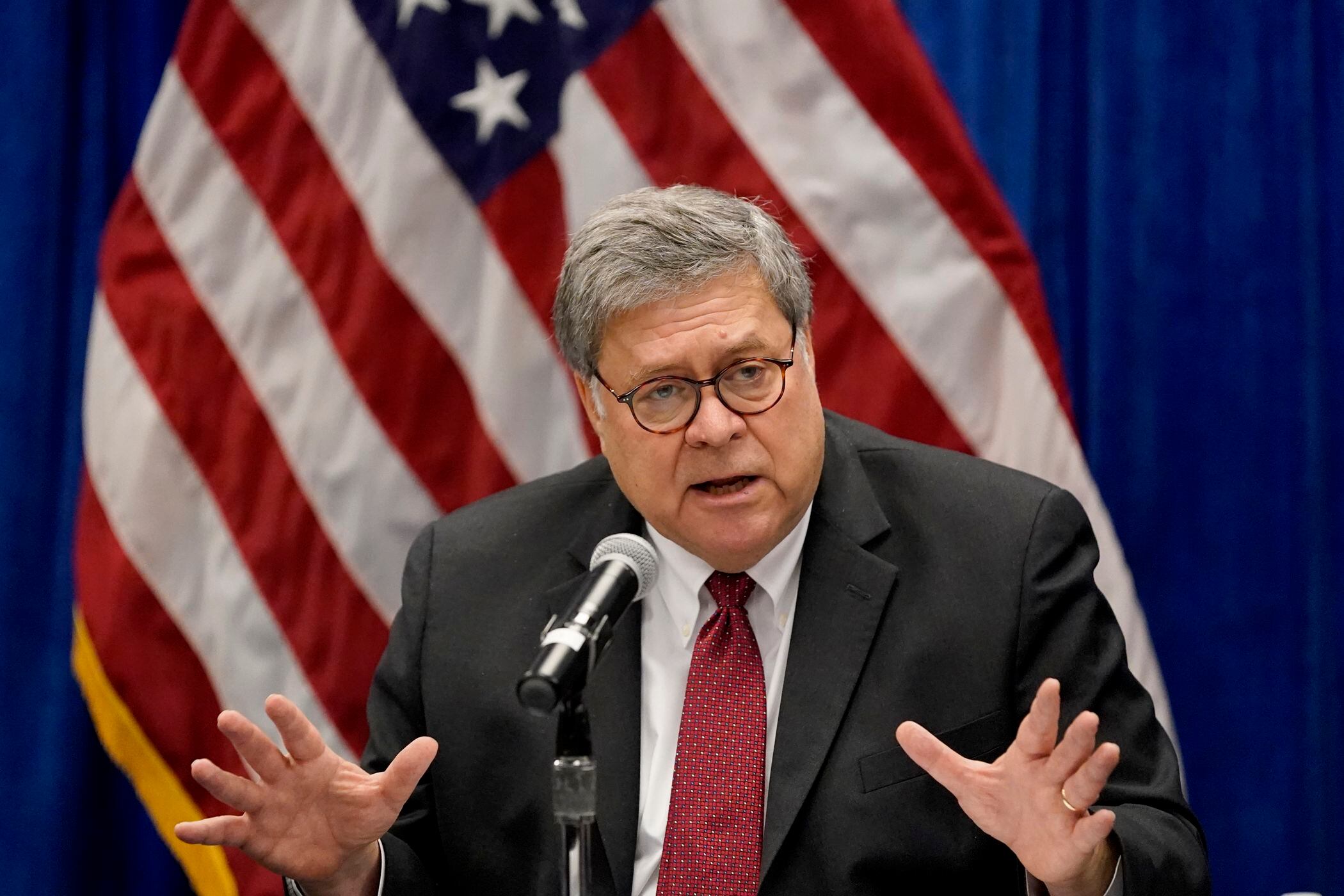
In this Oct. 15, 2020, file photo, Attorney General William Barr speaks during a roundtable discussion on Operation Legend in St. Louis. Barr has announced he is resigning. (AP Photo/Jeff Roberson, File)
By Michael Balsamo
Attorney General William Barr, one of President Donald Trump’s staunchest allies, is resigning amid lingering tension with the president over the president’s baseless claims of election fraud and the investigation into President-elect Joe Biden’s son.
Barr went Monday to the White House, where Trump said the attorney general submitted his letter of resignation. “As per letter, Bill will be leaving just before Christmas to spend the holidays with his family,” Trump tweeted.
Trump has publicly expressed his anger about Barr’s statement to The Associated Press earlier this month that the Justice Department had found no widespread election fraud that would change the outcome of the election. Trump has also been angry that the Justice Department did not publicly announce it was investigating Hunter Biden ahead of the election, despite department policy against such a pronouncement.
Barr in his resignation letter said he updated Trump Monday on the department's “review of voter fraud allegations in the 2020 election and how these allegations will continue to be pursued." He added that his last day on the job would be Dec. 23.
Trump said Deputy Attorney General Jeff Rosen, whom he labeled “an outstanding person,” will become Acting Attorney General.
Despite Trump’s obvious disdain for those who publicly disagree with him, Barr had generally remained in the president’s good graces and has been one of the president’s most ardent allies. Before the election, he had repeatedly raised the notion that mail-in voting could be especially vulnerable to fraud during the coronavirus pandemic as Americans feared going to polls.
But Trump has a low tolerance for criticism, especially public criticism, from his allies and often fires back in kind.
Barr, who was serving in his second stint as attorney general, sought to paint himself as an independent leader who would not bow to political pressure. But Democrats have repeatedly accused Barr of acting more like the president’s personal attorney than the attorney general, and Barr had proved to be a largely reliable Trump ally and defender of presidential power.
Before releasing special counsel Robert Mueller’s full report on the Russia investigation last year, Barr framed the results in a manner favorable to Trump even though Mueller pointedly said he couldn’t exonerate the president of obstruction of justice.
He also appointed as special counsel the U.S. attorney who is conducting a criminal investigation into the origins of the FBI’s probe of the 2016 election that morphed into Mueller’s investigation of possible Trump-Russia cooperation, following Trump’s repeated calls to “investigate the investigators.”
Barr also ordered Justice Department prosecutors to review the handling of the federal investigation into Trump’s former national security adviser Michael Flynn and then sought to dismiss the criminal charges against Flynn, who had twice pleaded guilty to lying to the FBI. Trump later pardoned Flynn.
Barr’s break from Trump over election fraud wasn’t the first. Earlier this year, Barr told ABC News that the president’s tweets about Justice Department cases “make it impossible for me to do my job” and tensions flared just a few months ago when the two were increasingly at odds over the pace of the Durham investigation.
Trump had been increasingly critical about a lack of arrests and Barr was privately telling people he was frustrated by Trump’s public pronouncements about the case.
Trump was also said to blame Barr for comments from FBI Director Chris Wray on election fraud and mail-in voting that didn’t jibe with the president’s alarmist rhetoric.
___
Associated Press writers Colleen Long, Eric Tucker, Jonathan Lemire, and Zeke Miller contributed to this report.
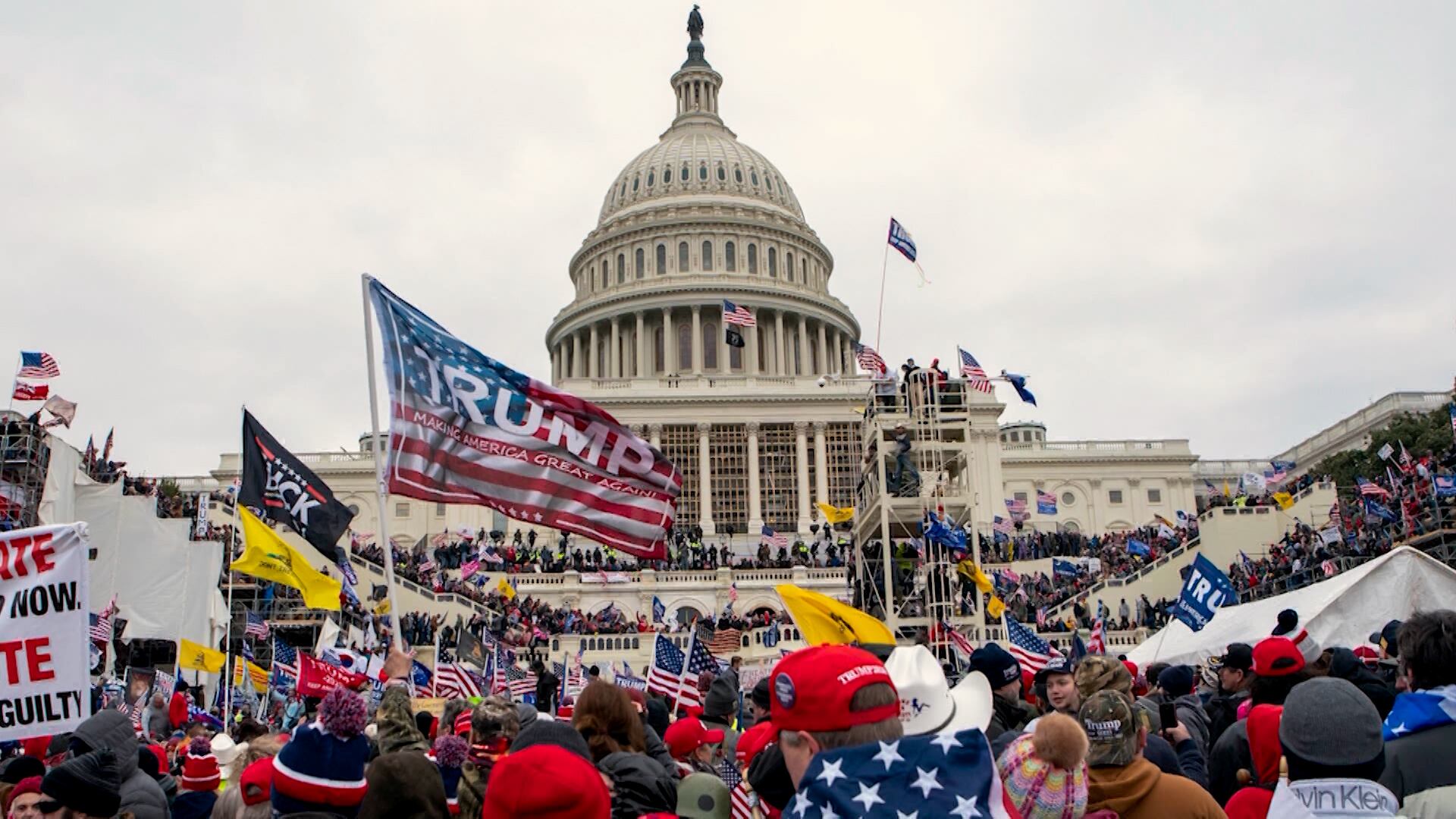
As the U.S. comes up on the first anniversary of the January 6 insurrection.,A.C. Thompson, investigative reporter at ProPublica, joined Cheddar's Baker Machado to discuss updates to American Insurrection by FRONTLINE, ProPublica and Berkeley Journalism’s Investigative Reporting Program. The documentary investigates the attack on the Capitol touched off by the lie that the presidential election was stolen from Donald Trump but with new information gleaned since the event including interviews with lawmakers and law enforcement and the evolution of groups like the Boogaloo Boys and the Proud Boys behind the attack. "In some ways those groups that were kind of the vanguard of January 6 are maybe no longer relevant because their message is everywhere," he said.
A new report from ProPublica and the Washington Post found that Facebook Groups played a major role in the spread of misinformation linked to the January 6 insurrection with more than 650,000 posts claiming that Joe Biden's election victory was illegitimate.
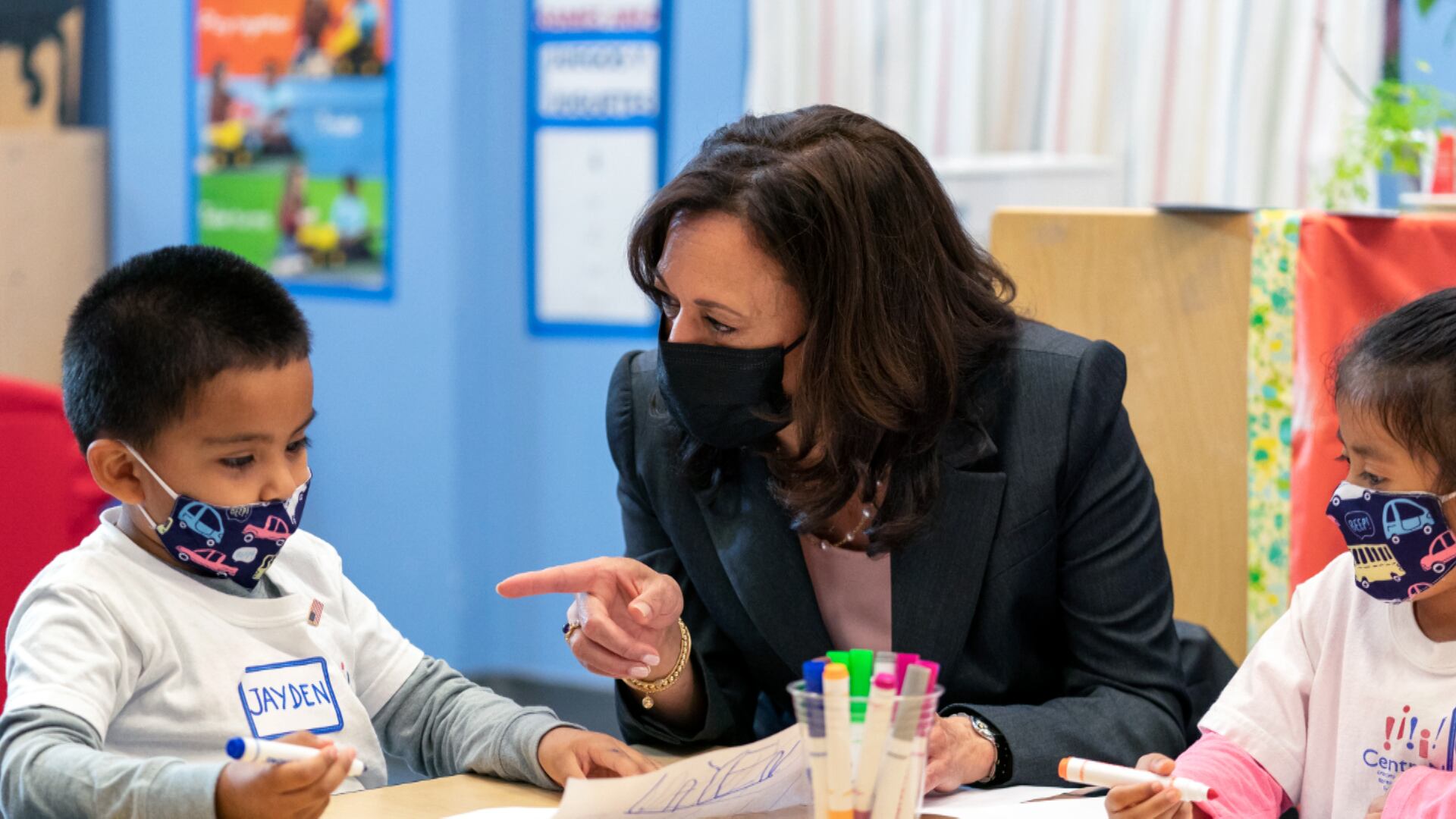
Millions of Americans with young children have relied on the child tax credit since the federal government began issuing checks in July 2021. The last round of payments was sent out just before the Christmas holiday — at the same time as the omicron variant surged. Leah Hamilton, associate professor of social work at Appalachian State University, joined Cheddar to discuss what the end to the tax credit means as the U.S. sees the end of many relief programs and its highest number of COVID cases since the start of the pandemic. "It'll become harder for families to meet their basic needs, increasing national childhood poverty rates and the proportion of families who have difficulty putting food on the table, maintaining stable housing, and paying their bills," Hamilton said. She also pointed to research that the credit as a long-term investment in children offsets claims that it contributes to macroeconomic impacts like inflation.
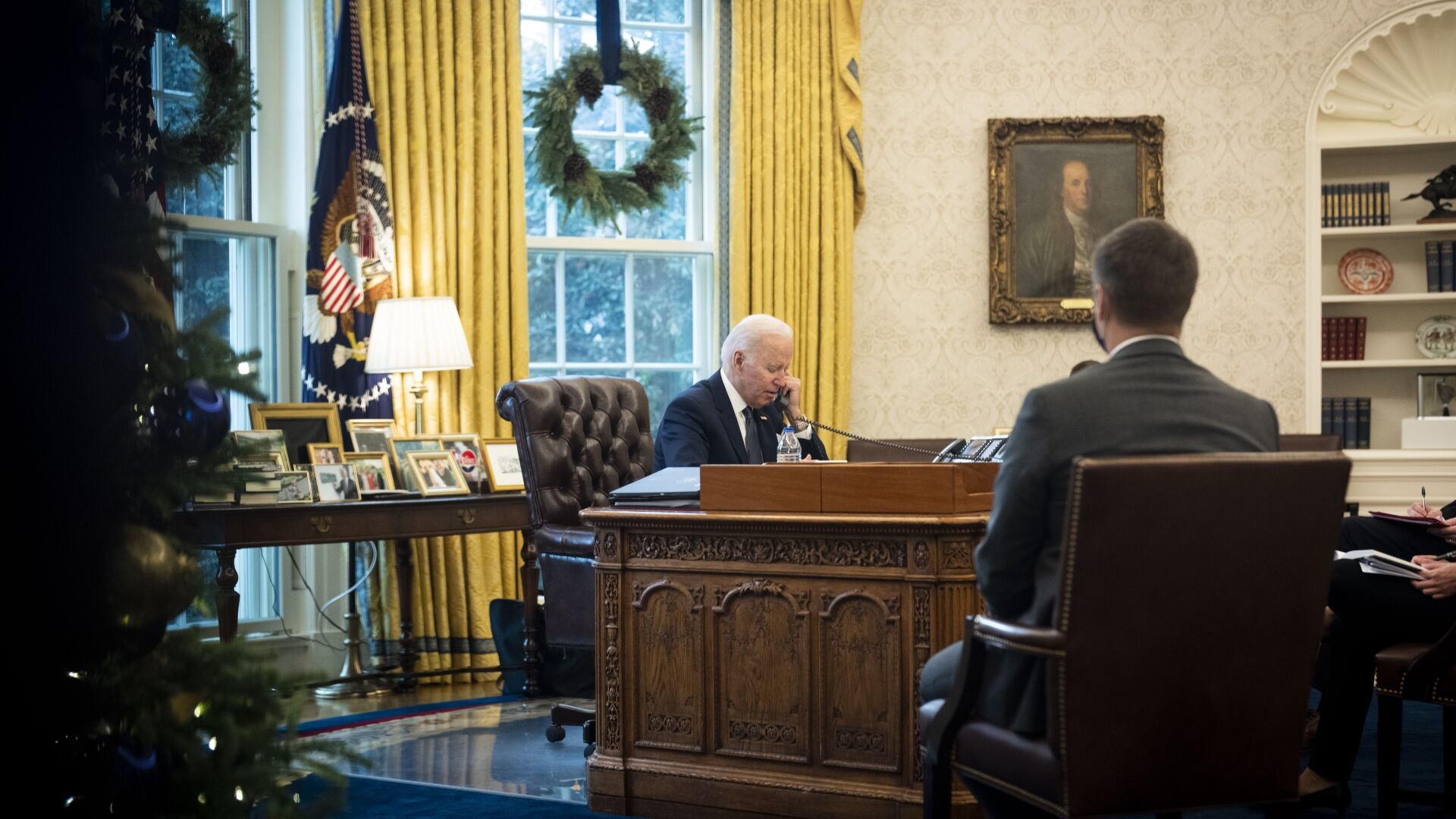
U.S. President Joe Biden spoke with Ukrainian President Volodymyr Zelensky over the week-end, just days after he spoke with Russian President Vladimir Putin. The call comes as Washington prepares to meet with Moscow on January 10, as tensions mount over Russia's military build up near its border with Ukraine. Cheddar News speaks with Mustafa Tameez, a former advisor to the U.S. Department of Homeland Security, about the issue.
Several Silicon Valley insiders are being accused of contorting a 1990s-era tax break to avoid taxes on millions of dollars of investment profits. The tax break is known as the qualified small business stock exemption, and it allows early investors in certain companies to avoid half of the taxes on up to $10 million in capital gains. A piece recently published in the New York Times says venture capital firms like Andreessen Horowitz replicated the tax exemption by giving shares of companies to friends and family, who would otherwise face a 23.8% capital gains bill. The CEO of Roblox is also accused of replicating the tax break for his family members at least 12 times. Although the loophole known as 'stacking' is considered to be legal, the Times piece implies that the exemption has been manipulated for the ultra-wealthy to become more wealthy. Greycroft co-founder and Chairman Emeritus Alan Patricof joins Cheddar News' Closing Bell to discuss.
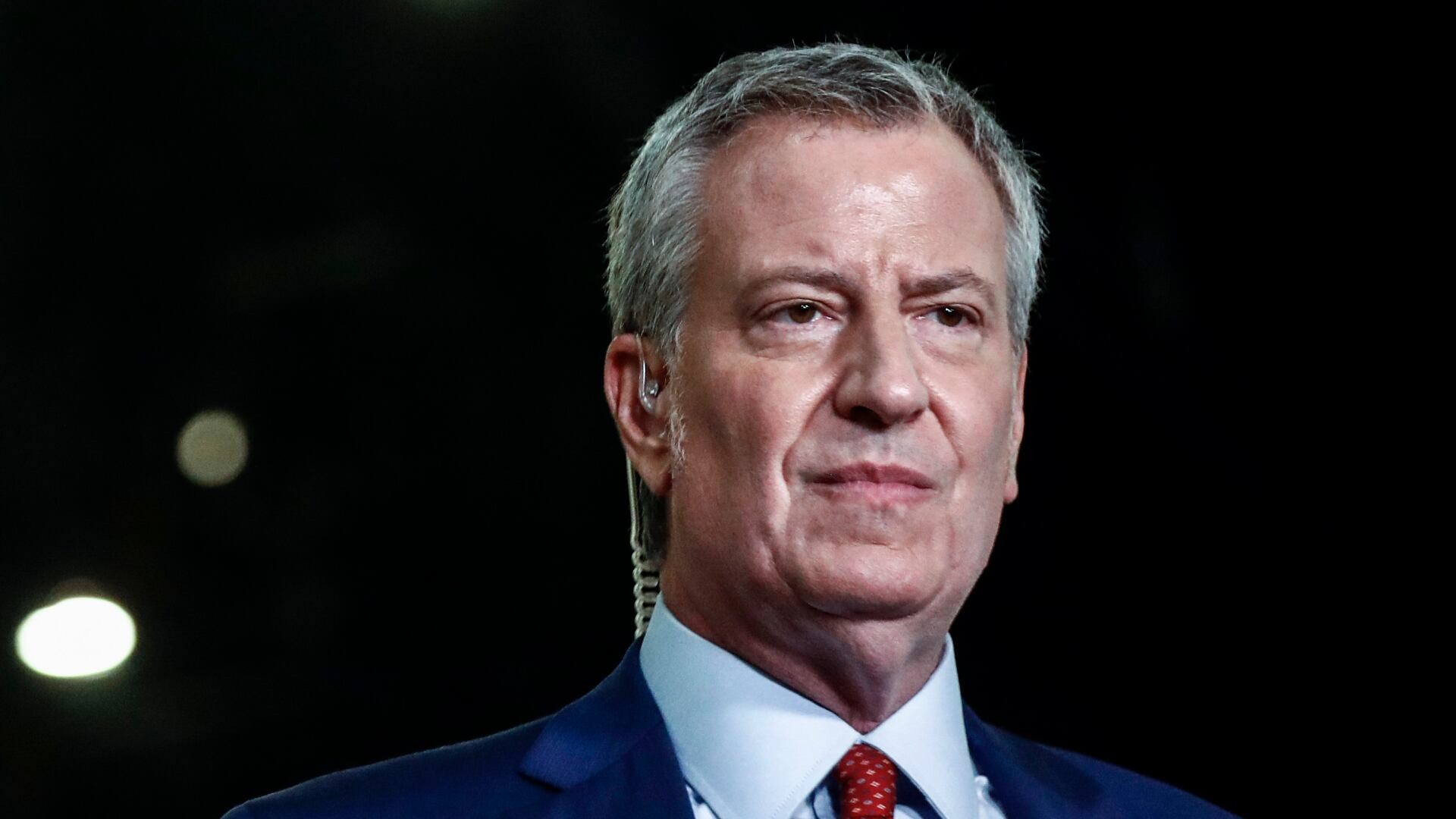
Chris Sommerfeldt, City Hall reporter for the New York Daily News, joins Cheddar News' Closing Bell, where he discusses both the wins and losses of Bill de Blasio's eight years as New York City Mayor.
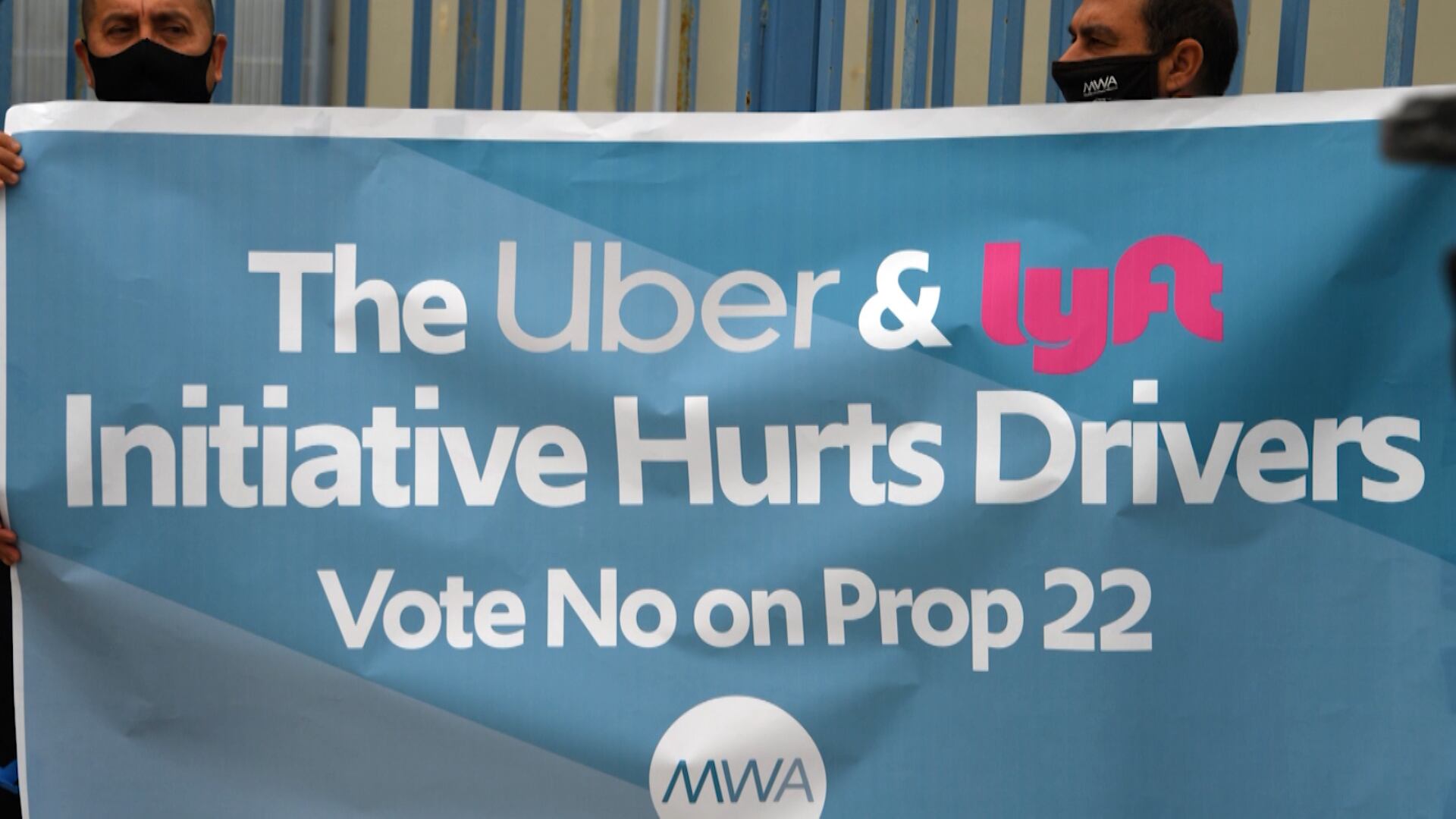
The push to regulate the gig worker economy is gaining steam as the share of workers who participate in freelancing through businesses like Uber and Lyft have also exponentially grown during the pandemic. Employment attorney Mark Kluger, founding partner at Kluger Healey, LLC, joined Cheddar to break down how the battle to reclassify gig workers will continue in the new year, and why the issue continues to generate conflict. "More and more workers are using gig work as their primary source of income and as a result of that they are not like employees in the sense that they don't have benefits like health insurance," Kluger noted.