By Michael R. Sisak and Jennifer Peltz
Donald Trump returned Tuesday to the civil fraud trial that imperils his real estate empire, watching and deploring the case as an employee and an outside appraiser testified that his company essentially put a thumb on the scale when sizing up his properties' value.
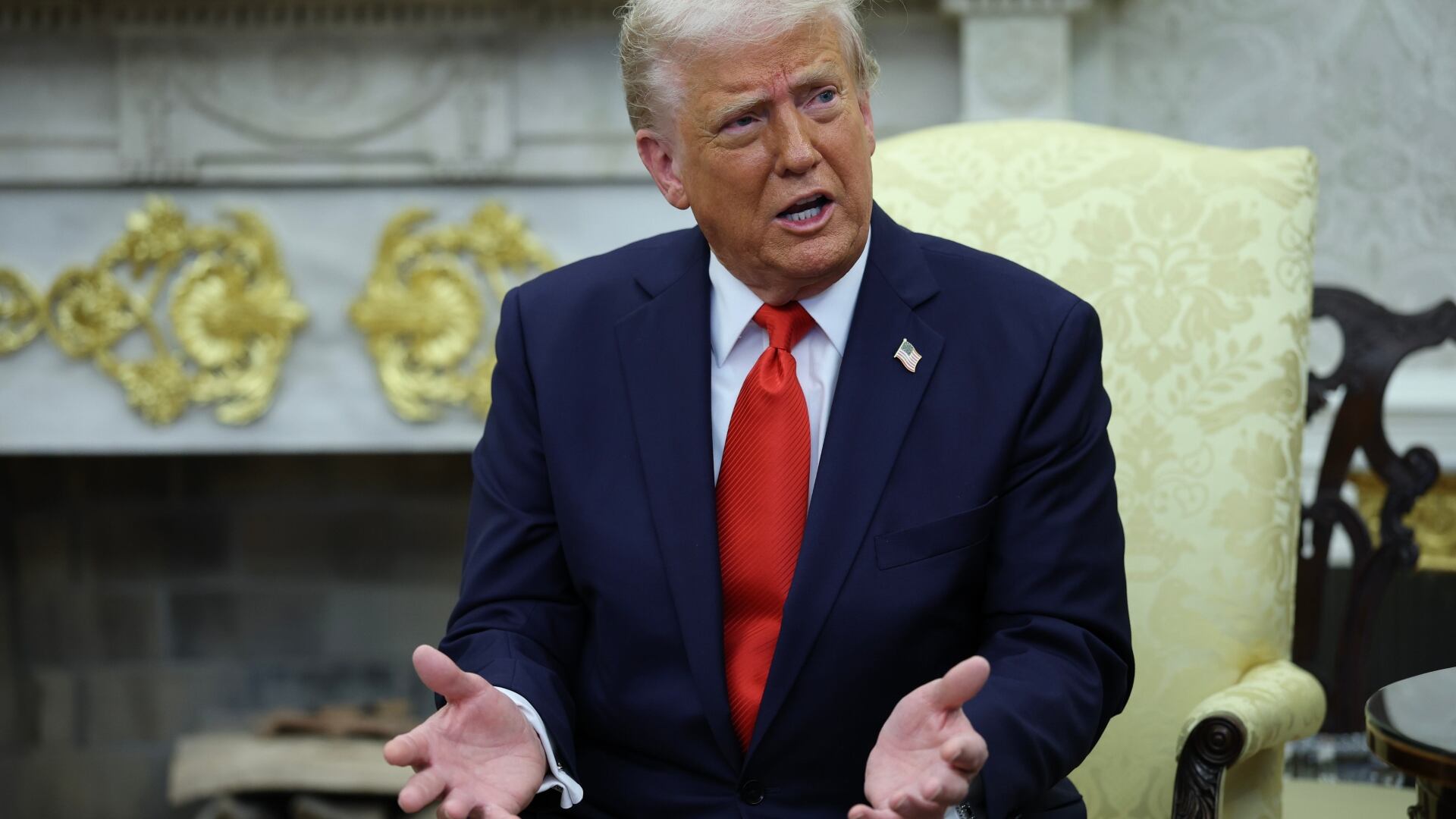
Incensed by a case that disputes his net worth and could strip him of such signature holdings as Trump Tower, the former president is due to testify later in the trial. But he chose to attend the first three days and came back Tuesday to observe — and to protest his treatment to the news cameras waiting outside the Manhattan courtroom.
Star witness Michael Cohen, a onetime Trump fixer now turned foe, postponed his scheduled testimony because of a health problem.
Instead, Trump company accountant Donna Kidder testified that she was told to make some assumptions favorable to the firm on internal financial spreadsheets. Outside appraiser Doug Larson said he didn't suggest or condone a former Trump Organization comptroller's methods of valuing properties.
“It doesn't make sense,” Larson said of the way the ex-controller reached a $287.6 million value for a prominent Trump-owned retail space in 2013.
Trump, outside court, reiterated his insistence that he's done nothing wrong and that New York Attorney General Letitia James' lawsuit is a political vendetta designed to drag down his 2024 presidential campaign as he leads the Republican field.
“We built a great company — a lot of cash, it’s got a lot of great assets, some of the greatest real estate assets anywhere in the world,” Trump said outside the courtroom. He dismissed the case as “a disgrace,” the legal system as “corrupt" and the Democratic attorney general as a “radical lunatic.”
James’ lawsuit alleges that Trump and his company deceived banks, insurers and others by massively overvaluing his assets and inflating his net worth on his financial statements. She also attended Tuesday but didn’t comment.
Trump says his assets were actually undervalued and maintains that disclaimers on his financial statements amounted to telling banks and other recipients not to accept his numbers but to check them out for themselves.
Larson, a real estate brokerage executive and professional appraiser, assessed Trump properties for lenders. He was taken aback when told on the stand that he was repeatedly cited as an outside expert in former Trump Organization controller Jeffrey McConney ’s valuation spreadsheets.
“It’s inappropriate and inaccurate,” Larson testified. “I should have been told, and an appraisal should have been ordered.”
When it came to valuing a storefront formerly known as Niketown, McConney relied on rates of return for a different type of property, rather than for comparable retail space, Larson testified. He also said he appraised a Trump-owned Wall Street building at $540 million in 2015, while McConney valued it at $735.4 million on Trump’s financial statement.
Outside court, Trump attorney Alina Habba suggested that appraisers' valuations routinely come in lower than what owners believe their properties are worth.
Kidder, the Trump company accountant, provided a window into Trump Organization accounting practices.
She testified that as she filled out internal spreadsheets documenting the value of a Trump-owned Wall Street office building, longtime former Trump Organization finance chief Allen Weisselberg told her to act as if the skyscraper would be completely leased by a certain date, even if some space was currently vacant. For a Park Avenue residential tower, she was told to project that unsold units “would all sell out” in a certain timeframe.
Kidder said she wasn’t aware that those assumptions would be used to improve Trump’s bottom line on financial statements that helped his company make deals and get financing and insurance.
Trump lawyer Christopher Kise objected to what he deemed “very granular” testimony from Kidder, who also alluded to a prior Trump tangle with New York state’s lawyers.
In explaining a spreadsheet, she noted an entry about a $12 million loan to pay a $25 million settlement of lawsuits from former state Attorney General Eric Schneiderman and others over the now-defunct Trump University real estate seminar program.
Judge Arthur Engoron is hearing the current case without a jury. The suit was brought under a state law that doesn't allow for one.
Trump has repeatedly criticized both the statute and the judge, a Democrat. The ex-president said Tuesday that he had come to like and respect Engoron but believed that Democrats were “pushing him around like a pinball.”
After Trump maligned a key court staffer on social media during the trial's first days, the judge ordered him to delete the post and issued a limited gag order, warning participants in the case not to smear members of his staff.
In a pretrial decision last month, Engoron resolved the case's top claim, ruling that Trump and his company committed years of fraud by exaggerating the value of his assets and net worth on his financial statements.
As punishment, Engoron ordered that a court-appointed receiver take control of some Trump companies, putting the future oversight of Trump Tower and other marquee properties in question. An appeals court has since blocked enforcement of that aspect of the ruling for now.
The trial concerns six remaining claims in the lawsuit, including allegations of conspiracy, insurance fraud and falsifying business records.
Updated October 17, 2023 at 3:48 p.m. ET with latest details.