By Eric Tucker
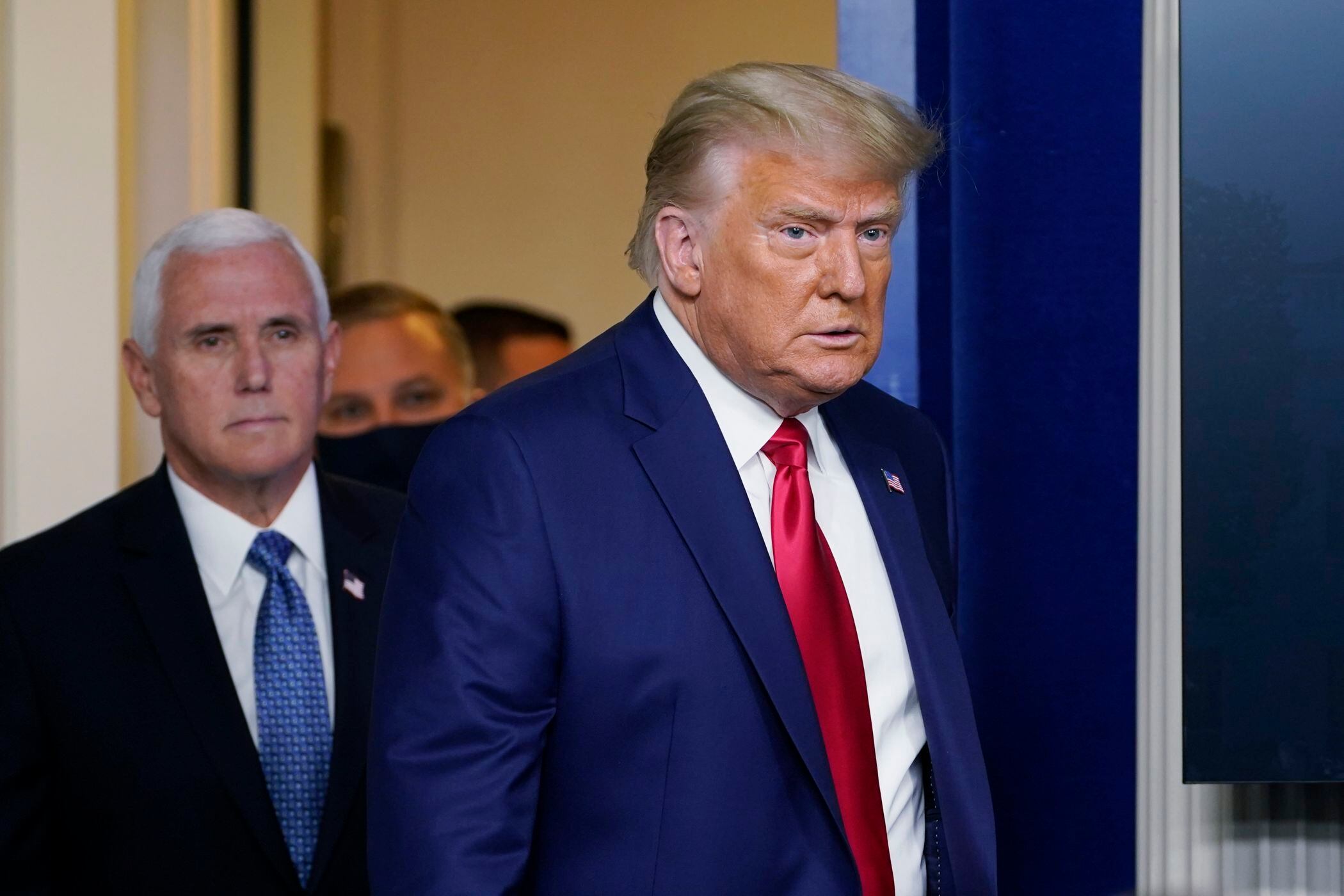
President Donald Trump pardoned former national security adviser Michael Flynn on Wednesday, taking direct aim in the final days of his administration at a Russia investigation that he has long insisted was motivated by political bias.
“It is my Great Honor to announce that General Michael T. Flynn has been granted a Full Pardon," Trump tweeted. “Congratulations to @GenFlynn and his wonderful family, I know you will now have a truly fantastic Thanksgiving!”
Flynn is the second Trump associate convicted in the Russia probe to be granted clemency by the president. Trump commuted the sentence of longtime confidant Roger Stone just days before he was to report to prison. It is part of a broader effort to undo the results of an investigation that for years has shadowed his administration and yielded criminal charges against a half dozen associates.
The action voids the criminal case against Flynn just as a federal judge was weighing, skeptically, whether to grant a Justice Department request to dismiss the prosecution despite Flynn's own guilty plea to lying to the FBI about his Russia contacts.
The move, coming as Trump winds down his single term, is likely to energize supporters who have taken up the case as a cause celebre and rallied around the retired Army lieutenant general as the victim of what they assert is an unfair prosecution. Trump himself has repeatedly spoken warmly about Flynn, even though special counsel Robert Mueller's prosecutors once praised him as a model cooperator in their probe into ties between Russia and the 2016 Trump campaign.
House Judiciary Committee Chair Jerry Nadler said the pardon was undeserved and unprincipled.
“The President’s enablers have constructed an elaborate narrative in which Trump and Flynn are victims and the Constitution is subject to the whims of the president," the Democratic congressman said in a statement. “Americans soundly rejected this nonsense when they voted out President Trump. ”
The pardon is the final step in a case defined by twists and turns over the last year after the Justice Department abruptly move to dismiss the case, insisting that Flynn should have never been interviewed by the FBI in the first place, only to have U.S. District Justice Emmet Sullivan refuse the request and appoint a former judge to argue against the federal government's position.
In the months since, a three-judge panel's decision ordering Sullivan to dismiss the case was overturned by the full appeals court, which sent the matter back to Sullivan. At a hearing in September, Flynn lawyer Sidney Powell told the judge that she had discussed the Flynn case with Trump but also said she did not want a pardon — presumably because she wanted him to be vindicated in the courts.
Powell emerged separately in recent weeks as a public face of the Trump's efforts to overturn the results of his election loss to President-elect Joe Biden, but the Trump legal team ultimately distanced itself from her after she advanced a series of uncorroborated conspiracy claims.
The pardon spares Flynn the possibility of any prison sentence, which Sullivan could potentially have imposed had he ultimately decided to reject the Justice Department's dismissal request. That request was made in May after a review of the case by a federal prosecutor from St. Louis who had been specially appointed by Attorney General William Barr.
Flynn acknowledged lying during the FBI interview by saying he had not discussed with the then-Russian ambassador, Sergey Kislyak, sanctions that had just been imposed on Russia for election interference by the outgoing Obama administration. During that conversation, Flynn urged Kislyak for Russia to be “even-keeled” in response to the punitive measures, and assured him “we can have a better conversation” about relations between the two countries after Trump became president.
The conversation alarmed the FBI, which at the time was investigating whether the Trump campaign and Russia had coordinated to sway the election's outcome. In addition, White House officials were stating publicly that Flynn and Kislyak had not discussed sanctions.
But last May, the Justice Department abruptly reversed its position in the case. It said the FBI had no basis to interview Flynn about Kislyak, then the Russian ambassador to the United States, and that any statements he may have made were not relevant to the FBI's broader counterintelligence probe. It cited internal FBI notes showing that agents had planned to close out their investigation into Flynn weeks earlier.
Flynn was ousted from his position in February 2017 after news broke that he had indeed discussed sanctions with Kislyak and that former Obama administration officials had warned the White House that he could be vulnerable to blackmail.
Flynn, of Middletown, Rhode Island, was among the first of the president's aides to admit guilt in Mueller's investigation and cooperated extensively for months. He provided such extensive cooperation that prosecutors did not recommend any prison time and suggested that they would be fine with probation.
But on the morning he was to have been sentenced, after a stern rebuke about his behavior from Sullivan, Flynn asked for the hearing to be cut short so that he could continue cooperating and earn credit toward a more lenient sentence.
After that, though, he hired new attorneys — including Powell, a conservative commentator and outspoken critic of Mueller's investigation — who took a far more confrontational stance to the government.
The lawyers accused prosecutors of withholding documents and evidence they said was favorable to the case and repeatedly noted that one of the two agents who interviewed Flynn was fired from the FBI for having sent derogatory text messages about Trump during the 2016 campaign.
Updated on November 25, 2020, at 4:43 p.m. ET.