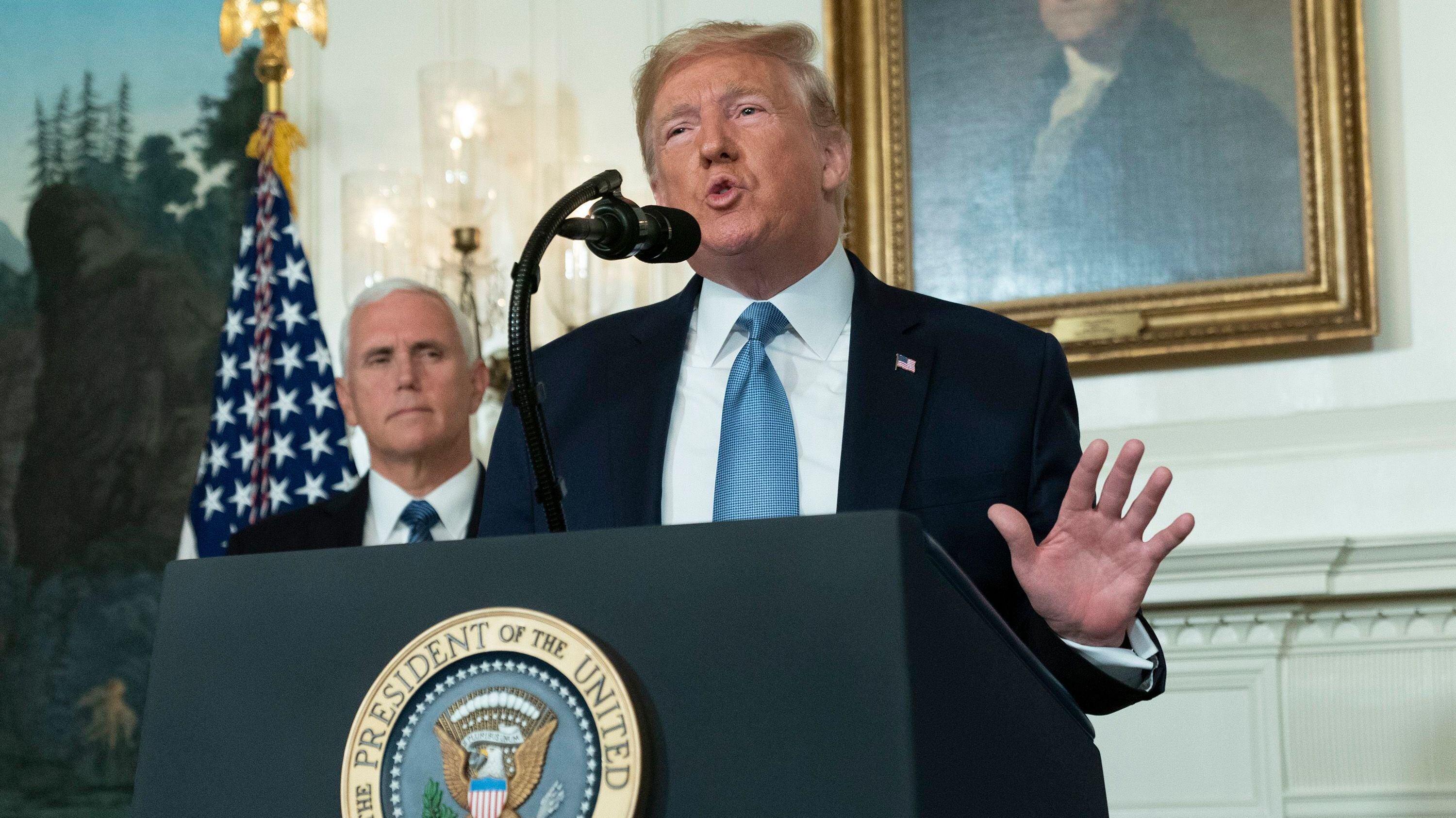
President Trump denounced white supremacy and called for a bipartisan effort to combat gun violence on Monday, two days after back-to-back mass shootings killed over 30 people and rocked the nation.
In remarks delivered from the White House, Trump said the government needs to boost its efforts to confront violent internet culture, mental illness, and implement red-flag laws, which allow guns to be confiscated from individuals deemed to be a risk to public safety. He did not propose any major overhaul to gun control legislation.
"Mental illness and hatred pulls the trigger, not the gun," Trump said as he spoke alongside Vice President Mike Pence.
On Saturday, a gunman opened fire at a Walmart in El Paso killing at least 22 people and injuring dozens more. In a racist manifesto believed to be from the suspect, which mirrored rhetoric used by Trump when speaking about immigrants, the shooter said he was specifically targeting Hispanics to stop their "invasion of Texas."
Monday, however, the president explicitly called out crimes of hate. "In one voice, our nations must condemn racism, bigotry, and white supremacy," Trump said. "These sinister ideologies must be defeated. Hate has no place in America."
The condemnation follow several instances — including after the mosque massacre in Christchurch, New Zealand in March and the synagogue shooting in Poway, California in April — where critics said Trump failed to effectively disavow white supremacy from his bully pulpit.
"To pretend that [Trump's] administration and the hateful rhetoric it spreads doesn't play a role in the kind of violence that we saw yesterday in El Paso is ignorant at best and irresponsible at worst," Heidi Beirich, the head of the Southern Poverty Law Center's Intelligence Report and Hatewatch blog, said in a statement on Sunday.
The Justice Department announced it is treating the shooting as a hate crime and a domestic terrorism case. The 21-year-old shooter, Patrick Crusius, surrendered to police at the scene.
"We're going to do what we do to terrorists in this country which is to deliver swift and certain justice," John Bash, the U.S. Attorney for the Western District of Texas, said on Sunday.
Democratic state Rep. César Blanco, who represents El Paso in Austin, told Cheddar that he was not swayed by the president’s remarks, saying that his city “is ground zero” for Trump’s hateful anti-Latino, anti-immigrant rhetoric. “Since this president started his campaign he has negatively talked about Latinos," Blanco said. "He has called us murders, he has called us rapists, he says that we bring drugs into this country."
Just 13 hours after the El Paso massacre, another mass shooter killed nine people in Dayton, Ohio, including his younger sister.
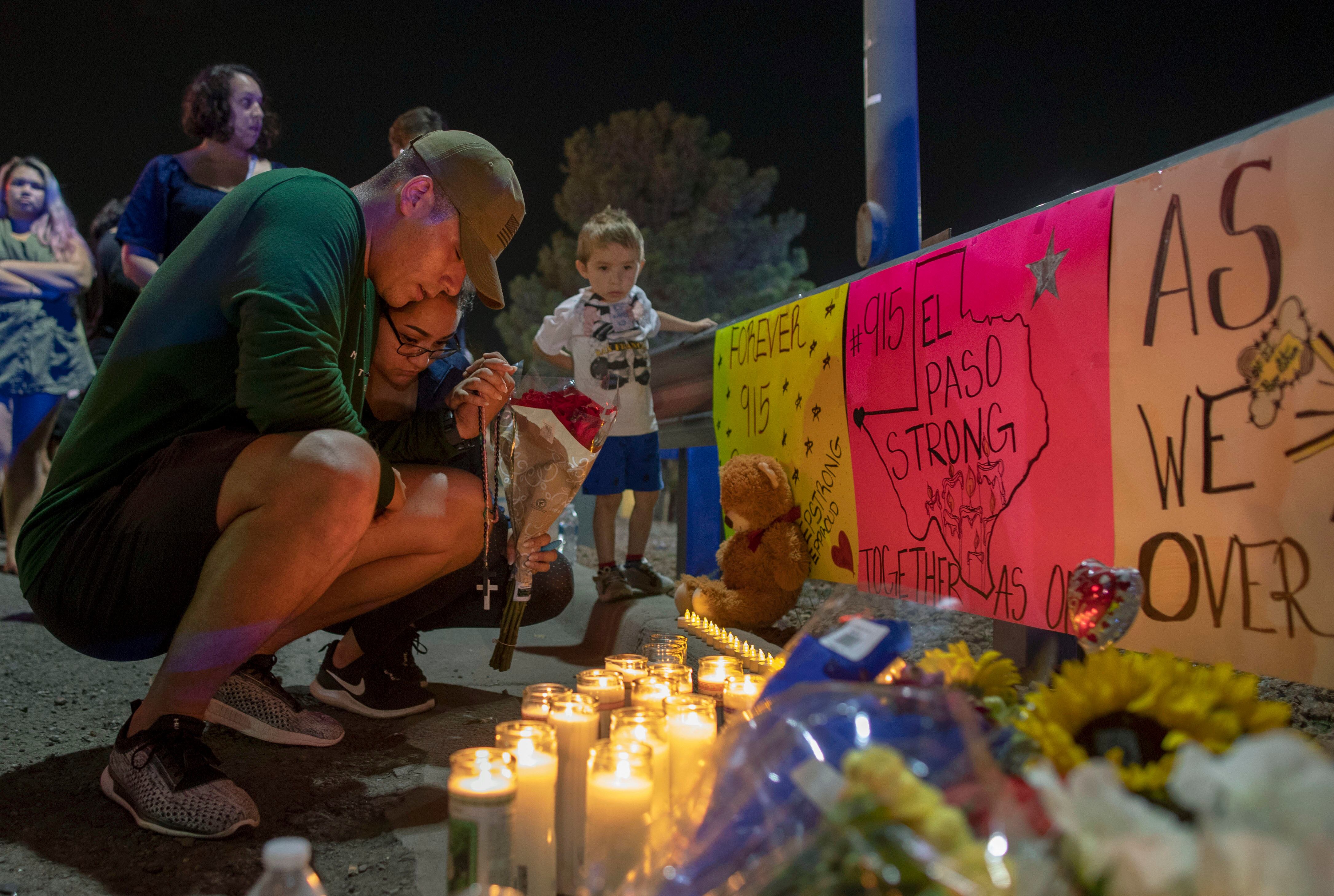
In his address Monday, Trump called the two shootings "barbaric slaughters [that] are an assault on our communities, and attack upon our nation, and a crime against all of humanity."
Trump also warned that the "perils of internet and social media cannot be ignored." Following the El Paso attack, the controversial platform 8chan, an anonymous message board popular with far-right extremists and a variety of fringe groups, was taken offline after its security services provider, Cloudflare, announced that it would no longer support the site. Crusius had allegedly published his manifesto on 8chan just minutes prior to the shooting — just as manifestos appeared on the platform before the Christchurch and Poway attacks.
"Unfortunately the action we take today won't fix hate online," Matthew Prince, Cloudfare's CEO said in a statement. "It will almost certainly not even remove 8chan from the Internet. But it is the right thing to do. Hate online is a real issue."
Trump also said that harmful video games were influencing unstable individuals and creating a culture that glorifies violence, a claim that has been rebuked repeatedly by social scientists.
"Our nation has watched with rising horror and dread as one mass shooting has followed another," Trump added.
The president, moreover, said the country needs to reform its laws regarding mental illness and improve its ability to identify mentally distrubted individuals — an argument that has long been employed by the National Rifle Association and pro-gun advocates following mass shootings. In February 2017, Trump, nevertheless, repealed an Obama-era regulation that made it more difficult for people with mental illnesses to purchase a firearm.
In a statement on Monday, Paul Gionfriddo, the president and CEO of Mental Health America, said that Trump's remarks on mental illness was just "talk that masks inaction" on gun control, adding that "to say that gun violence is solely a mental health issue is simply wrong. Most people with mental health concerns are never violent."
Furthermore, Trump said he directed the Justice Department to propose legisaltion that would mandate the death penalty for those guilty of hate crimes and mass murder.
Earlier in the day on Twitter, Trump called for Washington to strengthen background checks and proposed "marrying" them to immigraion reform legislation. He did not elaborate during his live address hours later.
"When President Trump links background checks for guns with immigration reform, he is once again demonizing immigrants and communities of color," Ernest Coverson, the head of Amnesty International USA's End Gun Violence campaign, said in a statement on Monday. "It is outrageous to denounce bigotry in one breath and terrorize the community that was targeted in one of these shootings."
Trump also attacked the news media, again, on Monday morning, tweeting that the media has "a big responsibility to life and safety in our Country" and that the "Fake News has contributed greatly to the anger and rage."
Also on Monday, former President Barack Obama issues a rare, and scathing, statement condemning hateful language used by political leaders that incites violence and called on the American people to rise up and hold public officials accountable for inaction on gun control.
“The evidence shows that [gun control] can stop some killings. They can save some families from heartbreak. We are not helpless here,” Obama said.
Seemingly ahead of the former president, residents in Dayton drowned out Republican Gov. Mike DeWine with a chant of “do something!” while he spoke at a vigil on Sunday.