WASHINGTON (AP) — The Trump administration has ordered the Consumer Financial Protection Bureau to stop nearly all its work, effectively shutting down an agency that was created to protect consumers after the 2008 financial crisis and subprime mortgage-lending scandal.
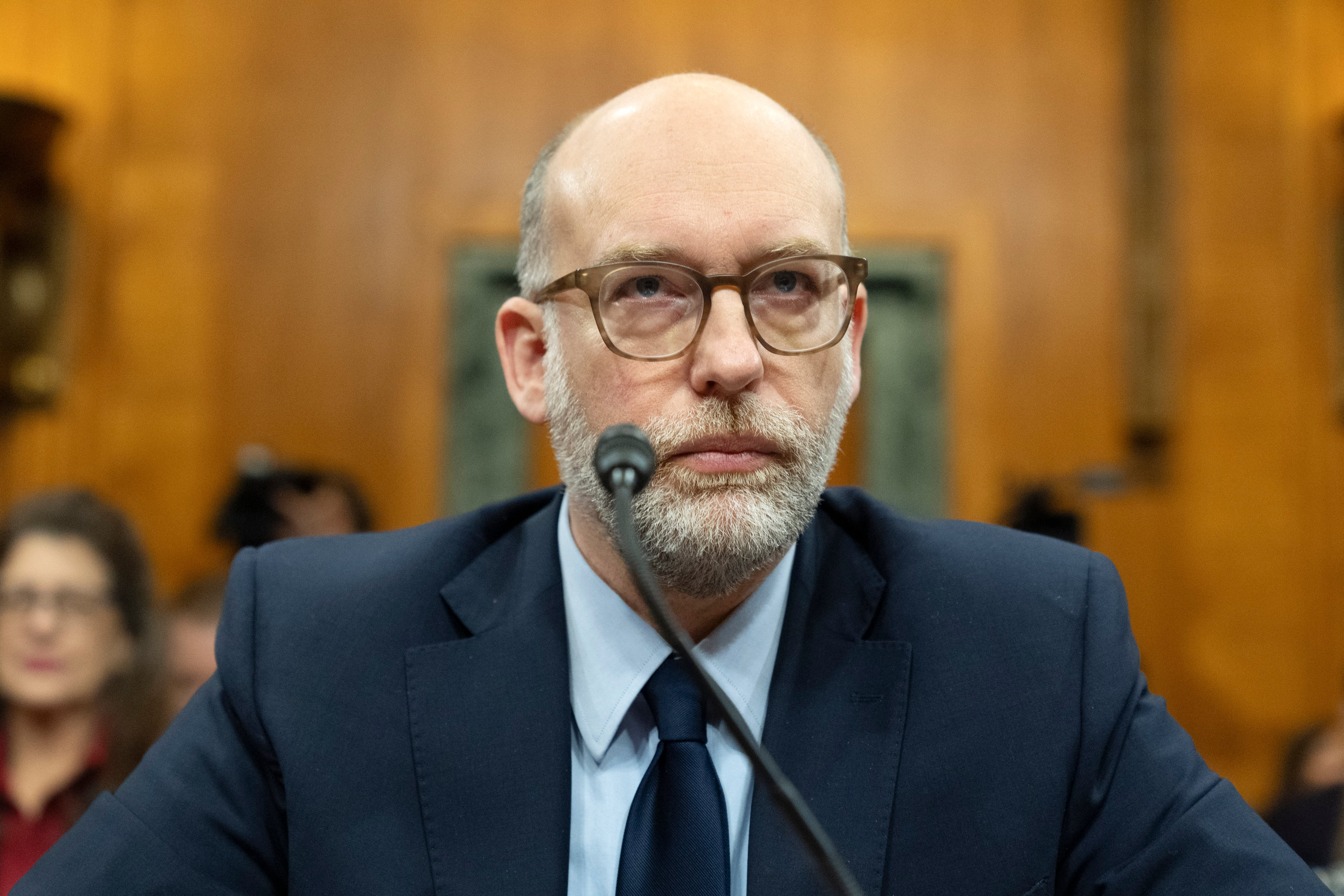
Russell Vought, the newly installed director of the Office of Management and Budget, directed the CFPB, in a Saturday night email confirmed by The Associated Press, to stop work on proposed rules, to suspend the effective dates on any rules that were finalized but not yet effective, and to stop investigative work and not begin any new investigations. The agency has been a target of conservatives since President Barack Obama pushed to include it in the 2010 financial reform legislation that followed the 2007-2008 financial crisis.
The email also ordered the bureau to “cease all supervision and examination activity.”
On Sunday, administration officials also said that the CFPB's headquarters in Washington, D.C. would be closed the week of Feb. 10 through Feb. 14, according to an email obtained by The Associated Press. No reason was given for closure.
“Employees and contractors are to work remotely unless instructed otherwise,” the email to headquarters workers said.
The order follows similar efforts by the White House to dismantle the U.S. Agency for International Development.
Since the CFPB is a creation of Congress, it would require a separate act of Congress to formally eliminate it. But the head of the agency has discretion over what enforcement actions to take, if any.
Yet Elon Musk commented, “CFPB RIP” on social media site X on Friday. And the CFPB homepage on the Internet was down Sunday, replaced by a message reading “page not found.”
Also late Saturday, Vought said in a social media post that the CFPB would not withdraw its next round of funding from the Federal Reserve, adding that its current reserves of $711.6 million is “excessive." Congress directed the bureau to be funded by the Fed to insulate it from political pressures.
“This spigot, long contributing to CFPB’s unaccountability, is now being turned off,” Vought said on X.
The CFPB says that it has obtained nearly $20 billion in financial relief for U.S. consumers since its founding in the form of canceled debts, compensation, and reduced loans. Last month, the bureau sued Capital One for allegedly misleading consumers about its offerings for high-interest savings accounts — and “cheating” customers out of more than $2 billion in lost interest payments as a result, the bureau said.
Dennis Kelleher, president of Better Markets, an advocacy group, said, “that's why Wall Street’s biggest banks and Trump’s billionaire allies hate the bureau: it’s an effective cop on the finance beat and has stood side-by-side with hundreds of millions of Americans — Republicans and Democrats — battling financial predators, scammers, and crooks.”
The administration's move against the CFPB also highlights the tensions between Trump's more populist promises to lower costs for working-class families and his pledge to reduce government regulation.
During the campaign, Trump said he would cap credit card interest rates at 10%, after they had soared to record levels above 20%, on average, as the Federal Reserve lifted interest rates in 2022 and 2023. The CFPB had started work on how that proposal would be implemented.
The bureau can still take complaints, but it can’t conduct exams or pursue existing investigations, according to a person familiar with the agency who insisted on anonymity to discuss CFPB business. The memo is also interpreted as blocking it from communicating with companies it regulates, consumer advocates or other outside groups.
Musk’s team would also have access to complaints, investigations and regulatory oversight data. The access raises uncomfortable questions if Musk’s company X launches a payments system as the CFPB has data on competitors such as Cash App, the person said.
Vought's email follows a similar directive from Treasury Secretary Scott Bessent Feb. 3 and is the latest move by the Trump administration to rapidly curtail the work of federal agencies that they have deemed excessive.
Obama spearheaded the creation of the bureau in the wake of the 2007-2008 housing bubble and financial crisis, which was caused in part by fraudulent mortgage lending. It was the brainchild of Massachusetts Democratic Sen. Elizabeth Warren and has attracted lawsuits from large banks and financial industry trade associations.
“Vought is giving big banks and giant corporations the green light to scam families," Warren said.
Last week, Warren called on Trump to work with the bureau to protect Americans from de-banking, the practice of banks shutting down customer accounts because they believe they pose financial, legal or reputational risks to the banks.
“I know that the Consumer Financial Protection Bureau is a favorite whipping boy of Republicans on this Committee, but the CFPB is the main agency in our government that is actively working to stop unfair de-banking,” she said at a hearing of the Senate Banking, Housing and Urban Affairs Committee.
Vought's email said that President Donald Trump had made him acting director of the CFPB on Friday. Trump fired the previous director of the bureau, Rohit Chopra, on Feb. 1. Vought was an architect of Project 2025, a policy blueprint for the Trump White House that Trump tried to disavow during last year's campaign.
Under Chopra, the CFPB approved rules to cap overdraft fees by banks, limit junk fees, and has proposed restrictions on data brokers selling personal information such as Social Security numbers.
___
AP Writers Josh Boak and Chris Megerian contributed to this report. AP Writer Holly Ramer contributed from Concord, New Hampshire.