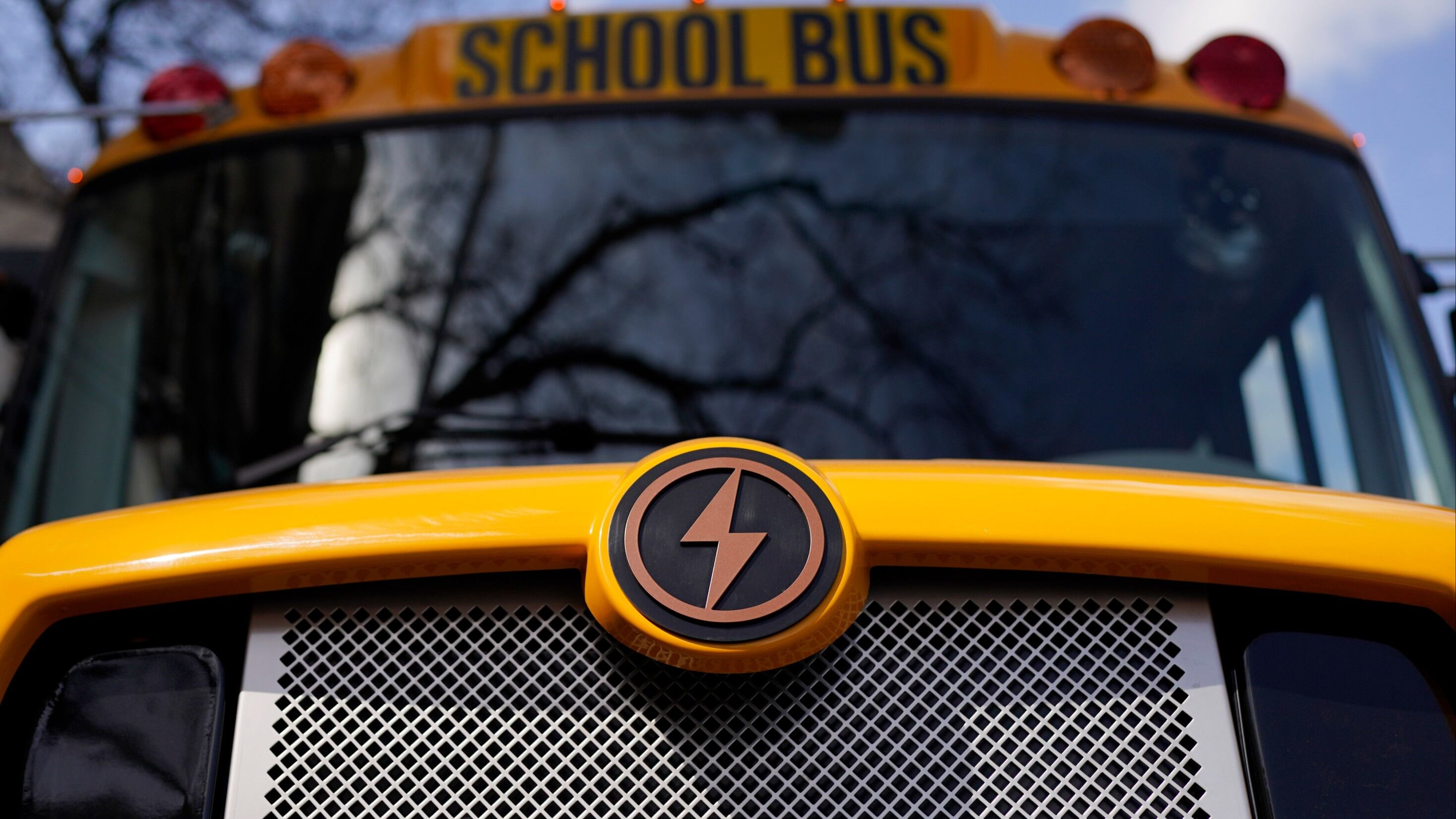
A Lion electric school bus is seen on display in Austin, Texas, Feb. 22, 2023. The Transportation Department is awarding almost $1.7 billion in grants for buying zero and low emission buses, with the money going to transit projects in 46 states and territories. The grants will enable transit agencies and state and local governments to buy 1,700 U.S.-built buses, nearly half of which will have zero carbon emissions. (AP Photo/Eric Gay, File)
By Josh Boak
The U.S. Department of Transportation is awarding almost $1.7 billion in grants for buying zero- and low-emission buses, with the money going to transit projects in 46 states and territories.
The grants will enable transit agencies and state and local governments to buy 1,700 U.S.-built buses, nearly half of which will have zero carbon emissions. Funding for the grants comes from the 2021 bipartisan infrastructure bill signed into law by President Joe Biden. The Democratic president has made it a priority to put more electric vehicles on the road — especially for schools and public transit — in an effort to contain the damage from climate change.
“Every day, millions of Americans climb aboard over 60,000 buses to get to work, to school, doctor’s appointments, everywhere they need to be,” Transportation Secretary Pete Buttigieg said in a call with reporters. “These are unprecedented levels of investment when it comes to putting modern cleaner buses on the road.”
Monday's announcement covers the second round of grants for buses and supporting infrastructure. All told, the U.S. has invested a total of $3.3 billion in the projects so far. Government officials expect to award roughly $5 billion more over the next three years.
The Biden administration said that the new buses will improve public health as diesel exhaust will no longer be going into the air and that the new buses will be easier to maintain.
The government received 475 project proposals for the grants that totaled roughly $8.7 billion, a sign of the demand for the funding.
The Seattle area will be getting $33.5 million to purchase 30 electric battery buses and chargers. The Washington, D.C., transit authority will use $104 million to make a bus garage an electric facility and buy roughly 100 electric battery buses. But money also is going outside of major U.S. cities, with Iowa City, Iowa, and the Seneca Nation in Western New York also receiving grants.
The end of 2025 is almost upon us. And it’s time to unpack Spotify Wrapped. On Wednesday, the music streaming giant delivered its annual recap — giving its hundreds of millions of users worldwide a look at the top songs, artists, podcasts and other audio they listened to over the past year. Spotify isn’t the only platform to roll out a yearly glimpse of data collected from consumers’ online lives. But since its launch about a decade ago, Wrapped has become one of the most anticipated. And Spotify is billing the 2025 edition to be the biggest yet, with a host of new features it hopes may also address some disappointments users had last year.
Elon Musk’s X unveiled a feature that lets users see where an account is based. Online sleuths and experts quickly found that many popular accounts, often posting in support of the U.S. MAGA movement with thousands or hundreds of thousands of followers, are based outside the U.S. This raises concerns about foreign influence in U.S. politics.
The Enhanced Games is going public in two ways — with a new listing on the Nadsaq stock exchange and also by offering a direct-to-consumer business focused on performance products.
Real estate software company RealPage has agreed to stop sharing nonpublic information between landlords as part of a settlement with the Department of Justice.
2025’s top Black Friday tech deals from smart speakers to wearables. Tom’s Guide editor Kate Kozuch shares expert picks and tips for smart holiday shopping.
Computer chipmaker Nvidia is poised to release a quarterly earnings report that is expected to either deepen a recent downturn in the stock market or prompt an ebullient sigh of relief among investors increasingly worried the world’s most valuable company is perched upon an artificial intelligence bubble about to burst.
Phoebe Gates and Sophia Kianni introduce Phia, a fashion tech startup that helps users find price comparisons and discover alternative options for apparel