The RNC's Kayleigh McEnany on Parkland: The GOP Can Make Change
The deadly attack on a Parkland, Fla., high school last week mobilized not only students to demand action on gun control, but also may have spurred action in Washington.
On Tuesday, President Trump asked the Department of Justice for regulations that would ban so-called “bump stocks.” It’s a move that Republican National Committee spokeswoman Kayleigh McEnany says shows the issue doesn’t have to be a partisan one.
“Our party can make change. Just because you’re pro-Second Amendment, just because you are with the NRA or seeing money from the NRA, that doesn’t mean you don’t want to do everything possible to avert tragedies like this,” she told Cheddar. “That’s why you’re seeing Republican lawmakers talk about background check systems and Republican lawmakers also talking about bump stocks. These are things that are compatible with the Second Amendment.”
Nineteen-year-old Nikolas Cruz opened fire at Marjory Stoneman Douglas High School on Valentine’s Day, an attack that left 17 dead and more than a dozen injured.
In the wake of the attack, several students have emerged as advocates for gun control, organizing marches to local and federal government offices and addressing what they saw as President Trump’s inadequate response to the events.
Over the weekend, Trump expressed support for a bipartisan bill introduced by Senators John Cornyn (R-TX) and Chris Murphy (D-CT) to fix the background check system. That legislation was prompted by a shooting at a Sutherland Springs, Tex., church in November. The “bump stock” bill meanwhile, also bipartisan, came after the Las Vegas attack in October, in which a shooter used the devices to make a semi-automatic rifle act like a machine gun.
McEnany, who’s from the state of Florida, says that gun control regulations have to be a joint effort between states and the federal government.
“This has to be a multi-pronged approach,” she said. “We also need to look at mental health. We also need to look at the missed warning signs at the FBI, the fact that they were called and proper protocol wasn’t followed.”
For full interview, [click here](https://cheddar.com/videos/rnc-spokeswoman-kayleigh-mcenany-republicans-are-pro-second-amendment-anti-tragedy).
The average city in California has a 38% higher cost of living than the average American city, according to a cost of living index. For many, the general minimum wage of $15/hour just doesn't cut it. Anti-poverty activist Joe Sanberg wants to get the minimum wage changed to $18/hour. He joins Cheddar News to discuss the Living Wage Act of 2022.
Liana Guzmán, CEO of FOLX Health, joins Cheddar News to discuss the company launching billboards across the country in response to anti-LGBTQ+ legislation.
President Biden has announced an additional $800 million in military assistance to Ukraine, including artillery, armored personnel carriers, and helicopters. It comes as Russian forces appear to be preparing for a new, aggressive offensive in the eastern part of Ukraine. Paul McLeary, defense reporter for Politico, joined Cheddar to discuss this new round of aid and what it means for the U.S. commitment to arming the embattled country.
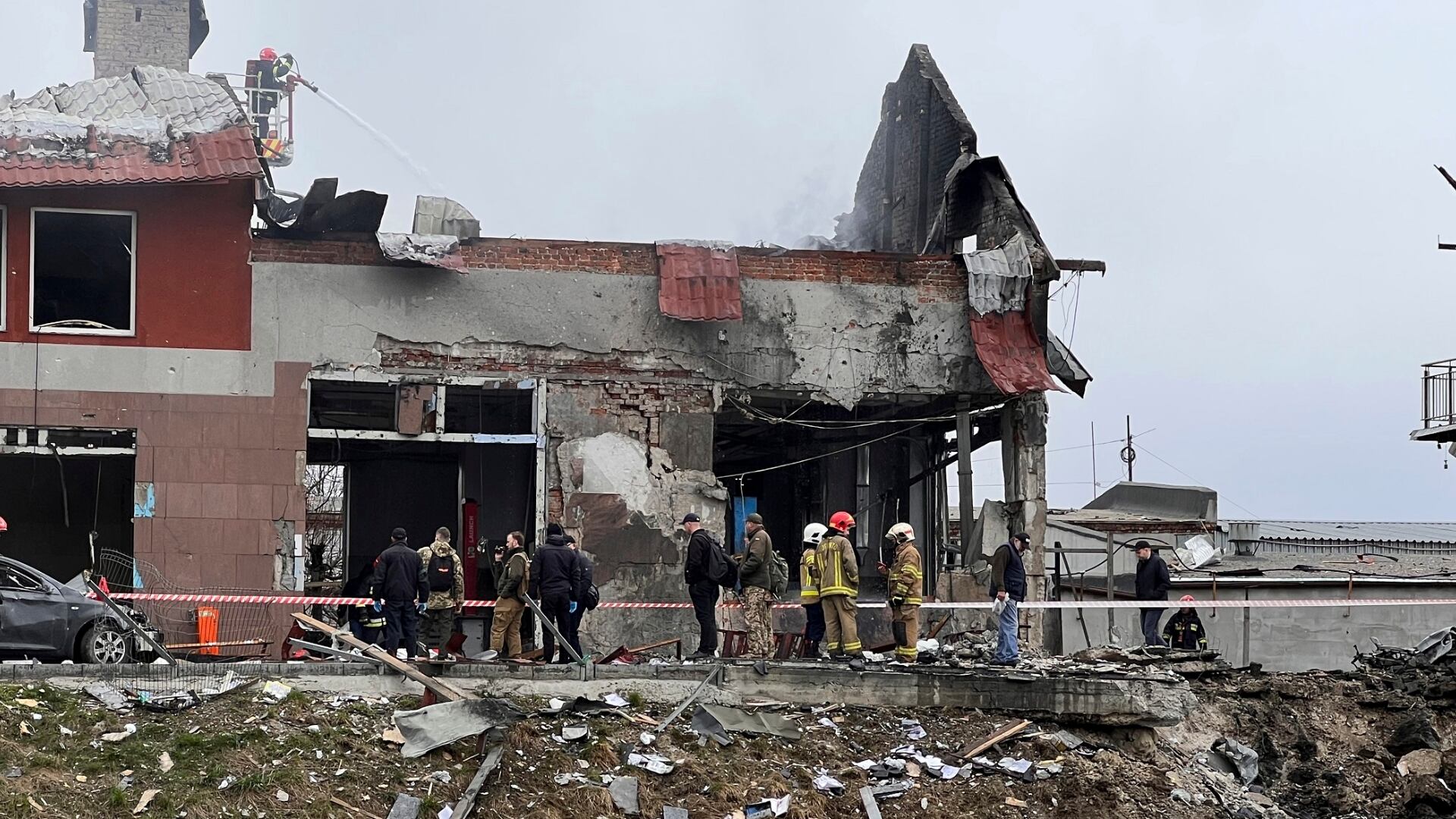
Catching you up on what you need to know on April 18, 2022, with Russian missile attacks on the Ukrainian city of Lviv killing seven, mass shootings in South Carolina and Pittsburgh, Lucky Charms cereal under official investigation by the FDA, and more.
Activism is growing around the country in response to school boards banning books from shelves that focus on sexuality, gender, identity, or race. Jen Cousins, co-founder of The Florida Freedom to Read Project, joins Cheddar News to discuss.
As the Russian invasion of Ukraine intensifies, President Biden has announced a ban on importing Russian oil, gas, and energy. To discuss how this ban will impact the war and Americans, Amir Handjani, non-resident fellow at Quincy Institute, joins Cheddar News.
Thousands of protesters around the world are expressing their solidarity with Ukraine against Russia's invasion.
Jason Beardsley, national executive director of the Association of the U.S. Navy and national security expert, joins Cheddar News to discuss.
As gas prices surge amid the Russian invasion of Ukraine, other nations could potentially transition faster to using clean energy than previously expected. Philip K. Verleger, a senior fellow at the Niskanen Center, joined Cheddar News to explain how this could be a possibility in the near future. "Part of the reason I think we have this invasion and the tantrum that's being thrown by Russia, terrible tantrum, is because the Russians were trying to slow down the transition," he said. "Ironically they speeded it up."