By Jim Vertuno
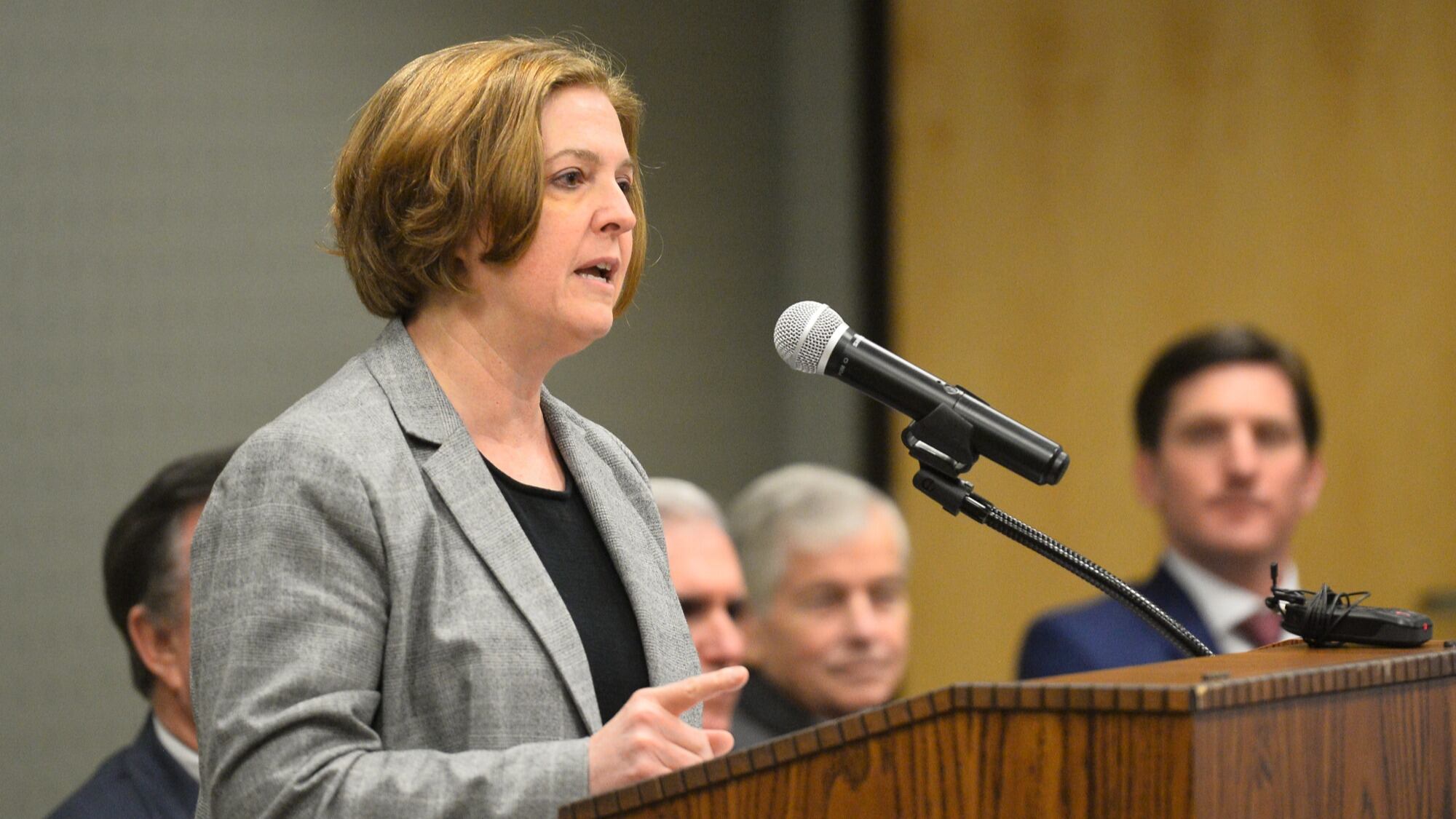
Texas A&M University on Friday announced the resignation of its president in the fallout over a Black journalist who said her celebrated hiring at one of the nation's largest campuses quickly unraveled due to pushback over her past work promoting diversity.
President Katherine Banks said in a resignation letter that she was retiring immediately because “negative press has become a distraction” at the nearly 70,000-student campus in College Station.
Her departure after two years as president followed weeks of turmoil at Texas A&M, which only last month had welcomed professor Kathleen McElroy with great fanfare to revive the school's journalism department. McElroy is a former New York Times editor and had overseen the journalism school at the more liberal University of Texas at Austin campus.
But McElroy said soon after her hiring — which included a June ceremony with balloons — she learned of emerging pushback because of her past work to improve diversity and inclusion in newsrooms.
Her exit comes as Republican lawmakers across the U.S. are targeting diversity, equity and inclusion programs on college campuses. That includes Texas, where Republican Gov. Greg Abbott signed a bill in June that dismantles program offices at public colleges.
The A&M System said in a statement that Banks told faculty leaders this week that she took responsibility for the “flawed hiring process." The statement said “a wave of national publicity” suggested McElroy “was a victim of ‘anti-woke’ hysteria and outside interference in the faculty hiring process.”
“I’m deeply grateful for the groundswell of support I’ve received, especially from Aggies of all majors, and my former and current students," McElroy said in a statement. "There’s much more I could say and will say about what has unfolded. But for now, I’ll reserve those statements for a future date.”
American Association of University Professors President Irene Mulvey criticized Texas A&M's handling of McElroy's hiring, and called efforts against diversity, equity and inclusion in higher education a “misguided culture war.”
"This will surely result in chilled conditions for academic freedom in teaching and research," said Mulvey, a mathematics professor at Fairfield University.
McElroy previously told The Texas Tribune that she had been “damaged by this entire process” and that she believed she was “being judged by race, maybe gender. And I don’t think other folks would face the same bars or challenges.”
Her work at the New York Times included research into the relationship between news media and race, notably in newsroom practices, Pulitzers, obituaries and sports.
Gary Bledsoe, president of the Texas NAACP, called Banks' resignation a “wakeup call for all of us" and that Texas A&M’s reputation had been damaged. Hart Blanton, the head of Texas A&M's department of communication and journalism, said in a statement Friday that he initiated McElroy's recruitment and claimed that race had played a part in the “unusual scrutiny” of her hiring.
“The failed effort to hire Dr. McElroy is a great loss to A&M and surely caused her great unnecessary suffering,” Blanton said.
McElroy said the initial offer of a tenure-track position had been reduced to a five-year post, then again to a one-year job from which she could be fired at any time. The 1981 Texas A&M graduate rejected that offer and chose to stay at the University of Texas as a journalism professor.
In an interview with NPR in 2021, McElroy said journalists should be pushed to find information from beyond what she called traditional sources that “skewed white patriarchy.”
“We can’t just give people a set of facts anymore,” she said. “I think we know that and we have to tell our students that. This is not about getting two sides of a story or three sides of a story, if one side is illegitimate. I think now you cannot cover education, you cannot cover criminal justice, you can’t cover all of these institutions without realizing how all these institutions were built.”
A right-leaning outlet in Texas highlighted those comments in a story after McElroy's hiring and the publisher Friday said it helped expose a “woke agenda” at Texas A&M.
“Just as a little sunlight sends the cockroaches scurrying, exposing the statements and writings of these #HigherEd propagandists sends them into fits of hysteria,” tweeted Michael Quinn Sullivan, the publisher of Texas Scorecard and previous head of a conservative group backed by wealthy GOP donors.
The Rudder Association, which describes itself as a collection of Texas A&M students, former students, faculty and staff who are “dedicated Aggies committed to preserving and perpetuating the core values and unique spirit of Texas A&M,” also has acknowledged complaining to school administrators about McElroy’s hiring.
“TRA believes that a department head should embrace the egalitarian and merit-based traditions that characterize Texas A&M’s values, rather than the divisive ideology of identity politics,” the group wrote last week.
At a meeting with university faculty on Wednesday, Banks said she was not involved in the changes to McElroy's contract offer. The faculty then voted to set up a panel to investigate the matter.
According to the university, of its 4,062 faculty members, 2,156, or 53%, are white, and 139, or 3%, are Black. Asians made up 8% of faculty, and Hispanics or Latinos 5%. In fall 2022 student enrollment, 51% were white, 23% were Hispanic, 10% were Asian and 3% were Black.
On Monday, José Luis Bermúdez, interim dean of the Texas A&M College of Arts and Sciences, also announced he would leave that job and return to his faculty position. McElroy said Bemudez had warned her about mounting “hysteria” about diversity, equity and inclusion at Texas A&M and advised her to stay on at Texas.
Banks is the second major university president to resign this week amid turmoil. Stanford President Marc Tessier-Lavigne said Wednesday he would resign Aug. 31, citing an independent review that cleared him of research misconduct but found “serious flaws” in five scientific papers on subjects such as brain development in which he was the principal author.
Associated Press reporter Acacia Coronado contributed to this report.