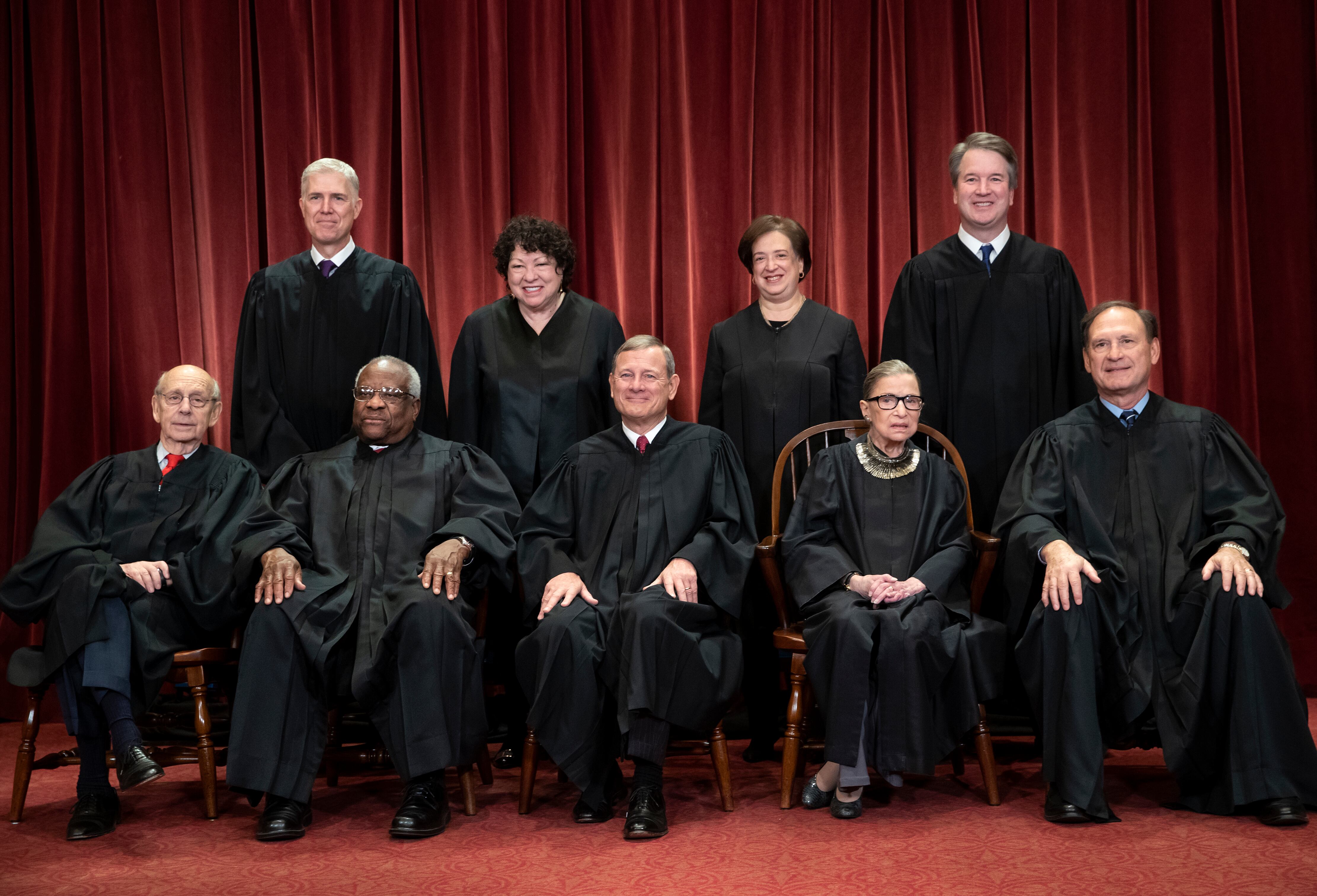
In this Nov. 30, 2018, file photo, the justices of the U.S. Supreme Court gather for a formal group portrait. Seated from left: Associate Justice Stephen Breyer, Associate Justice Clarence Thomas, Chief Justice of the United States John G. Roberts, Associate Justice Ruth Bader Ginsburg and Associate Justice Samuel Alito Jr. Standing behind from left: Associate Justice Neil Gorsuch, Associate Justice Sonia Sotomayor, Associate Justice Elena Kagan and Associate Justice Brett M. Kavanaugh. (AP Photo/J. Scott Applewhite, File)
By Mark Sherman
The Supreme Court said Monday it will hold arguments by teleconference in May in key cases, including President Donald Trump's bid to shield his tax and other financial records.
The court will make live audio of the arguments available for the first time. It had previously postponed courtroom arguments for March and April because of the coronavirus.
The justices and the lawyers arguing the cases all will participate remotely. The court said a live audio feed will be provided to news organizations.
The court has never live-streamed courtroom arguments and only rarely has it made the audio available on the same day.
Six of the nine justices are 65 and older, at higher risk of getting very sick from the illness, according to the Centers for Disease Control and Prevention.
Justices Ruth Bader Ginsburg, 87, and Stephen Breyer, 81, are the oldest members of the court.
The only other time Supreme Court arguments have been held outside the 85-year-old court building was in October 2001, when anthrax was detected in the court mailroom. That led the justices to hold arguments in the federal courthouse about a half mile from the Supreme Court, but only for one week.
In 1918, when the court still met inside the Capitol, arguments were postponed for a month because of the flu pandemic. Smallpox outbreaks in the late 1700s also caused postponement of court business.
A U.S. general says Russia has operationally lost the war in Ukraine, a court says federal workers are not owed COVID-19 hazard pay, and Microsoft officially shuts down Internet Explorer. Here is everything you Need2Know for Wednesday, February 15, 2023.
The Biden administration on Wednesday announced a new program under the Bipartisan Infrastructure Law that aims to expand the infrastructure needed to keep electric vehicles charged.
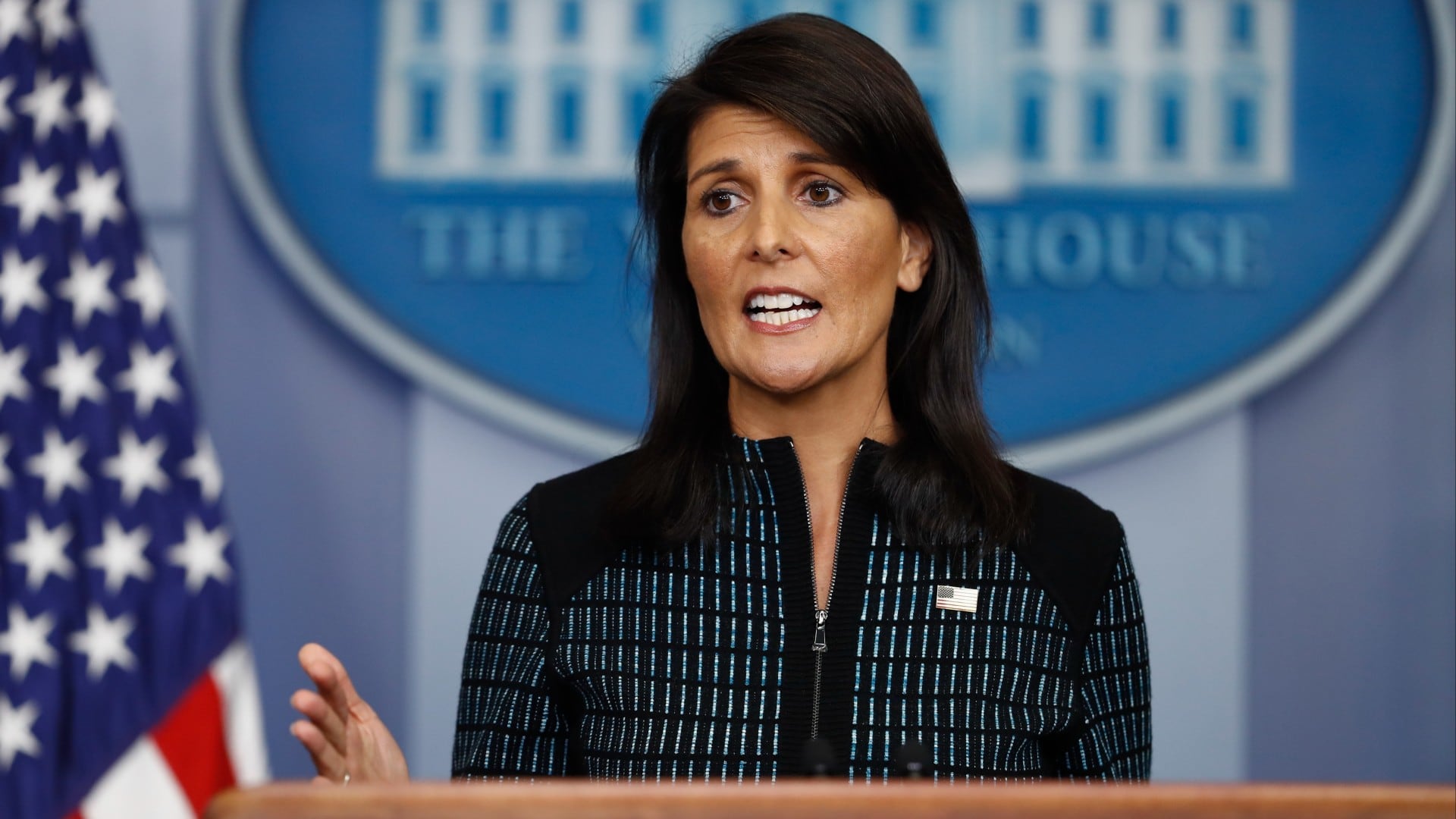
Nikki Haley, the former South Carolina governor and United Nations ambassador, announced her candidacy for president on Tuesday, becoming the first major challenger to former President Donald Trump for the 2024 Republican nomination.
The White House defended the shootdowns of three unidentified objects in as many days even as it acknowledged that officials had no indication the objects were intended for surveillance in the same manner as the high-altitude Chinese balloon that traversed American airspace earlier this month.
Millions of Medicaid recipients could find relief in the form of food shopping funds as the Biden administration begins approving state requests to use the coverage for groceries.
It is still not known where the second, third, and fourth flying objects shot down by U.S. military fighter jets originated from, a White House spokesperson said Monday.
A judge has ordered the release of parts of a report produced by a special grand jury that investigated efforts by former President Donald Trump and his allies to overturn his narrow 2020 election loss in Georgia.