By Jessica Gresko
The Supreme Court on Tuesday wrestled with the case of a Christian mail carrier who refused to work on Sundays when he was required to deliver Amazon packages.
While the court seemed in broad agreement that businesses like the Postal Service can't cite minor costs or hardships to reject such requests to accommodate religious practices, it was less clear what they might do about the particular worker's case.
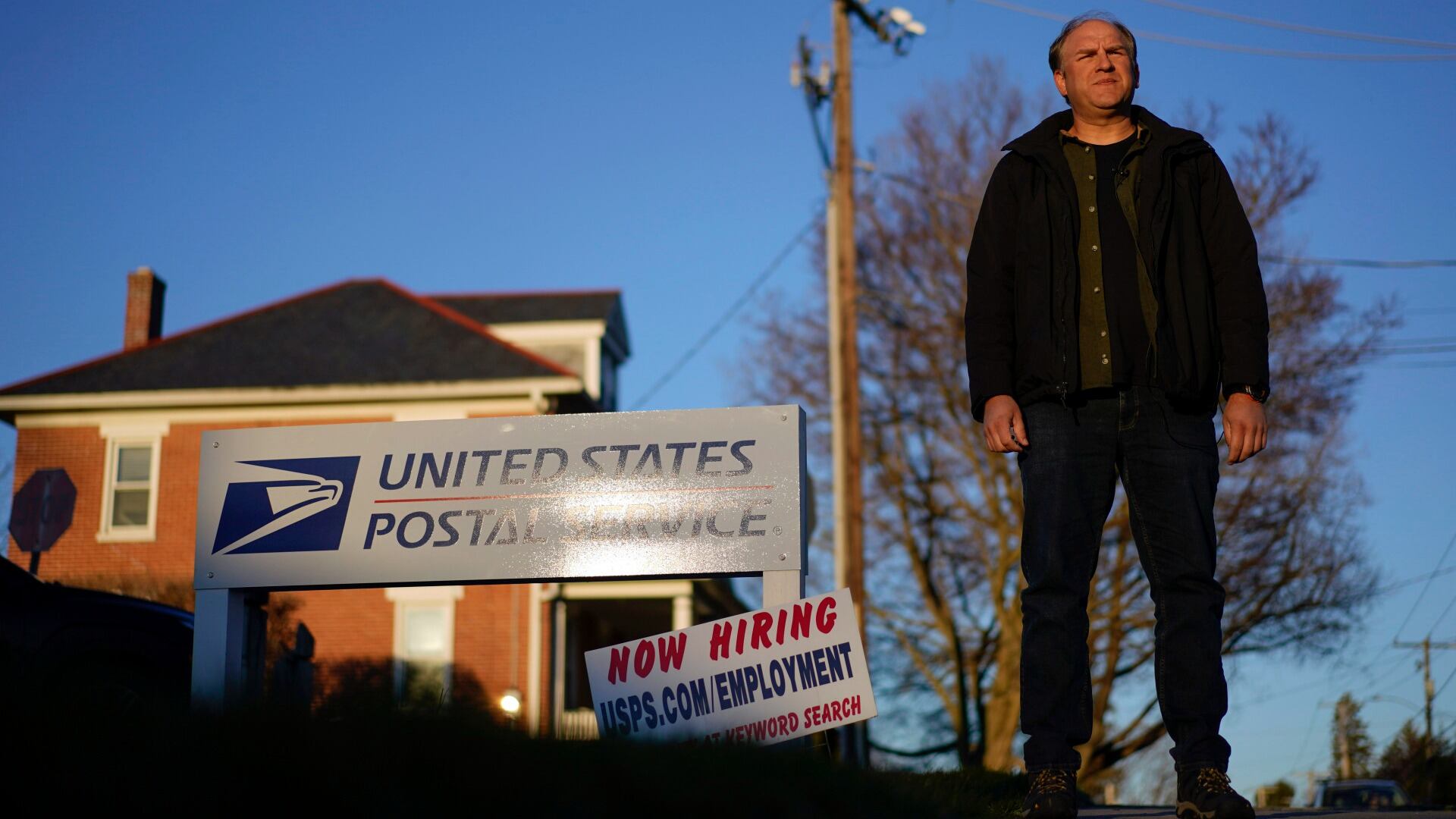
The case before the court involves a mail carrier in rural Pennsylvania. The man was told that as part of his job he’d need to start delivering Amazon packages on Sundays. He declined, saying his Sundays are for church and family. U.S. Postal Service officials initially tried to get substitutes for the man’s shifts, but they couldn’t always accommodate him. When he didn’t show, that meant more work for others. Ultimately, the man quit and sued for religious discrimination.
During the arguments, the justices struggled with the question of when employers have to accommodate employees' religious needs. Justice Ketanji Brown Jackson said the circumstances of each case matter and that "the answer is: it depends.”
The case is the latest religious confrontation the high court has been asked to referee. In recent years, the court’s 6-3 conservative majority has been particularly sensitive to the concerns of religious plaintiffs. That includes a ruling last year in which the court said a public high school football coach should be allowed to pray on the field after games. Another case the court is weighing this term involves a Christian graphic artist who wants to create wedding websites, but doesn't want to serve gay couples.
A federal law, Title VII of the Civil Rights Act of 1964, requires employers to accommodate employees’ religious practices unless doing so would be an “undue hardship” for the business. But a Supreme Court case from 1977, Trans World Airlines v. Hardison, says in part that employers can deny religious accommodations to employees when they impose “more than a de minimis cost” on the business.
Three current justices have said the court should reconsider the Hardison case. And on Tuesday other justices also suggested the “more than de minimis cost language” was problematic.
Even Solicitor General Elizabeth Prelogar, the Biden administration’s top Supreme Court lawyer who was representing the Post Office, told the justices that the Hardison case as a whole requires an employer who wants to deny an accommodation to show more. She said that most often requests for religious accommodation come up when employees seek schedule changes like the Sabbath off or midday prayer breaks or exemptions from a company's dress code or grooming policies. They also come up when an employee wants to display a religious symbol in the workplace.
Justice Neil Gorsuch, who along with Clarence Thomas and Samuel Alito has said Hardison should be reconsidered, suggested the justices could simply say that “some courts have taken this de minimis language" too far and that has “been a serious misunderstanding.” He suggested the justices could do “a good day's work and put a period at the end of it by saying that that is not the law.”
The justices seemed less in agreement, however, about what to do on the facts of the case in front of them involving Gerald Groff, a former employee of the U.S. Postal Service in Pennsylvania’s Amish Country. For years, Groff was a fill-in mail carrier who worked on days when other mail carriers were off.
But when an Amazon.com contract with the Postal Service required carriers to start delivering packages on Sundays, Groff balked. Initially, to avoid the shifts, Groff transferred to a more rural post office not yet doing Sunday deliveries, but eventually that post office was required to do them, too.
Whenever Groff was scheduled on a Sunday, another carrier had to work or his spot went unfilled. Officials said Groff’s absences created a tense environment and contributed to morale problems. It also meant other carriers had to deliver more Sunday mail than they otherwise would.
Justice Elena Kagan suggested there was enough evidence that Groff's Sunday absences were causing a hardship and that the Postal Service did nothing wrong in denying an accommodation. Justice Brett Kavanaugh pointed out that the Postal Service had “one employee quit, one employee transfer and another file a grievance” as a result of Groff's Sunday absences. But other justices including Justice Amy Coney Barrett suggested the justices might want to send Groff's case back to lower courts for another look.
Groff resigned in 2019 rather than wait to be fired. His lawyer Aaron Streett urged the Supreme Court to overrule the Hardison case and to say that employers must show “significant difficulty or expense” if they want to reject a religious accommodation.
The case is Groff v. DeJoy, 22-174.