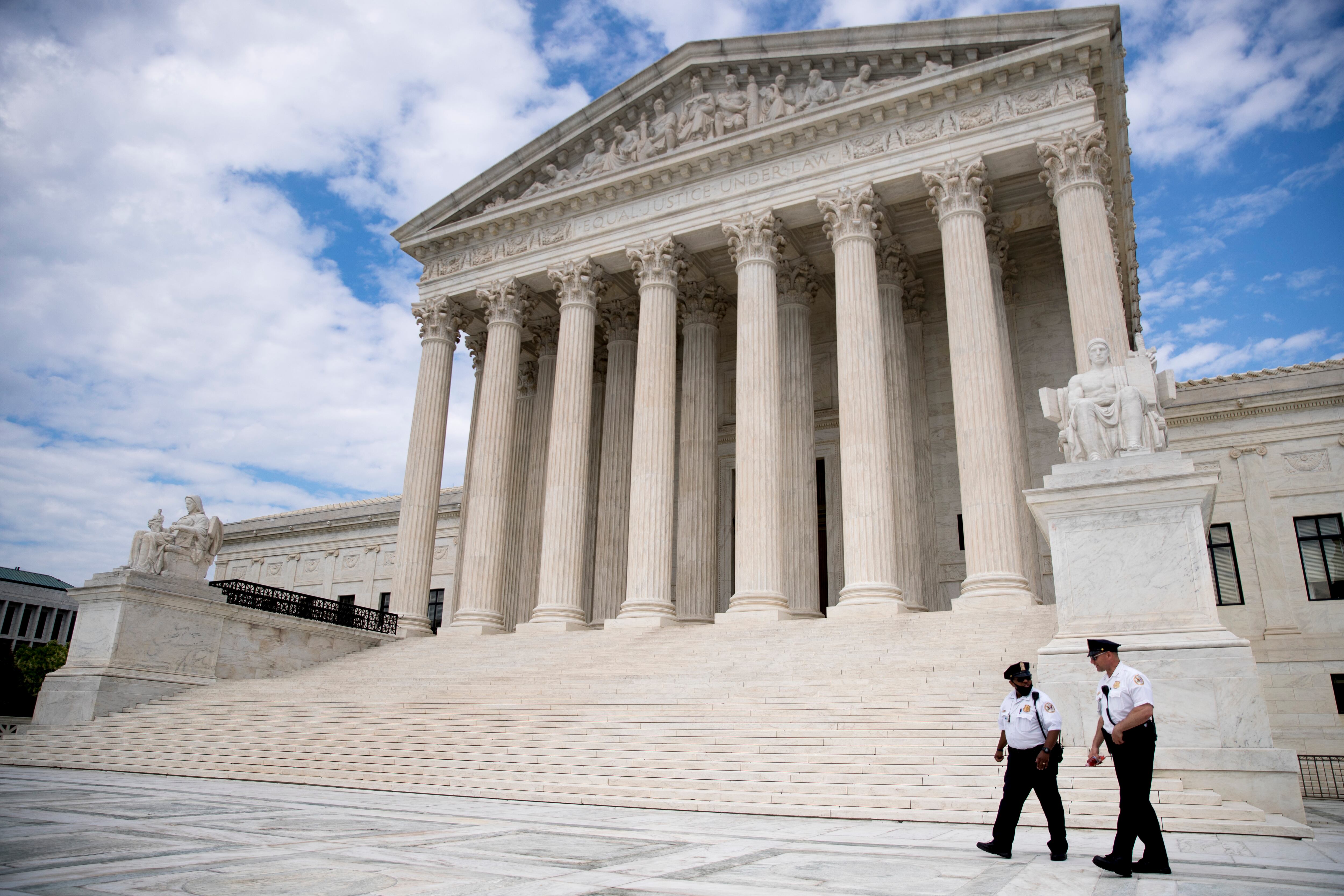
The Supreme Court on Wednesday temporarily prevented the House of Representatives from obtaining secret grand jury testimony from special counsel Robert Mueller's Russia investigation.
The court's unsigned order keeps previously undisclosed details from the investigation of Russian interference in the 2016 election out of the hands of Democratic lawmakers at least until early summer. The court will decide then whether to extend its hold.
The federal appeals court in Washington ruled in March that the documents should be turned over because the House Judiciary Committee’s need for the material in its investigation of President Donald Trump outweighed the Justice Department’s interests in keeping the testimony secret.
Mueller’s 448-page report, issued in April 2019, “stopped short” of reaching conclusions about Trump’s conduct, including whether he obstructed justice, to avoid stepping on the House’s impeachment power, the appeals court said.
The committee was able to persuasively argue that it needed access to the underlying grand jury material to make its own determinations about the president’s actions, the court said.
The materials initially were sought last summer, but by the time the appeals court ruled in March, Trump had been impeached by the House and acquitted by the Senate.
The Justice Department said in its Supreme Court filings that the court’s action was needed in part because the House hasn’t given any indication it “urgently needs these materials for any ongoing impeachment investigation.”
The House had opposed the delay on the grounds that its investigation of Trump was continuing, and that time is of the essence because of the approaching election. The current session of the House will end Jan. 3, and lawmakers elected in November will take their seats.
The committee investigation “continues today and has further developed in light of recent events,” the House told the justices, citing the “possible exercise of improper political influence” on decisions to seek a shorter prison term for Trump confidant Roger Stone and end the prosecution of former national security adviser Michael Flynn, despite his two guilty pleas.
The case is one of several ongoing court disputes between the Trump administration and Congress.
The Supreme Court heard arguments last week over whether Trump’s accountants and banks must turn over financial records to House committees. The administration is not a party to the case but is backing the president.
The appeals court also is weighing whether former White House counsel Don McGahn must appear before the committee to answer questions related to the Mueller investigation. And the Justice Department has said it will ask the Supreme Court to step in and kill a lawsuit alleging that Trump is illegally profiting off the presidency through his luxury Washington hotel.
Mueller’s report detailed multiple interactions between the 2016 Trump campaign and Russia and examined several episodes involving the president for potential obstruction of justice. Mueller said his team did not find sufficient evidence to establish a criminal conspiracy between the campaign and the Kremlin to tip the election, though pointedly noted that he could not exonerate the president for obstruction.
Portions of the report were blacked out, including grand jury testimony and material that Mueller said could harm ongoing investigations or infringe on the privacy of third parties.
Grand jury testimony is typically treated as secret, in part to protect the privacy of people who are not charged or are considered peripheral to a criminal investigation. But several exceptions allow for the material to be turned over, including if it is in connection with a judicial proceeding.
Lower courts agreed with lawmakers that impeachment is considered a judicial proceeding, rejecting Justice Department arguments to the contrary.
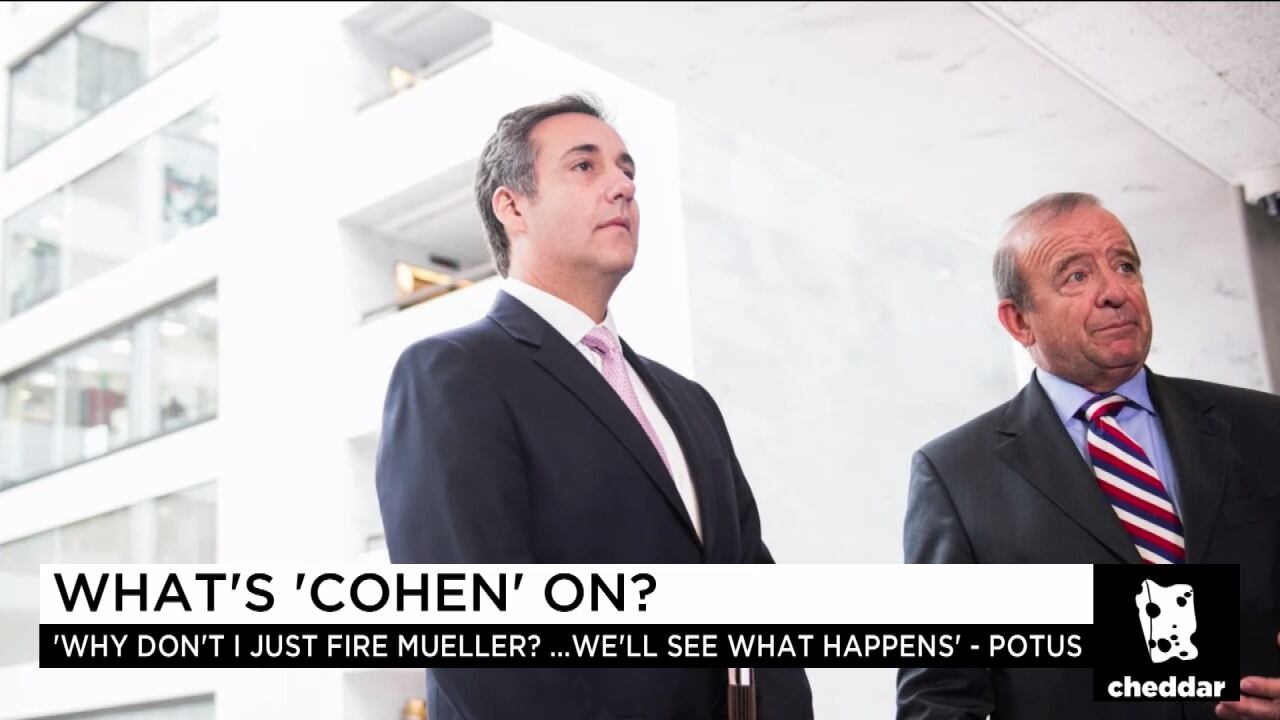
It is extremely rare for federal prosecutors to get search warrants for lawyers "because they usually want to protect attorney-client privilege," explains Politico's Daniel Lippman. The fact that the FBI moved on Cohen suggests he "might not have been totally legal" in his work for Trump. The president blasted the raid, calling it a "disgraceful situation."
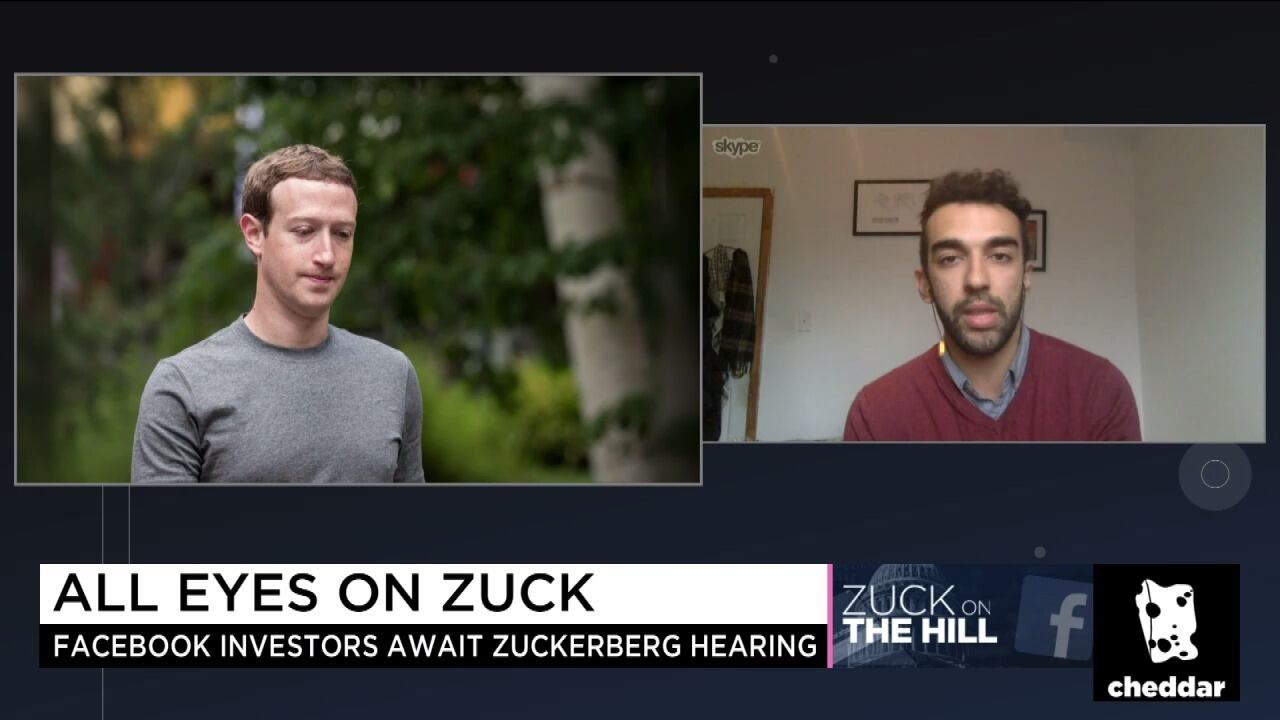
Democrats have already signaled that they're going to focus more on election interference and be "a little bit more aggressive than Republicans" during Mark Zuckerberg's testimonies this week, says Ali Breland, technology and politics reporter at The Hill. The Facebook CEO will appear before Congress Tuesday and Wednesday to face questions about the Cambridge Analytica scandal.
President Trump's feud with Amazon and its CEO Jeff Bezos continues, as the president claims that the tech giant does not pay its fair share of taxes and that it's causing the U.S. Postal Service to lose money. Cheddar breaks down President Trump's claims and explores how Amazon's deal with the post office works.
The Facebook CEO's hearings on Capitol Hill will likely dominate headlines for days. If those stories focus more on the new initiatives that the social network has recently rolled out, rather than the data scandal itself, "that would be a big win," says Aaron Pressman, Senior Technology Reporter at Fortune Magazine.
The president is likely to respond to the brutal chemical attack in Syria that took place over the weekend, says Jon Miller, CRTV's White House Correspondent. That's based on the fact that, not only has the president taken military action against Syria before, but there also seems to be some support for some kind of a response among voters.
The trade war rhetoric "runs the risk of overplaying [Trump's] hand" in negotiations, says Clayton Allen, Vice President of Special Situations at Height Capital Management. That could, in the long run, come back and hurt employment rates in the U.S.
A lot of top executives of big name brands, like Apple or Starbucks, are starting to take political stances that are "unrelated to the bottom line," explains Aaron Chatterji, Associate Professor at Duke University's Fuqua School of Business and author of a recent Harvard Business Review article about CEO activism.
Washington won't easily forgive Facebook for sending a "low-level" deputy to testify when Congress first wanted answers about Russia's role in the 2016 election. And legislators are likely to take out their frustration on the CEO when he appears before them next week, says Ken Gude, Senior Fellow at the Center for American Progress.
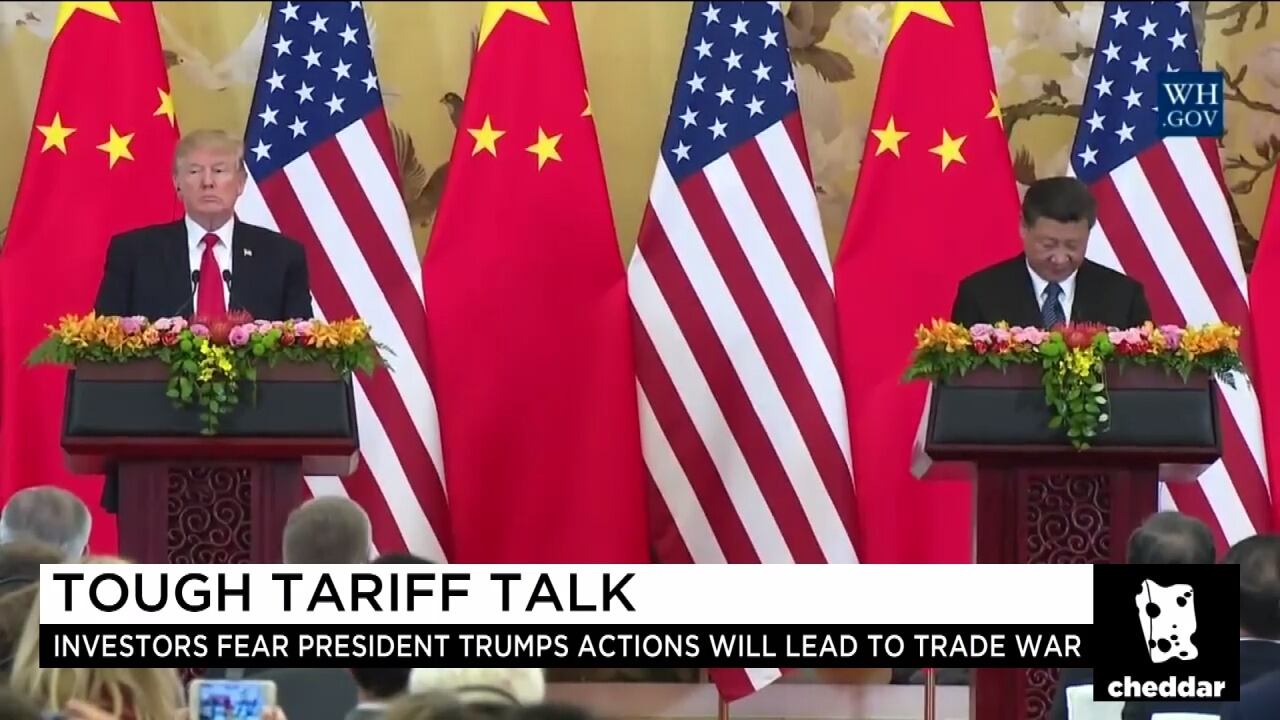
President Trump is stoking fears of a trade war with China yet again. On Thursday evening, Trump threatened more tariffs on China worth $100 billion dollars, on top of the tariffs Trump is already planning. China immediately fired back, saying the country will continue to meet Trump's tariff threats with counter-actions.
President Trump also made news when he finally broke his silence on the Stormy Daniels controversy. When asked by reporters if he knew about the payment by his lawyer to Daniels, Trump quickly said, "no." Michael Avenatti, Stormy Daniels' lawyer, said Trump denying knowledge of the payment is "a gift from the heavens."
Executives and fighters from the UFC were at the New York Stock Exchange to ring the opening bell on Friday in celebration of the organization's 25th anniversary. Amanda Nunes, a UFC fighter, and Lawrence Epstein, the COO of the UFC, join us to weigh in on the milestone and preview the UFC 223 taking place at Barclays Center in Brooklyn this weekend. Epstein also commented on the arrest of UFC star Conor McGregor, saying McGregor's actions don't represent UFC's values.
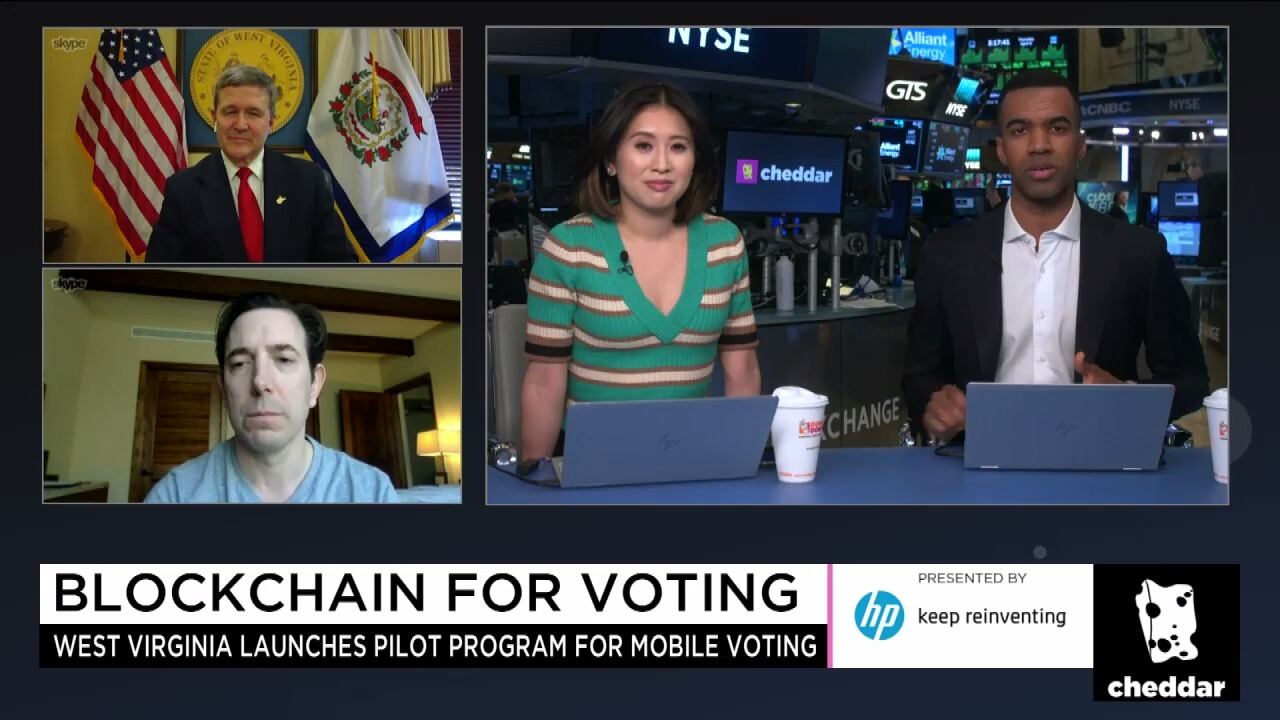
West Virginia is the first state to test out voting via blockchain, collaborating with venture capitalist Bradley Tusk. "[People] want to vote the same way that they order something from Amazon," says Mac Warner, WV's Secretary of State. The experiment has rolled out for deployed military voters in some counties, with plans to deploy it across the state for the midterm elections in November.