By Damian J. Troise and Alex Veiga
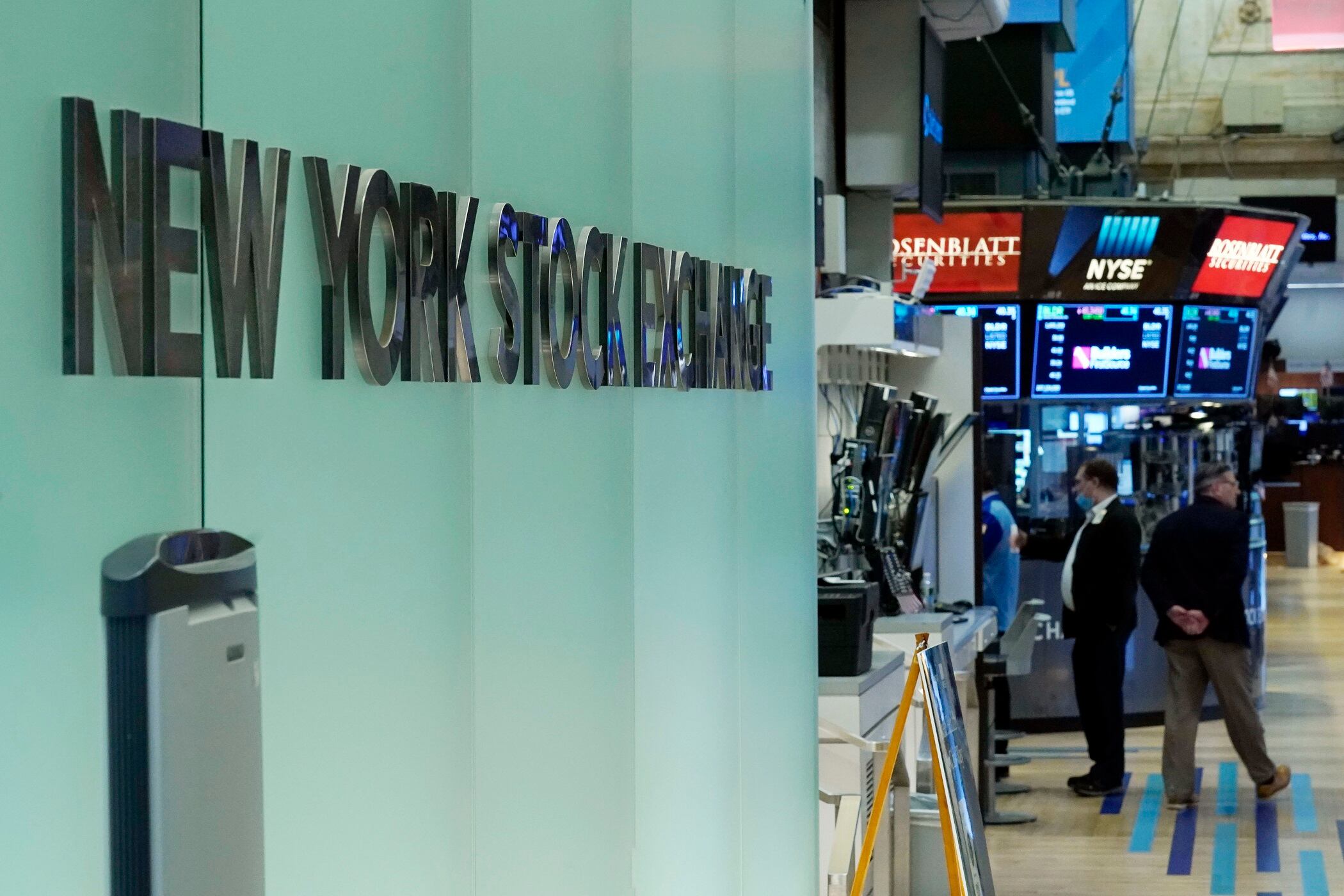
Wall Street's major stock indexes ended mixed Monday as losses by technology and health care companies outweighed gains elsewhere in the market.
The S&P 500 fell 0.3% after spending much of the day essentially flat. The pullback ended a three-day winning streak for the benchmark index, which last week notched its first weekly gain in three weeks.
The tech-heavy Nasdaq composite fell 0.5%, while the Dow Jones Industrial Average managed a 0.2% gain. Small company stocks fared better than the broader market, sending the Russell 2000 index 1.5% higher.
Bond yields moved broadly higher. The 10-year Treasury yield rose to 1.49% from 1.46% late Friday. It was at 1.31% a week ago, as market jitters drove investors to shift money into bonds, which lowers their yield, but have been climbing since Tuesday.
Banks made solid gains as the 10-year Treasury yield rose. The yield influences interest rates on mortgages and other consumer loans, so when it rises it allows lenders to charge higher rates. Bank of America gained 2.7%.
“The story now is higher bond yields and what areas of the (stock) market benefit,” said Willie Delwiche, investment strategist at All Star Charts.
The S&P 500 fell 12.37 points to 4,443.11, the Nasdaq dropped 77.73 points to 14,969.97 and the Dow gained 71.37 points to 34,869.37. The Russell 2000 picked up 32.93 points to 2,281, a sign that investors are still confident about future economic growth.
Markets have had a choppy month so far and the S&P 500 is on pace to shed 1.8% in September, which would mark the first monthly loss since January. Investors have been trying to gauge just how much room the economy has to grow amid waves of COVID-19 crimping consumer spending and job growth while inflation remains a concern.
The economic recovery started strong in 2021, but analysts and economists have been tempering their forecasts for the rest of the year. In a survey being released Monday, the National Association for Business Economics found that its panel now expects full-year economic growth of 5.6%, down from a forecast for 6.7% growth in NABE’s previous survey in May. However, economists raised their forecast for 2022 economic growth to 3.5% from a previous outlook of 2.8%.
Consumer spending has been the key driver for the economic recovery and it has been crimped in part by rising cases of COVID-19 because of the highly contagious delta variant. Investors will get a glimpse into how that could continue to play out on Tuesday when The Conference Board releases its consumer confidence index for September.
Wall Street has been facing an otherwise quiet period for corporate news as companies prepare to start reporting their latest quarterly results in the next few weeks. The next round of corporate statements could give investors a better sense of the actual impact supply chain and labor disruptions are having on sales and profits.
Microsoft fell 1.7% and Apple gave back 1.1% as tech stocks helped drag down the S&P 500. The technology sector, which carries an outsized weight within the index, fell 1% overall.
Health care stocks also weighed on the market. Moderna dropped 5% and Abbot Laboratories lost 3.1%.
The price of benchmark U.S. crude oil rose 2% and supported gains for energy stocks. Exxon Mobil rose 3%.
Bank stocks have responded to the surge in bond yields. The KBW Bank Index has risen more than 9% in four days.
The exception Monday was Wells Fargo, which fell 0.8%. The bank settled its latest legal headache by agreeing to pay $37 million over allegations overcharged customers using its foreign exchange services.
The bank has been entangled in numerous scandals the past few years and is still operating under an order from the Federal Reserve that keeps Wells from growing any larger. Sen. Elizabeth Warren of Massachusetts issued a letter this month calling for Wells Fargo to be broken up, citing the bank’s inability to resolve its problems.
Markets in Europe edged higher while Asian markets were mixed.
___
AP Business Writer Ken Sweet contributed.
Updated on September 27, 2021, at 5:42 p.m. ET.