By Damian J. Troise and Alex Veiga

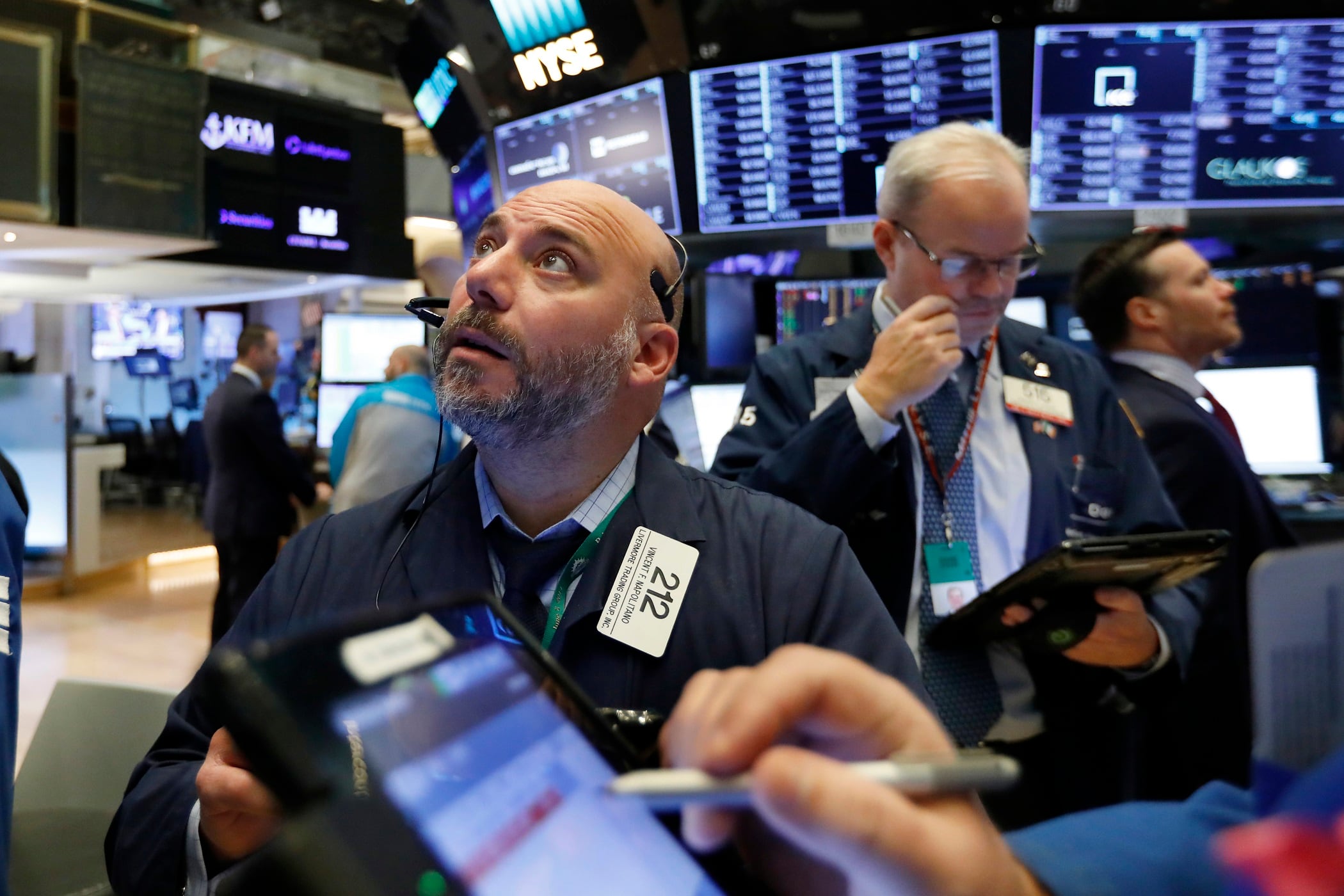
Technology and energy companies led stocks lower on Wall Street Monday, easing the market back from its recent all-time highs.

The S&P 500 slipped 0.1%, erasing an early gain. Technology companies accounted for a big share of the decline. Industrial and consumer-centric stocks also fell. Those losses outweighed gains in health care companies, banks and elsewhere in the market.

Energy companies slumped the most among S&P 500 stocks as the price of benchmark U.S. crude oil fell 2.6% to its lowest levels since May. The move lower follows a decline of 7.7% last week. Occidental Petroleum shed 3%.

Every major index was coming off weekly gains last week, which ended with record highs for the S&P 500 and the Dow Jones Industrial Average.

The modest pullback is another example of the volatility the market has seen amid uncertainty over the impact COVID-19 variants will have on the economy and the Federal Reserve’s next monetary policy moves, said Sylvia Jablonski, chief investment officer at Defiance ETFs.

“People who got in and saw some of the stocks that they hold at all-time highs on Friday, perhaps they’re selling a little bit off today and might be opportunistically trading some of this volatility,” she said.

The S&P 500 fell 4.17 points to 4,432.35. The Dow dropped 106.66 points, or 0.3%, to 35,101.85. The Nasdaq added 24.42 points, or 0.2%, to 14,860.18.

Smaller companies fell more than the rest of the market. The Russell 2000 index lost 12.95 points, or 0.6%, to 2,234.81.

Bond yields moved higher. The yield on the 10-year Treasury rose to 1.32% from 1.28% late Friday. Bond yields tend to move with expectations for the economy and for inflation.

The latest round of corporate earnings is winding down, and nearly 90% of companies in the S&P 500 have reported their latest results. The reports have been mostly solid. Tyson Foods jumped 8.7% for one of the biggest gains in the S&P 500 Monday after handily beating Wall Street's profit forecasts.

Investors are also closely watching the world's reaction to the latest surge of the coronavirus. Some governments have reimposed limits on business and travel. China canceled flights as it tries to stop a rash of outbreaks. Australia’s two most populous states have told people to stay home except to go to work or for a handful of other reasons.

Analysts expect the U.S. and global economies to continue growing, but have cautioned that the resurgent virus could slow down the pace.

“That's one part of the story and that could be holding back" the stock market, said David Kelly, chief global strategist at JPMorgan Funds. “We don't really have a handle on how bad the delta variant might get.”

Investors have been taking in a steady stream of encouraging economic reports. The latest from the Labor Department shows that U.S. employers posted a record 10.1 million job openings in June. That follows Friday's report that the economy generated 943,000 jobs last month and the unemployment rate fell to 5.4% from 5.9% in June.

The solid jobs figures also raise some concerns about wage inflation and the pace of economic growth.

“We’re burning our way back to full employment fast," Kelly said. “Once we get there the economy is going to slow down.”

The latest figures also raise concerns about inflation fueled by the improving job market, as employers are potentially forced to raise wages to fill jobs.

Investors will get another piece of data on inflation when the Labor Department releases its consumer price index for July on Wednesday. Wall Street is still trying to gauge how much inflation might rise as the economy recovers and whether that will push the Federal Reserve to trim back its support for the economy sooner than expected.

Major indexes Europe edged lower while indexes in Asia ended mixed.

Updated on August 9, 2021, at 5:01 p.m. ET.

Share:
More In Business
A New-Age Twist on Millenia-Old Remedies
William Li and Danielle Chang, co-founders of The Hao Life, join Cheddar Innovates to discuss how they're shaking up the $71 billion supplement industry by putting a modern spin on traditional natural Chinese remedies.
Stocks Close at Session Lows as Investors Digest Inflation, Earnings
Stocks closed at session lows Thursday, with the major indexes falling slightly for the shortened trading week. The S&P 500 fell 2.1% for the week, the Dow Jones Industrial Average fell 0.8%, and the tech-heavy Nasdaq fell 2.6%. Investors continue to keep a close eye on inflation data, as well as earnings. Nancy Tengler, Chief investment Officer at Laffer Tengler Investments, joins Closing Bell to discuss today's close, inflation, how the Fed will handle rising prices, earnings, and more.
U.S. Stocks Close Lower After Consumer Prices Jump 8.5%
The major U.S. indexes closed Tuesday off of session lows as investors digest the latest read on inflation, showing it remains hot. Wall Street is also preparing for earnings from big banks and monitoring potential policy moves from the Federal Reserve. Peter Tuchman, a stock trader at TradeMas, joins Cheddar News' Closing Bell and highlighted tech stocks in particular. 'The tech sector, which led us to record highs before the 1st of this year, are now the ones that are leading us lower,' he said.
Streaming Services Score Big with Live Sports — But Will Viewers Win Too?
The competition between streaming platforms is heating up as Apple TV+, HBO Max, and others acquire the rights to air live sports, oftentimes behind an exclusive paywall. While this is likely to entice some viewers, it also presents a risk that viewership will become fractured. Customers might steer away from subscription overload as content streaming options become seemingly endless. Jeff Agrest, deputy sports editor and media columnist at the Chicago Sun-Times, joins Closing Bell to discuss what it means for the live sports industry when content is put behind a paywall on streaming platforms, how it could impact viewership, impact on sports betting, potential acquisition targets, and more.
Coca-Cola Teams With Bill Nye for Its World Without Waste Initiative
The Coca-Cola Company is teaming up with science education personality Bill Nye as part of its World Without Waste Initiative to describe the bottle-to-bottle plastic recycling process through a vividly animated, stop-motion short film. Christine Yeager, director of sustainability at The Coca-Cola Company, North America, joined Cheddar News to talk about their initiative and the partnership. "We really wanted to partner with someone who can help us make recycling relatable, but also has a very um respected voice in the climate change space," she said.
Dan Ives Foresees That Elon Musk 'Ultimately Ends Up Owning Twitter'
Billionaire Elon Musk made waves after revealing he's making an attempt at a hostile takeover of the social media platform Twitter. The Tesla CEO is offering $43 billion to buy the social media platform outright with "freedom of speech" allegedly at the forefront of his agenda. Dan Ives, managing director of equity research at Wedbush Securities, is taking the tech entrepreneur seriously. "I think through many twists and turns over the coming months, he ultimately ends up owning Twitter because Twitter's board, their back is going to be against the wall," he said.
Consumers Dig Deeper Into Wallets as Retail Sales Rise Amid High Gas Prices
Retail sales grew 0.5 percent in March, largely being attributed to the rise in gas prices. Jharonne Martis, director of consumer research at Refinitiv, joined Cheddar News to discuss why consumer confidence has remained strong despite high prices. "What's holding on the consumer is the strong employment market that we have right now in the United States, which is one of the strongest we had in a very long time. If consumers feel that they are secure in their job, they're going to continue to spend," she said. However, Martis noted that signs that consumer spending is slowing down are already visible as well.
Load More