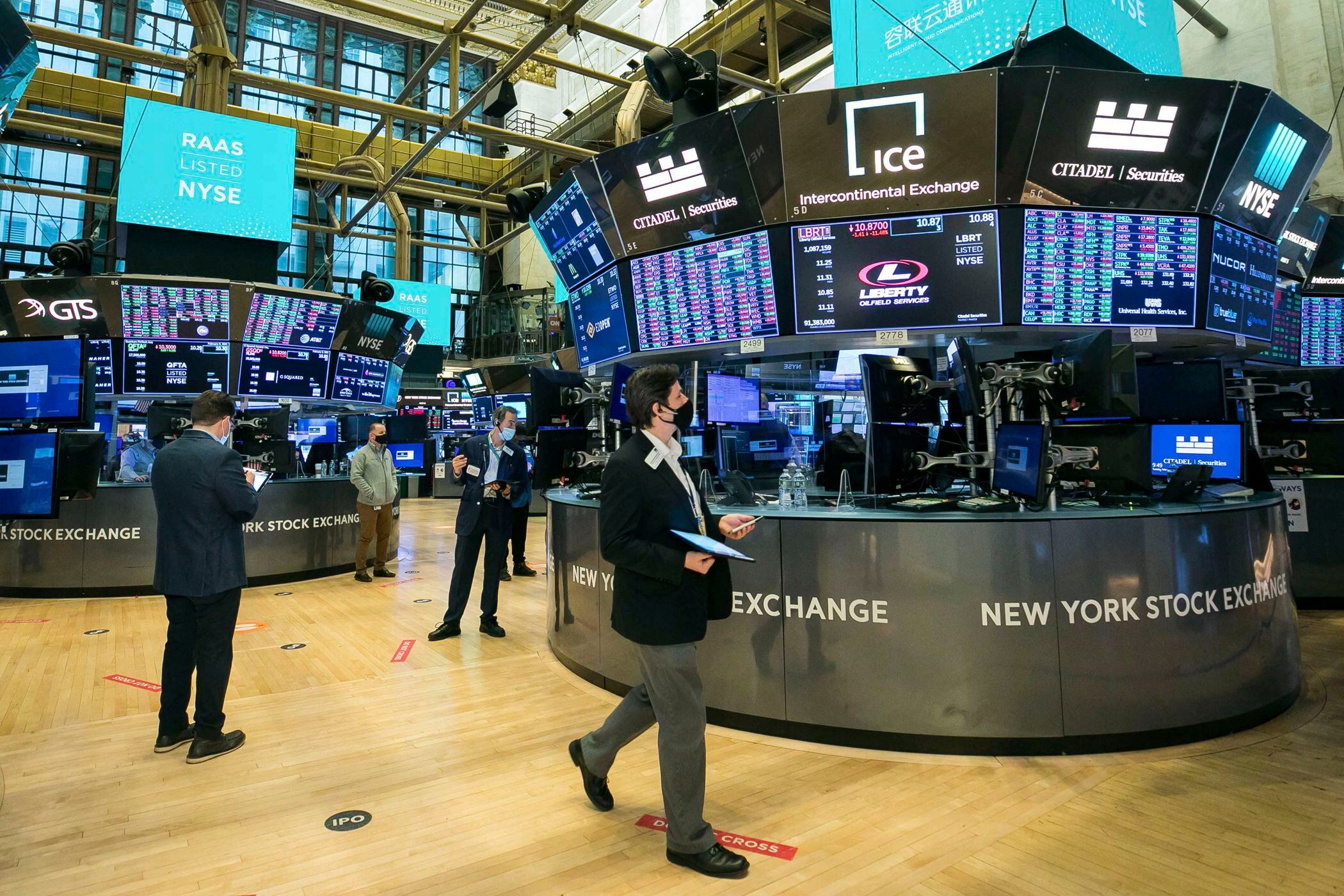
In this photo provided by the New York Stock Exchange, traders work on the floor, Tuesday, Feb. 9, 2021. Stocks were slightly lower in early trading on Tuesday, after the major stock market indexes hit record highs the day before. Investors continue to keep their eyes on Washington, where it appears Democrats plan to move ahead without Republican help on a major stimulus bill for the economy. (Courtney Crow/New York Stock Exchange via AP)
By Damian J. Troise and Alex Veiga
The major U.S. stocks capped a listless day of trading Tuesday with an uneven finish that snapped a six-day winning streak for the S&P 500 even as the Nasdaq set another all-time high.
A late fade pulled the S&P 500 down 0.1%, just below its record high set a day earlier. The benchmark index closed with a nearly even split between gainers and losers. A mix of companies that deal with consumer services and products were the biggest drag on the broader market, outweighing gains in communications, industrial and health care stocks.
A slight pullback after six straight days of gains is not uncommon, as investors pause during a rally to reassess and wait for more economic data to see where the market goes next.
Investors continued to monitor the action in Washington, where it appears Democrats plan to move ahead without Republican help on a major stimulus bill for the economy.
“It seems like fiscal stimulus will pass through reconciliation and the result will be one that is larger than was thought probably two or three weeks ago," said Keith Buchanan, senior portfolio manager at Globalt Investments.
The S&P 500 index slipped 4.36 points to 3,911.23. The Dow Jones Industrial Average dropped 9.93 points, or less than 0.1%, to 31,375.83. The Nasdaq rose 20.06 points, or 0.1%, to 14,007.70, its fourth straight gain. The Russell 2000 index of small company stocks rose 9.24 points, or 0.4%, to 2,299. The four indexes set all-time highs on Monday.
Stocks have been moving steadily higher for several days as Wall Street becomes more optimistic that the worst parts of the economic impact of the coronavirus pandemic might be in the rearview mirror. Vaccine rollouts continue both in the U.S. and globally, with the U.S. administrating hundreds of thousands of doses per day.
“The vaccinations have outpaced the virus and that becomes part of what’s playing into the optimism in the market,” Buchanan said. “It makes for an environment where it’s getting back to some sense of normality.”
Washington is preparing to go big for its next round of economic stimulus to support struggling Americans and businesses. Democrats have rallied around President Joe Biden's $1.9 trillion stimulus plan, which will include one-time payments to Americans plus a likely increase in the federal minimum wage to $15 an hour.
Expectations for another financial boost for the economy have helped keep investors in a buying mood.
The market's strong start to February and the strength in shares of companies that rely on consumer spending "is an indicator of the optimism creeping higher and the assumption that consumers in the U.S. will get a larger check perhaps than we thought three or four weeks ago,” Buchanan said.
Several companies made big moves after reporting their latest quarterly results Tuesday. Hanesbrands soared 24.9% for the biggest gain in the S&P 500 after reporting earnings that came in well ahead of what analysts were expecting.
Mobile games developer Glu Mobile vaulted 34.9% after it agreed to be acquired by Electronic Arts in a deal valued at $2.1 billion. Shares in Electronic Arts, maker of “Medal of Honor” and other video games, rose 2.6%.
Shares of GameStop and AMC Entertainment continue to be volatile, as online investors remain in a tug-of-war with Wall Street institutional investors over the struggling companies' values. GameStop shares fell 16.1% and AMC lost 11%.
Traders in cryptocurrencies continued to push up the price of bitcoin. It rose 7.3% to $47,184, according to the tracking site CoinDesk. Bitcoin futures on the Chicago Mercantile Exchange climbed 6.6% to $47,700. The futures allow investors to make bets on the future price of the digital currency.
Treasury yields were mostly higher. The yield on the 10-year Treasury note rose to 1.16% from 1.14% late Monday.
Uber and Lyft drivers are cruising in Washington State, the first U.S. state to set an earnings standard for drivers for the ride-hailing companies. Governor Jay Inslee signed the new minimum pay standard into law Thursday, which also gives drivers access to perks like paid sick time and family medical leave. John Logan, Director of Labor and Employment Studies at San Francisco State University, joins Cheddar News' Closing Bell to discuss.
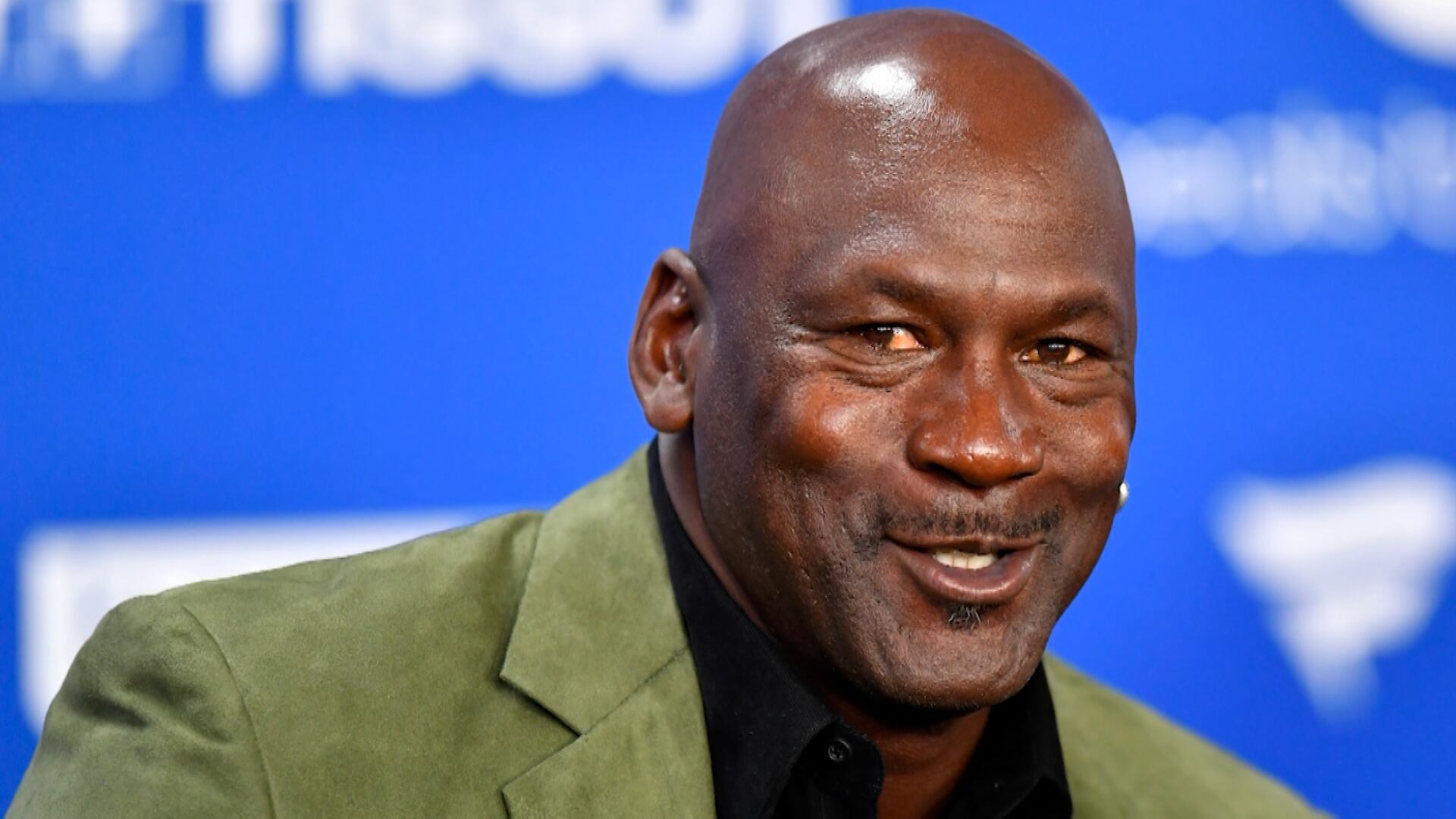
Carsten Koerl, CEO of Sportradar, joins Cheddar News' Closing Bell, where he explains how his company is bolstering the platforms of sports betting and streaming networks, and discusses basketball legend and Sportradar investor Michael Jordan's role in helping the company grow.
A new NFT network claims it is disrupting the art market, and is doing so by following in the footsteps of art legends Andy Warhol and Jean-Michel Basquiat. Tripsters says it is creating a new and revolutionary concept in the NFT space, by allowing users to combine two NFTs in order to create a new third NFT. Tripsters says the feature will be compatible with multiple NFT collections in the future, but the first Tripsters' airdrop will be compatible with the Bored Ape Yacht Club collection. Jayson Winer, co-founder of Tripsters, and Oskar Kowalski, a senior advisor for the startup, join Cheddar News' Closing Bell to discuss.
Dimitri Dadiomov, CEO and Co-Founder of Modern Treasury, joins Cheddar News' Closing Bell, where he elaborates on how his firm plans to deploy its latest dose of funding and how Modern Treasury is working with banking giants like JPMorgan and Citi to help businesses move money more confidently.
Just a week after talks of him starting his own social media platform, Tesla CEO Elon Musk purchased a 9.2 percent stake in Twitter. The stock by resulted in a price surge for both Twitter and Tesla stocks, but questions are swirling about how much of an active stake this will be for the controversial figure who's had a fraught relationship with the platform over the years. Dan Ives, the managing director of equity research at Wedbush, joined Cheddar News to discuss. "I think this is a start of what's gonna really be a soap opera with Musk, either getting on the board or forcing significant strategic changes at Twitter," he noted.
Bees are responsible for the bulk of fruit and vegetable pollination — and they're negatively being affected by climate change. Tech startup Beewise is offering a solution with artificial intelligence to create robotic, autonomous hives to help the vulnerable bee populations. Saar Safra, co-founder & CEO, joined Cheddar News to talk about the company's recent $80 million to help make this project possible. "Our solution is not only hardware," he said. "Its software and biology all in one device. That's the challenge, and that's what sets us apart."
Space tourism continues to be generating buzz after the most recent Blue Origin launch. Two of its passengers made history as the first married couple to travel to space. The couple, Marc Hagle, CEO at Tricor, and Sharon Hagle, CEO at Spacekids Global, joined Cheddar News fresh off of their trip to talk about their experience and future space travel plans. "If there is a Santa Claus, we’ll have the opportunity to fly with Virgin Galactic, and maybe we'll have the opportunity to fly with SpaceX," said Marc Hagle, followed by Sharon explaining they had already signed up with Virgin Galactic about 15 years ago.
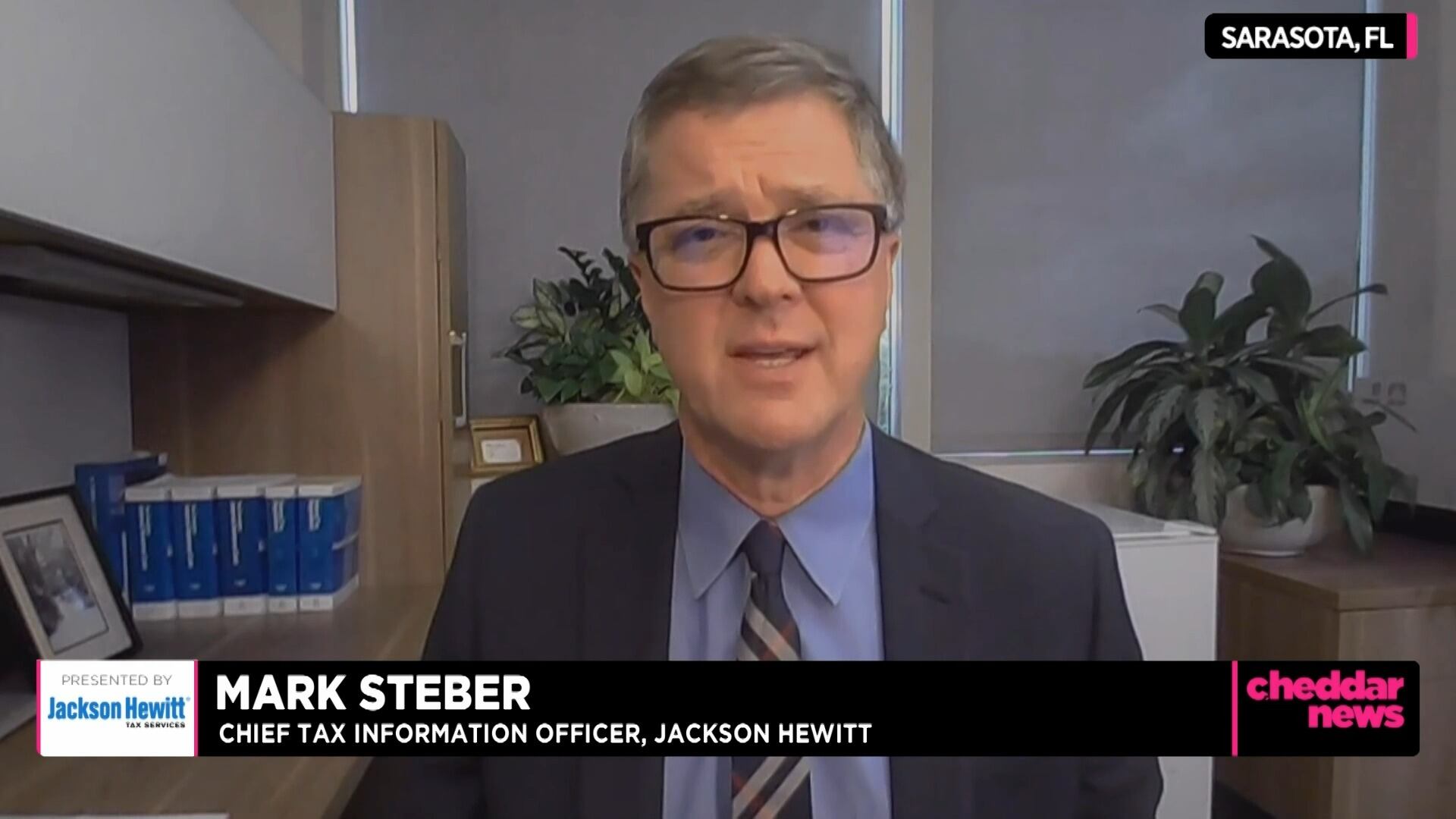
Mark Steber, chief tax information officer at Jackson Hewitt, joins Cheddar News to talk about what you need to know before filing your taxes this year.
Caleb Silver, Editor in Chief at Investopedia, breaks down which industries have the most pricing power and how rising inflation may impact margins in this upcoming corporate earnings release. "They have pricing power, no doubt about it, and consumers were feeling pretty flush last year, by and large, the personal savings rate in 2021 hit an all-time high, the personal income levels hit an all time high," he said. "Why? We had a lot of government money coming to consumers via those checks. So there was part of that, and we weren't spending in the first half of the year like we wanted to."
Joan Sutton, CEO & founding partner of CBD skincare company 707 Flora, joins Cheddar News to discuss her clean beauty brand powered by full-spectrum hemp.