By Damian J. Troise and Stan Choe
Already unnerved by the newest coronavirus variant, Wall Street's losses deepened on Tuesday after the head of the Federal Reserve said it will consider shutting off its support for financial markets sooner than expected.
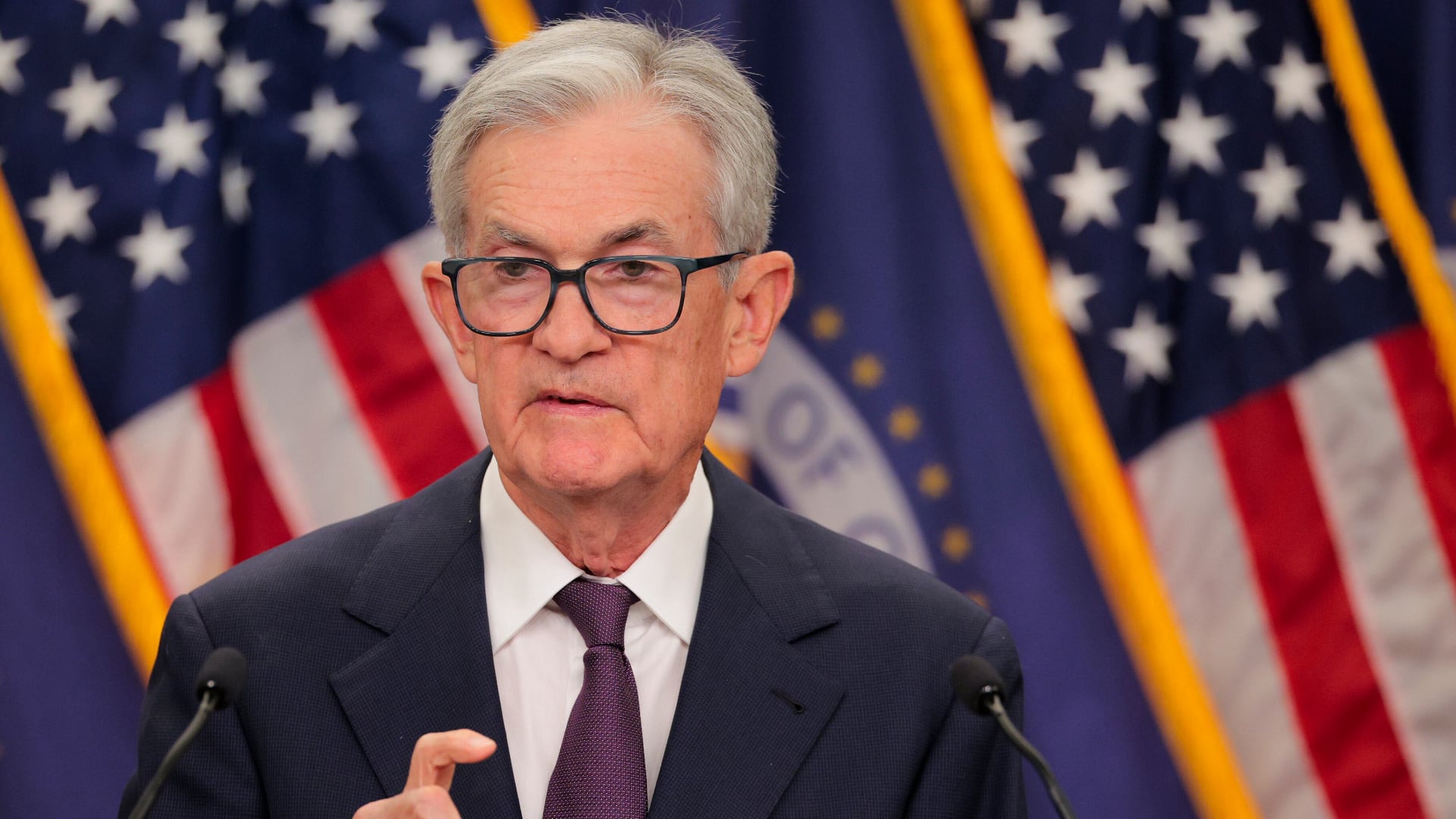
The S&P 500 fell 1.9%, erasing its gains from a day earlier. The sell-off accelerated after Fed Chair Jerome Powell told Congress the central bank may halt the billions of dollars of bond purchases it’s making every month “perhaps a few months sooner.” It had been on pace to wrap up the purchases, meant to goose the economy by lowering rates for mortgages and other long-term loans, in June.
An end to the purchases would open the door for the Fed to raise short-term interest rates from their record low of nearly zero. That in turn would dilute a major propellant that's sent stocks to record heights and swatted away concerns about an overly pricey market. As investors moved up their expectations for the Fed's first rate hike following Powell's remarks, yields on short-term Treasurys rose.
Losses for stocks mounted quickly, with the drop for the Dow Jones Industrial Average more than tripling in half an hour as it sank 711 points. The blue chip index ended down 652.22 points, or 1.9%, at 34,483.72.
The Nasdaq composite held up slightly better than the rest of the market, shedding 245.14 points, or 1.6%, to 15,537.69. Higher interest rates tend to hurt stock prices broadly, but they hit hardest on those seen as the most expensive or banking on big profit growth the furthest in the future. Such companies play a bigger role in the Nasdaq than other indexes. Microsoft fell 1.8% and chipmaker Nvidia slid 2.1%.
The whammy on interest rates came after stocks were already weak in the morning due to concerns about how badly the fast-spreading omicron variant of the coronavirus may hit the global economy.
The CEO of Moderna predicted in an interview with the Financial Times that existing COVID-19 vaccines may be less effective with omicron than earlier variants. Regeneron also said Tuesday that its monoclonal antibody treatment may have reduced effectiveness on omicron. Shares in Moderna fell 4.4%, while Regeneron dropped 2.7%.
Much is left to be determined about the variant, including how much it may slow already gummed-up supply chains or scare people away from stores. That uncertainty has sent Wall Street through jagged up-and-down jolts as investors struggle to handicap how much economic damage omicron will ultimately do.
“There will be heightened volatility around any piece of information,” said Kristina Hooper, chief global market strategist at Invesco. She said markets will likely remain cautious "before we know more.”
The S&P 500 dropped 88.27 points to 4,567. The benchmark index sank 2.3% Friday for its worst loss for February, only to rise 1.3% Monday as investors reconsidered whether the reaction was overdone, before giving way to Tuesday's loss. The index closed out November with a 0.8% loss. That follows a 6.9% gain in October and a 4.8% drop in September. The index is now up 21.6% for the year.
One measure of nervousness in the stock market jumped almost 19% Tuesday, nearing its level from Friday, when it touched its highest point since March. Much of the rise occurred after Powell began speaking.
Gold usually does well when fear among investors is rising, but its price slipped 0.5%. Higher interest rates could reduce the appeal of gold, which doesn’t pay its holders any interest.
Crude oil prices slid with concerns that a global economy weakened by omicron would burn less fuel. Benchmark U.S. crude dropped 5.4% and touched its lowest level in three months. Brent crude, the international standard, fell 3.9%.
If omicron does ultimately do heavy damage to the global economy, it could put the Federal Reserve in a difficult spot. Usually, the central bank will lower interest rates, which encourages borrowers to spend more and investors to pay higher prices for stocks.
But low rates can also encourage inflation, which is already high across the global economy. Powell acknowledged in his testimony before Congress that inflation has been worse and lasted longer than the Fed expected. For months, officials described inflation as only “transitory,” but Powell said that word no longer works.
The subsequent losses for stocks Tuesday were widespread, with all but seven stocks in the S&P 500 ending lower. Apple rose 3.2% for the biggest gain in the index.
Smaller stocks also took heavy losses. The Russell 2000 index slid 43.07 points, or 1.9%, to 2,198.91. Investors typically see them getting hurt more than their larger rivals by both higher interest rates and by a weaker U.S. economy.
One signal in the bond market was also flashing some concern about the economy's prospects. Longer-term Treasurys usually offer higher yields than shorter-term Treasurys, in part to make up for the increased risk that future inflation may eat into their returns.
A 10-year Treasury is still offering more in yield than a two-year Treasury, but the gap narrowed sharply on Tuesday. The two-year yield rose to 0.54% from 0.51% late Monday. The 10-year yield, meanwhile, fell to 1.45% from 1.52%.
Many investors see that narrowed gap as meaning the bond market has less confidence in the economy's long-term strength. If it were to flip, with short-term yields rising above long-term yields, many investors see that as a semi-reliable predictor of a recession.
___
AP Business Writer Alex Veiga in Los Angeles contributed.
Updated on November 30, 2021, at 4:43 p.m. ET.