By Stan Choe and Alex Veiga
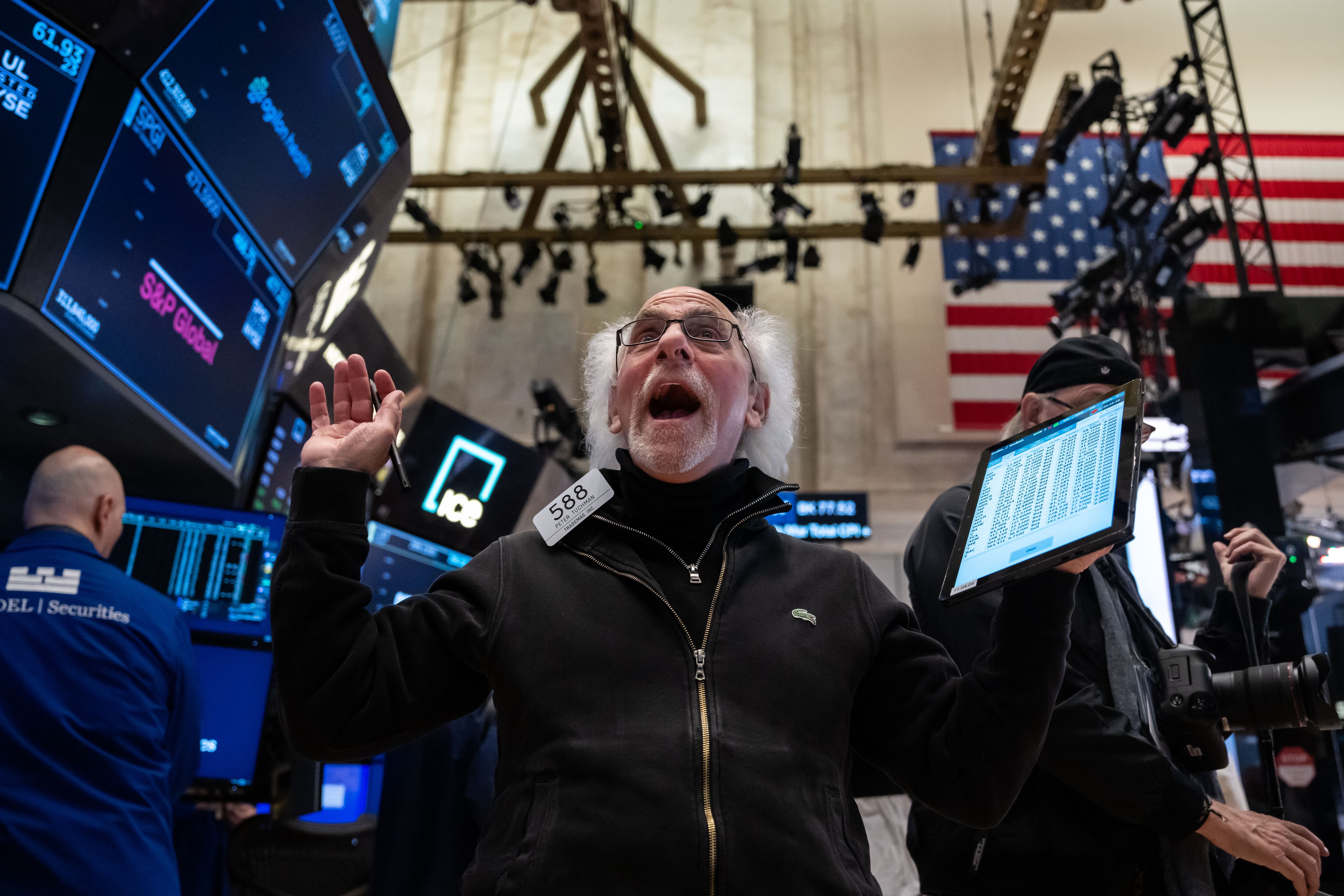
Wall Street extended a rally into a third day Thursday, even as oil prices jump back above $100, upping the pressure on inflation.
The S&P 500 rose 1.2%, with more than 80% of the stocks in the benchmark index closing higher. That follows gains of more than 2% in each of the prior two days for its best back-to-back performance in nearly two years.
The Dow Jones Industrial Average also gained 1.2%, while the Nasdaq composite rose 1.3%. The three indexes wavered between small gains and losses in the early going following better-than-expected reports on the U.S. economy. But they're also each on pace for their first weekly gains in at least two weeks.
The market's latest gains come a day after the Federal Reserve raised its key interest rate for the first time since 2018, something Wall Street had been expecting for months.
“There’s some relief in the market now that, ‘OK, we started, we got past the event, and now we can sort of settle in and digest it,’" said Liz Young, head of investment strategy at SoFi. “As the war continues, that’s the question mark.”
The S&P 500 rose 53.81 points to 4,411.67, its third-straight gain. The Dow added 417.66 points to 34,480.76. The Nasdaq rose 178.23 points to 13,614.78. The tech-heavy index is on pace for its biggest weekly gain in more than a year.
Smaller company stocks outpaced the broader market. The Russell 2000 index rose 34.30 points, or 1.7%, to 2,065.02.
Investors have been struggling to handicap what will happen to the economy and the world’s already high inflation because of Russia’s invasion of Ukraine, higher interest rates from central banks around the world and renewed COVID-19 worries in various hotspots.
A barrel of U.S. crude oil jumped 8.4% to settle at $102.98, while Brent crude, the international standard, leaped 8.8% to settle at $106.64 per barrel. Such moves have become the norm recently, as prices careen on uncertainties about both supplies of and demand for oil. After briefly topping $130 early last week, a barrel of U.S. crude went almost all the way down to $94 on Wednesday.
Dribbles of news about the state of negotiations between Russia and Ukraine have caused many of the sharp reversals. So too recently have worries about economic shutdowns in China because of surges in COVID-19 infections, which could hit demand for energy.
On Thursday, the Chinese government said companies in Shenzhen, a major business center, will be allowed to reopen while efforts to contain coronavirus outbreaks progress. Their earlier closures had rattled financial markets. That followed a promise on Wednesday to “invigorate the economy” with market-friendly policies.
The Hang Seng stock index in Hong Kong, which neighbors Shenzhen, surged 7% to continue a wild run. Earlier this week, it went from a 5% drop to a 5.7% plunge to a 9.1% surge.
All the frenetic movements are coming amid uncertainty about whether the economy is heading for a painful combination of stagnating growth and persistently high inflation.
Behind it all, the Federal Reserve and other central banks are trying to slow the economy enough to snuff out high inflation but not so much as to cause a recession. The Bank of England has been one of the most aggressive, and it raised its key interest rate on Thursday for the third time since December. A day earlier, the Fed raised its key rate for the first time since 2018.
It’s a delicate dance, and the surge in U.S. stock prices on Wednesday seems to indicate some investors see it succeeding.
“Far from choking off growth, the start of the Fed tightening cycle seems to have been greeted warmly,” Chris Turner and Francesco Pesole of ING said in a report. “Investors are cheering measures to address high inflation.”
A wave of better-than-expected reports on the U.S. economy Thursday may also have helped. Fewer workers applied for unemployment claims last week, and builders broke ground on more homes last month than economists expected. A third report, meanwhile, showed that manufacturing in the mid-Atlantic region was stronger than expected. That potentially eased some of the worry from an earlier report that showed the weakest activity in New York state since early in the pandemic.
Occidental Petroleum surged 9.5% after Berkshire Hathaway, the company run by famed investor Warren Buffett, upped its stake in the company. Cheniere Energy rose 1.7% after the U.S. Department of Energy gave it permission for additional sales of liquefied natural gas to every country entirely in Europe as they seek to move away from Russian energy products.
Treasury yields were mixed. The yield on the 10-year Treasury note rose to 2.20% from 2.19% late Wednesday.
___
AP Business Writers Joe McDonald and Damian J. Troise contributed. Veiga reported from Los Angeles.
Updated on March 17, 2022, at 5:27 p.m. ET.